Dopkins Nicholas, Miranda Kathryn, Wilson Kiesha, Holloman Bryan L, Nagarkatti Prakash, Nagarkatti Mitzi
Department of Pathology, Microbiology and Immunology, University of South Carolina School of Medicine, Columbia SC, 29208, USA.
J Neuroimmune Pharmacol. 2022 Jun;17(1-2):15-32. doi: 10.1007/s11481-021-10023-6. Epub 2021 Nov 10.
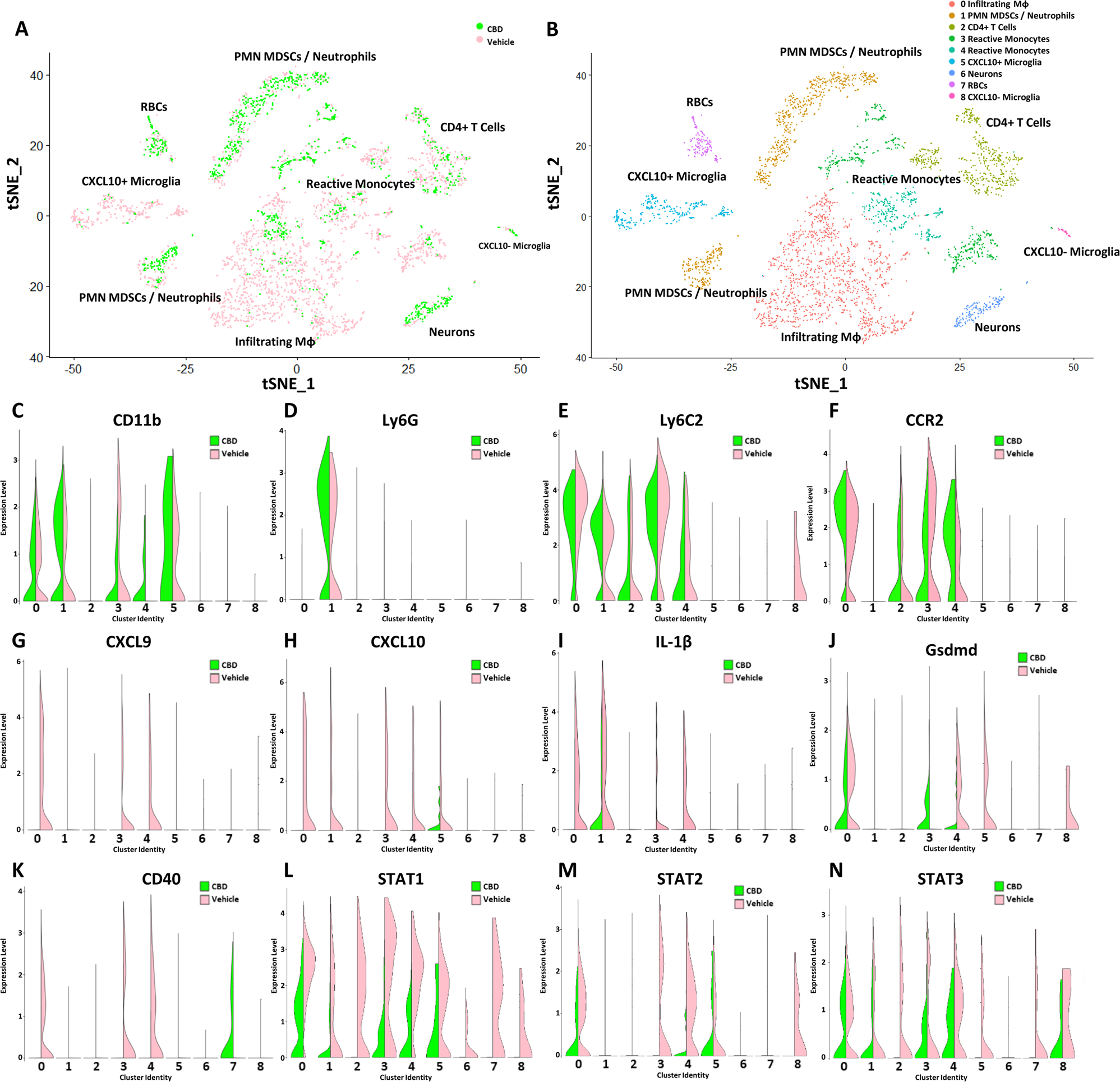
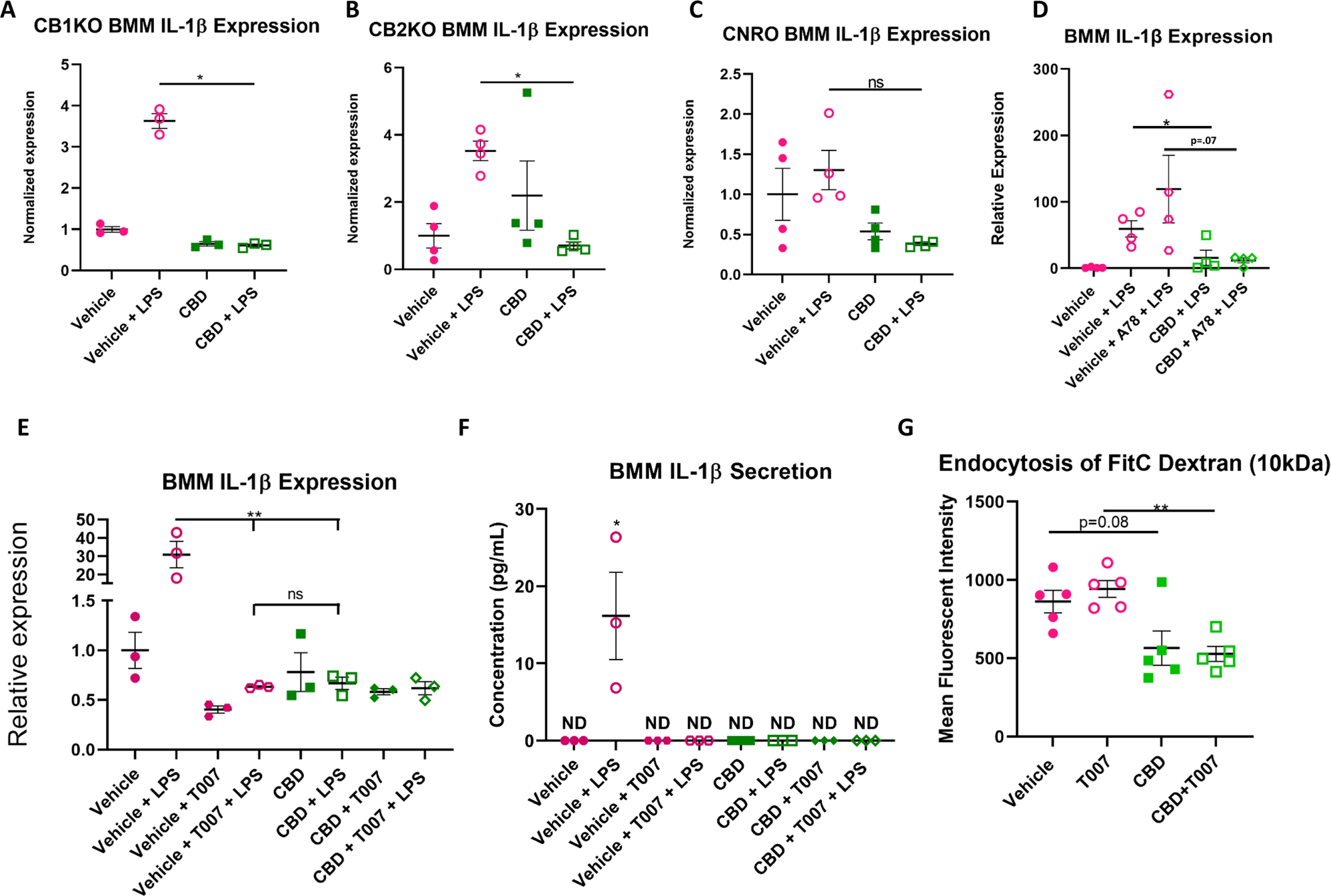
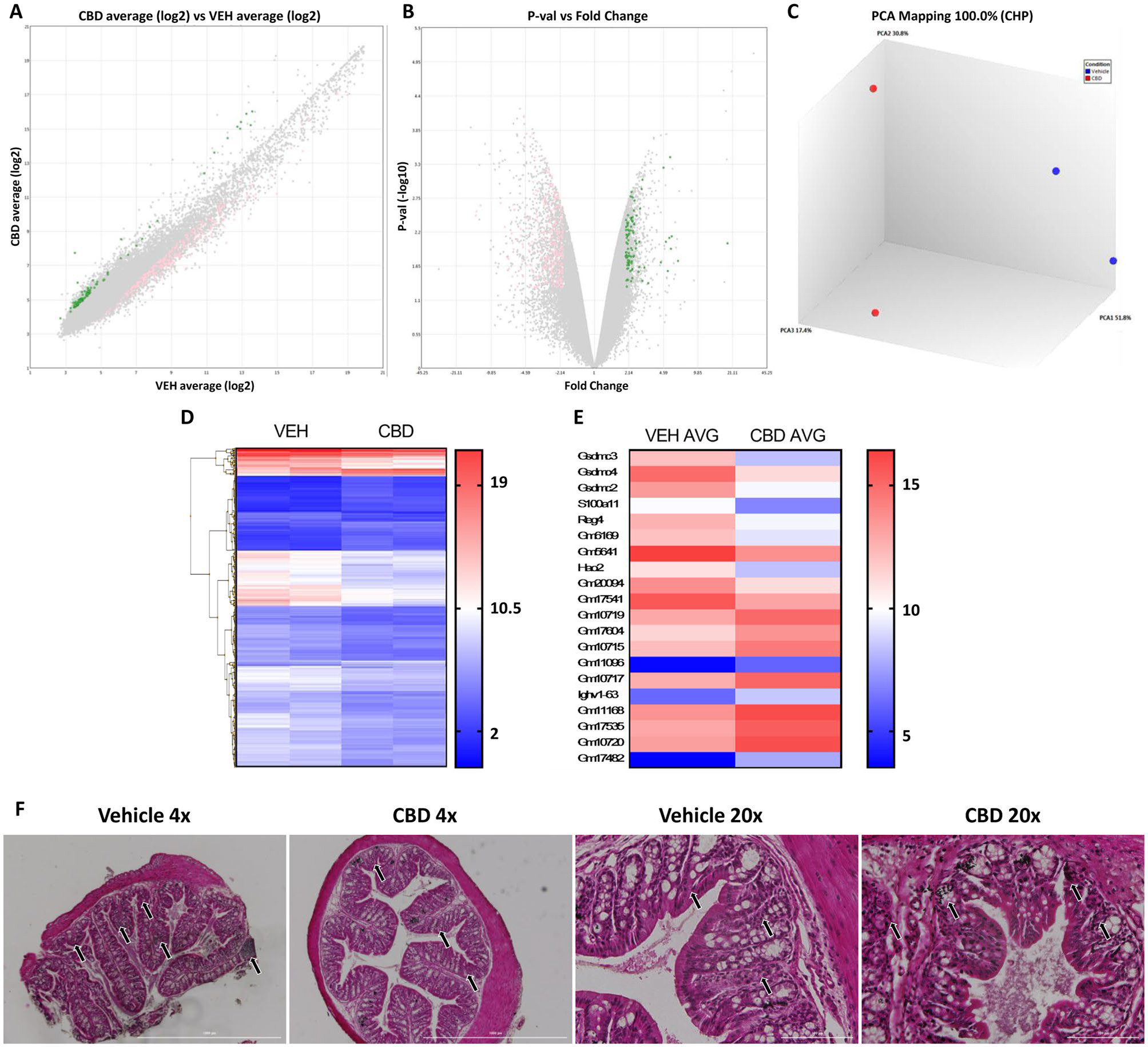
Cannabidiol (CBD) is a bioactive compound isolated from Cannabis plants that has garnered attention within the medical community due to its potent anti-inflammatory properties. To better understand how CBD limits excessive neuroinflammation we administered CBD via oral gavage (20 mg/kg) in a murine model of multiple sclerosis (MS) known as experimental autoimmune encephalomyelitis (EAE). Using single cell RNA sequencing (scRNA Seq) and array-based transcriptomics we were able to delineate how CBD limits excessive inflammation within the central nervous system (CNS) as well as within the intestinal lining in EAE. In-depth scRNA Seq analysis of CNS tissue demonstrated that CBD treatment resulted in a significant reduction in CXCL9, CXCL10 and IL-1β expression within the CNS, leading to inhibited infiltration of inflammatory macrophages. CBD inhibited IL-1β production independent of the classical cannabinoid receptors, CB1 and CB2. CBD treatment also led to induction of Myeloid-derived Suppressor Cells (MDSCs) both in the CNS and periphery. Interestingly, CBD treatment of EAE mice revealed significant suppression of inflammation in the gastrointestinal (GI) tract. The intestinal epithelial cells (IECs) of CBD treated mice demonstrated a transcriptional inhibition of a family of pyroptosis initiators that drive localized inflammation known as gasdermins (GSDMs). Further investigation into the GI tract via 16s sequencing of cecal and fecal contents demonstrated that oral administration of CBD resulted in no significant changes in the intestinal microbiota composition. These findings demonstrate the beneficial effect of CBD treatment on autoimmune neuroinflammation by ablating expression of pro-inflammatory chemoattractants, regulating inflammatory macrophage activity, promoting MDSC expansion, and limiting the systemic low-grade inflammation in the GI tract, culminating in the attenuation of EAE.
大麻二酚(CBD)是一种从大麻植物中分离出来的生物活性化合物,因其强大的抗炎特性而在医学界受到关注。为了更好地了解CBD如何限制过度的神经炎症,我们在一种名为实验性自身免疫性脑脊髓炎(EAE)的多发性硬化症(MS)小鼠模型中,通过灌胃给予CBD(20毫克/千克)。使用单细胞RNA测序(scRNA Seq)和基于芯片的转录组学,我们能够描绘出CBD如何限制EAE中中枢神经系统(CNS)以及肠壁内的过度炎症。对CNS组织进行深入的scRNA Seq分析表明,CBD治疗导致CNS内CXCL9、CXCL10和IL-1β表达显著降低,从而抑制炎症巨噬细胞的浸润。CBD独立于经典大麻素受体CB1和CB2抑制IL-1β的产生。CBD治疗还导致CNS和外周血中髓源性抑制细胞(MDSC)的诱导。有趣的是,对EAE小鼠进行CBD治疗显示胃肠道(GI)炎症得到显著抑制。接受CBD治疗的小鼠的肠上皮细胞(IEC)表现出对驱动局部炎症的一类焦亡启动子(称为gasdermins,GSDMs)的转录抑制。通过对盲肠和粪便内容物进行16s测序对胃肠道进行进一步研究表明,口服CBD不会导致肠道微生物群组成发生显著变化。这些发现表明,CBD治疗通过消除促炎趋化因子的表达、调节炎症巨噬细胞活性、促进MDSC扩增以及限制胃肠道的全身性低度炎症,最终减轻EAE,对自身免疫性神经炎症具有有益作用。