Jin Pengfei, Chao Kaixiang, Li Juan, Wang Zihao, Cheng Peng, Li Qiang, Wang Baotong
State Key Laboratory of Crop Stress Biology for Arid Areas, College of Plant Protection, Northwest A&F University, Yangling, China.
College of Chemistry, Biology and Environment, Yuxi Normal University, Yuxi, China.
Front Plant Sci. 2021 Oct 25;12:754823. doi: 10.3389/fpls.2021.754823. eCollection 2021.
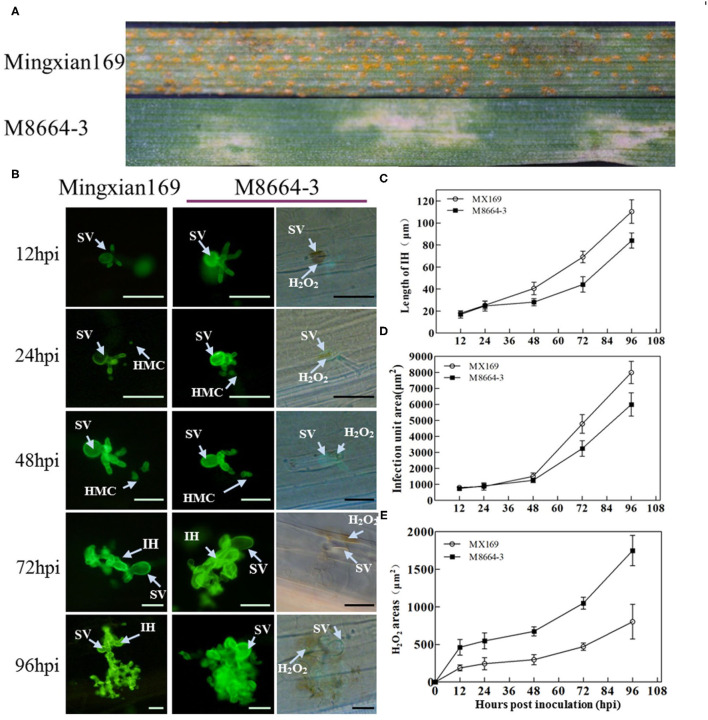
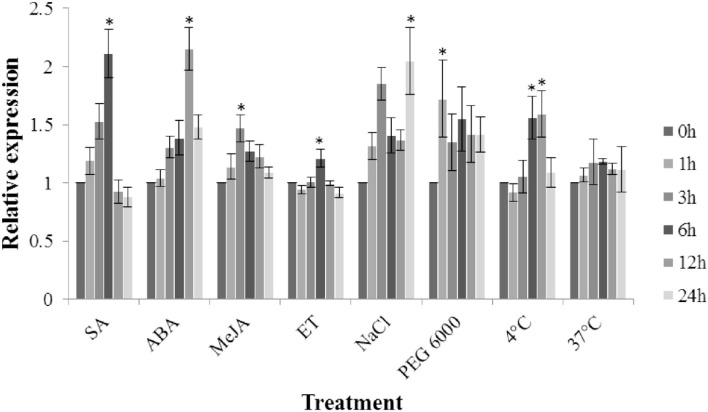
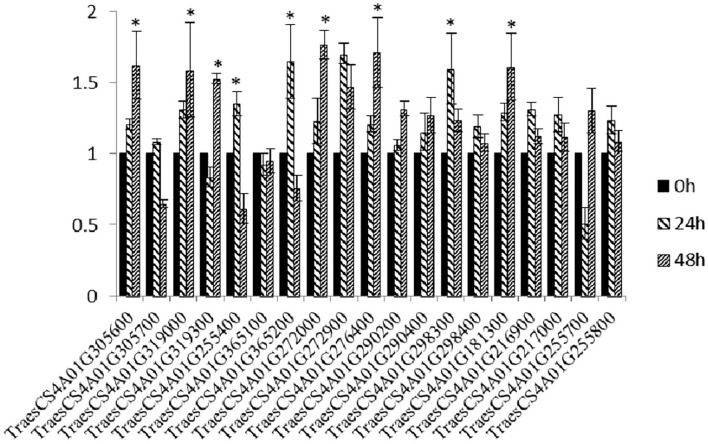
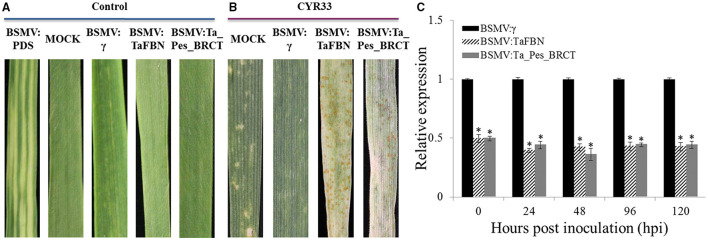
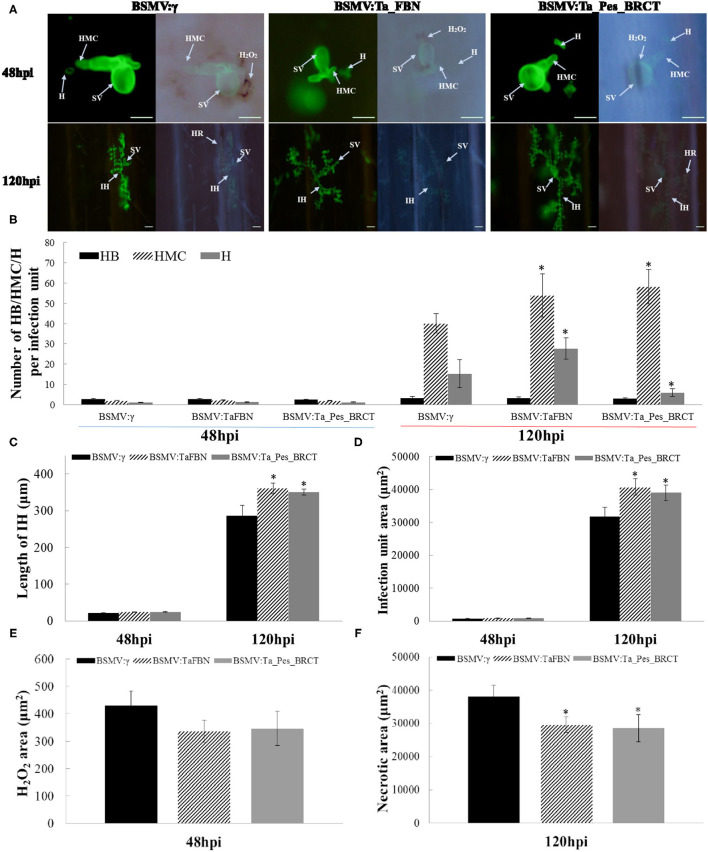
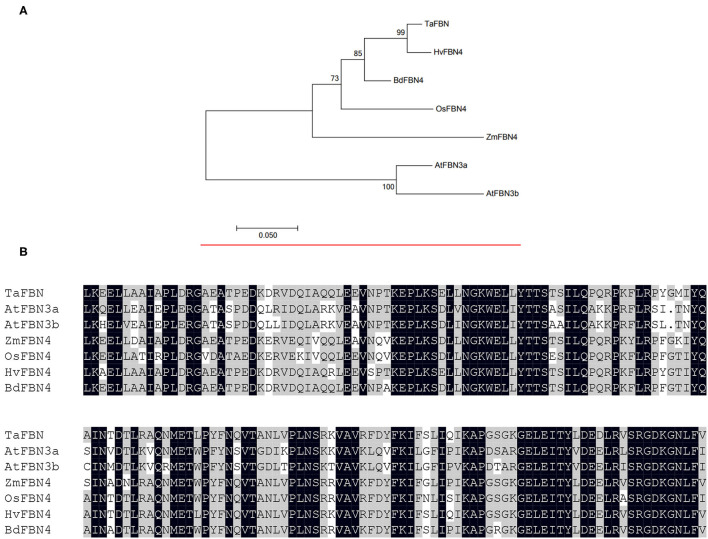
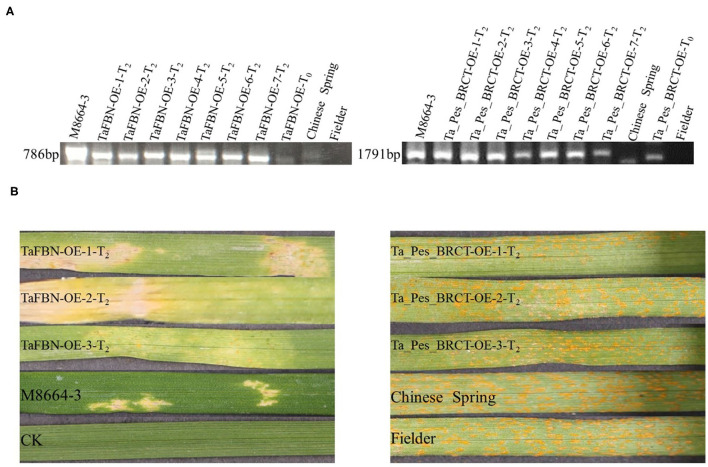
Stripe rust, caused by f. sp. (), is one of the most widespread and destructive fungal diseases of wheat worldwide. The cultivation and growth of resistant wheat varieties are the most economical, effective, and environmental friendly methods to control stripe rust. Therefore, it is necessary to use new resistance genes to breed resistant wheat varieties. A single dominant gene temporarily designated as , from a wheat- introgression line M8664-3 highly resistant to Chinese predominant races, is a potentially valuable source of stripe rust resistance for breeding. Herein, based on previous chromosome location results (bin 4AL13-0.59-0.66 close to 4AL12-0.43-0.59) and expression change information of candidate genes and bioinformatics analysis, several candidate genes with significantly different expression changes were then selected and verified by virus-induced gene silencing (VIGS). Two of the candidate genes temporarily designated as [containing plastid lipid-associated proteins (PAP)_fibrillin domain in its protein] and [containing Pescadillo and breast cancer tumour suppressor protein C-terminus (BRCT) domain in its protein], produced the most significant resistance changes in the wheat- interaction system after silencing. These two genes were further verified by -mediated wheat genetic transformation technology. According to the identification of disease resistance, the resistance function of the candidate gene was further verified. Then, the expression of under hormone treatment indicated that may be related to the salicylic acid (SA) and abscisic acid (ABA) signaling pathways. Combined with the expression of in response to environmental stress stimulation, it can be reasonably speculated that plays an important role in the resistance of wheat to and is involved in abiotic stress pathways.
条锈病由小麦条锈菌(Puccinia striiformis f. sp. tritici)引起,是全球范围内小麦最普遍且具毁灭性的真菌病害之一。培育和种植抗性小麦品种是控制条锈病最经济、有效且环保的方法。因此,利用新的抗性基因培育抗性小麦品种很有必要。来自对中国主要条锈菌生理小种高度抗性的小麦-中间偃麦草渗入系M8664-3中的一个暂时命名为YrM8664的显性单基因,是条锈病抗性育种中一个潜在的宝贵资源。在此,基于先前的染色体定位结果(4AL染色体上13-0.59-0.66区间,靠近4AL染色体上12-0.43-0.59区间)以及候选基因的表达变化信息和生物信息学分析,选择了几个表达变化显著不同的候选基因,并通过病毒诱导基因沉默(VIGS)进行验证。其中两个候选基因暂时命名为YrM8664-4D [其蛋白质中含有质体脂质相关蛋白(PAP)_原纤维蛋白结构域] 和YrM8664-7D [其蛋白质中含有Pescadillo和乳腺癌肿瘤抑制蛋白C末端(BRCT)结构域],在沉默后,在小麦-条锈菌互作系统中产生了最显著的抗性变化。通过农杆菌介导的小麦遗传转化技术对这两个基因进行了进一步验证。根据抗病性鉴定,进一步验证了候选基因YrM8664的抗性功能。然后,激素处理下YrM8664的表达表明其可能与水杨酸(SA)和脱落酸(ABA)信号通路有关。结合YrM8664对环境胁迫刺激的响应表达情况,可以合理推测YrM8664在小麦对条锈菌的抗性中起重要作用,并参与非生物胁迫途径。