Elya Carolyn, De Fine Licht Henrik H
Department of Organismic and Evolutionary Biology, Harvard University, Cambridge, MA, USA.
Department of Plant and Environmental Sciences, University of Copenhagen, 1871, Frederiksberg, Denmark.
IMA Fungus. 2021 Nov 12;12(1):34. doi: 10.1186/s43008-021-00084-w.
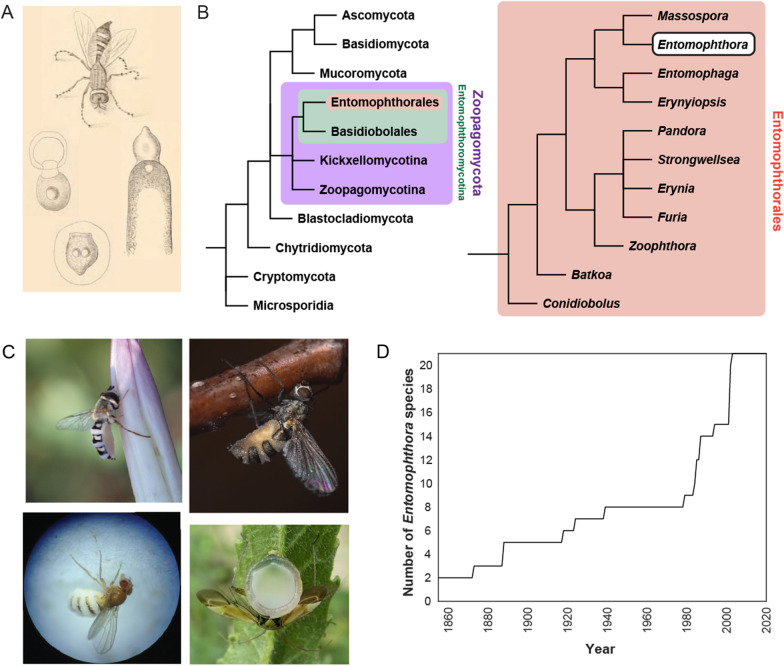
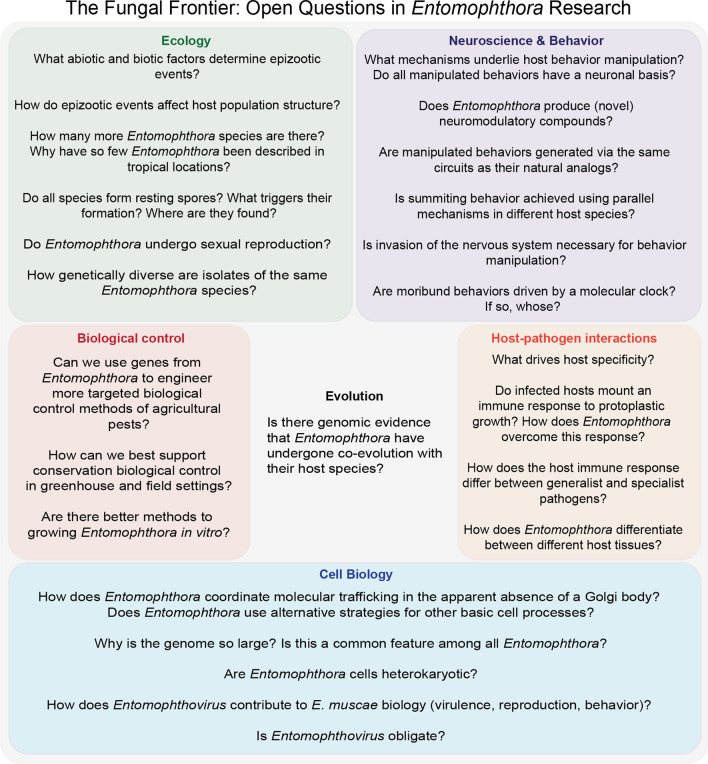
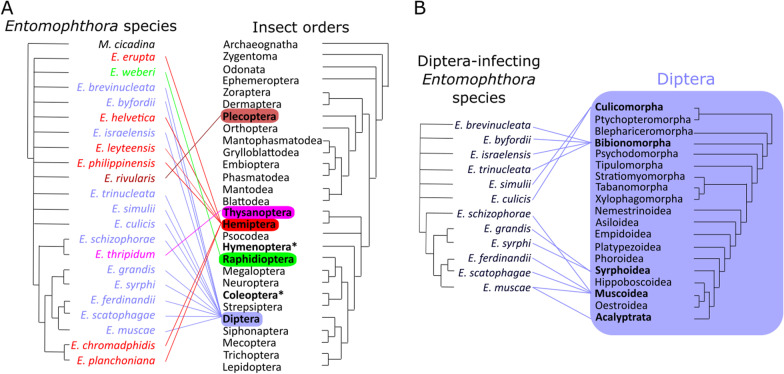
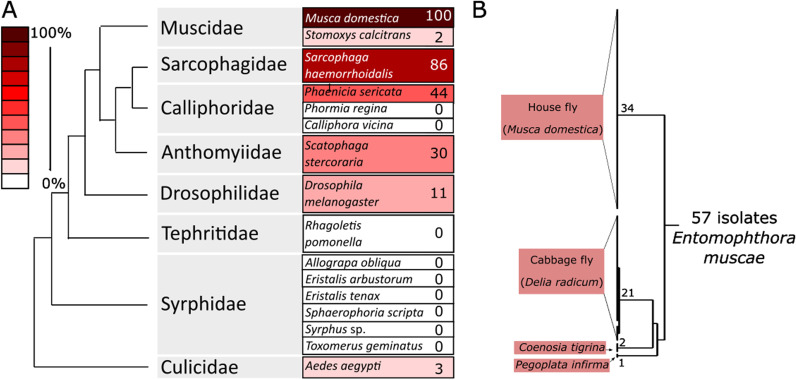
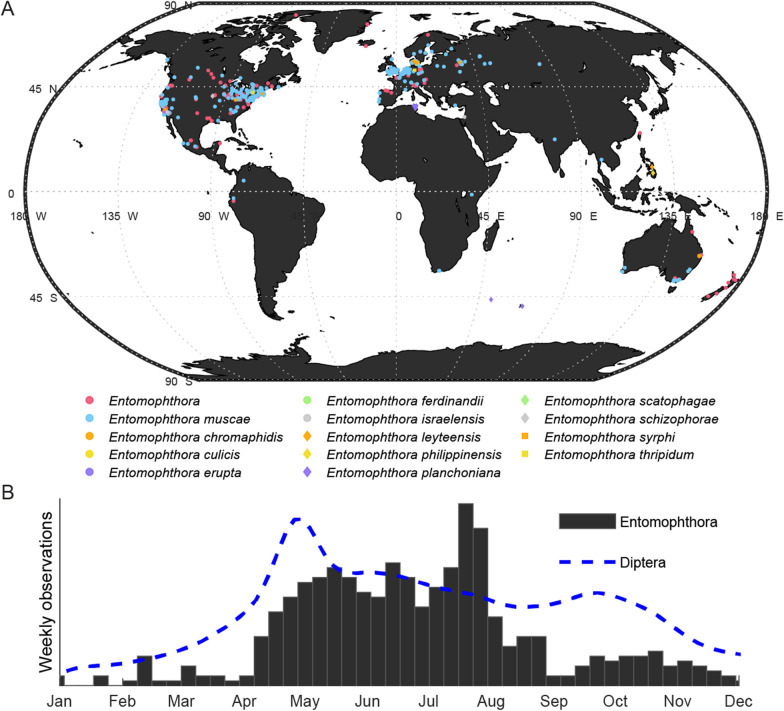
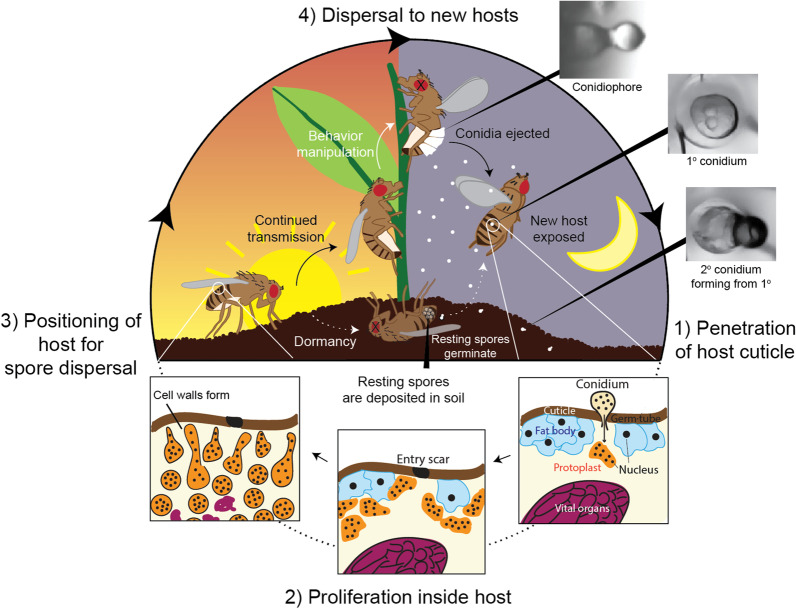
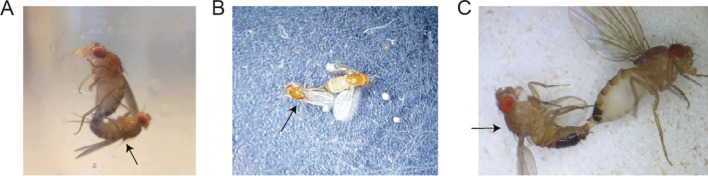
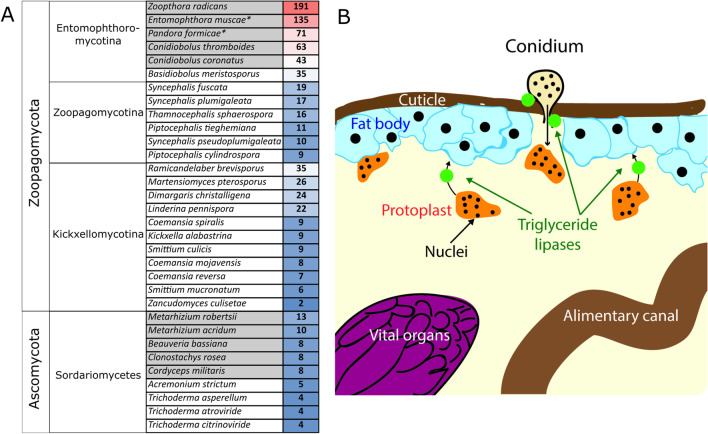
The fungal genus Entomophthora consists of highly host-specific pathogens that cause deadly epizootics in their various insect hosts. The most well-known among these is the "zombie fly" fungus E. muscae, which, like other Entomophthora species, elicits a series of dramatic behaviors in infected hosts to promote optimal spore dispersal. Despite having been first described more than 160 years ago, there are still many open questions about Entomophthora biology, including the molecular underpinnings of host behavior manipulation and host specificity. This review provides a comprehensive overview of our current understanding of the biology of Entomophthora fungi and enumerates the most pressing outstanding questions that should be addressed in the field. We briefly review the discovery of Entomophthora and provide a summary of the 21 recognized Entomophthora species, including their type hosts, methods of transmission (ejection of spores after or before host death), and for which molecular data are available. Further, we argue that this genus is globally distributed, based on a compilation of Entomophthora records in the literature and in online naturalist databases, and likely to contain additional species. Evidence for strain-level specificity of hosts is summarized and directly compared to phylogenies of Entomophthora and the class Insecta. A detailed description of Entomophthora's life-cycle and observed manipulated behaviors is provided and used to summarize a consensus for ideal growth conditions. We discuss evidence for Entomophthora's adaptation to growth exclusively inside insects, such as producing wall-less hyphal bodies and a unique set of subtilisin-like proteases to penetrate the insect cuticle. However, we are only starting to understand the functions of unusual molecular and genomic characteristics, such as having large > 1 Gb genomes full of repetitive elements and potential functional diploidy. We argue that the high host-specificity and obligate life-style of most Entomophthora species provides ample scope for having been shaped by close coevolution with insects despite the current general lack of such evidence. Finally, we propose six major directions for future Entomophthora research and in doing so hope to provide a foundation for future studies of these fungi and their interaction with insects.
虫霉属真菌由高度宿主特异性的病原体组成,可在其各种昆虫宿主中引发致命的流行病。其中最著名的是“僵尸蝇”真菌——蝇虫霉,它与其他虫霉属物种一样,会在受感染的宿主中引发一系列显著行为,以促进孢子的最佳传播。尽管早在160多年前就有了首次描述,但关于虫霉生物学仍有许多悬而未决的问题,包括宿主行为操纵和宿主特异性的分子基础。本综述全面概述了我们目前对虫霉属真菌生物学的理解,并列举了该领域应解决的最紧迫的突出问题。我们简要回顾了虫霉的发现,并总结了21种已确认的虫霉属物种,包括它们的模式宿主、传播方式(宿主死亡前后孢子的弹射)以及可获取分子数据的物种。此外,基于文献和在线博物学家数据库中虫霉记录的汇编,我们认为该属在全球范围内分布,并且可能还存在其他物种。总结了宿主菌株水平特异性的证据,并将其与虫霉属和昆虫纲的系统发育进行了直接比较。提供了虫霉生命周期和观察到的操纵行为的详细描述,并用于总结理想生长条件的共识。我们讨论了虫霉适应仅在昆虫体内生长的证据,例如产生无壁菌丝体和一组独特的枯草杆菌蛋白酶样蛋白酶以穿透昆虫角质层。然而,我们才刚刚开始了解异常分子和基因组特征的功能,例如拥有充满重复元件的大于1Gb的大基因组和潜在的功能二倍体。我们认为,尽管目前普遍缺乏此类证据,但大多数虫霉属物种的高宿主特异性和专性生活方式为与昆虫的密切协同进化塑造它们提供了充足的空间。最后,我们提出了虫霉未来研究的六个主要方向,希望借此为这些真菌及其与昆虫相互作用的未来研究奠定基础。