Wessels Jeroen N, Mouratoglou Sophia A, van Wezenbeek Jessie, Handoko M Louis, Marcus J Tim, Meijboom Lilian J, Westerhof Berend E, Bogaard Harm Jan, Strijkers Gustav J, Vonk Noordegraaf Anton, de Man Frances S
Pulmonary Medicine, Amsterdam Cardiovascular Sciences, Amsterdam UMC, Vrije Universiteit Amsterdam, Amsterdam, The Netherlands.
Cardiology, Amsterdam Cardiovascular Sciences, Amsterdam UMC, Vrije Universiteit Amsterdam, Amsterdam, The Netherlands.
Eur Respir J. 2022 Jun 23;59(6). doi: 10.1183/13993003.01454-2021. Print 2022 Jun.
Pulmonary arterial hypertension (PAH) patients have altered right atrial (RA) function and right ventricular (RV) diastolic stiffness. This study assessed the impact of RV diastolic stiffness on RA-RV interaction.
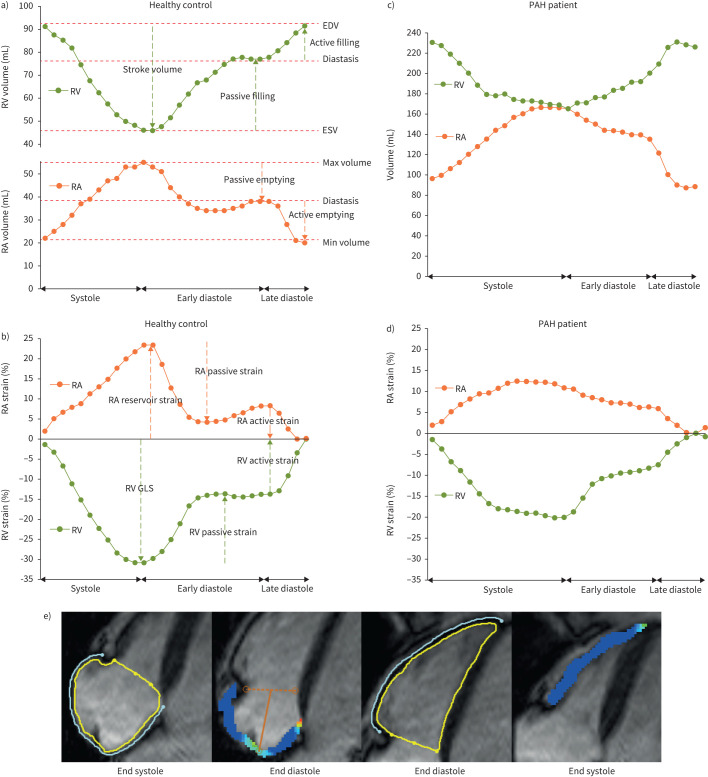
PAH patients with low or high end-diastolic elastance (E) (n=94) were compared with controls (n=31). Treatment response was evaluated in 62 patients. RV and RA longitudinal strain, RA emptying and RV filling were determined and diastole was divided into a passive and active phase. Vena cava backflow was calculated as RA active emptying-RV active filling and RA stroke work as RA active emptying×RV end-diastolic pressure.
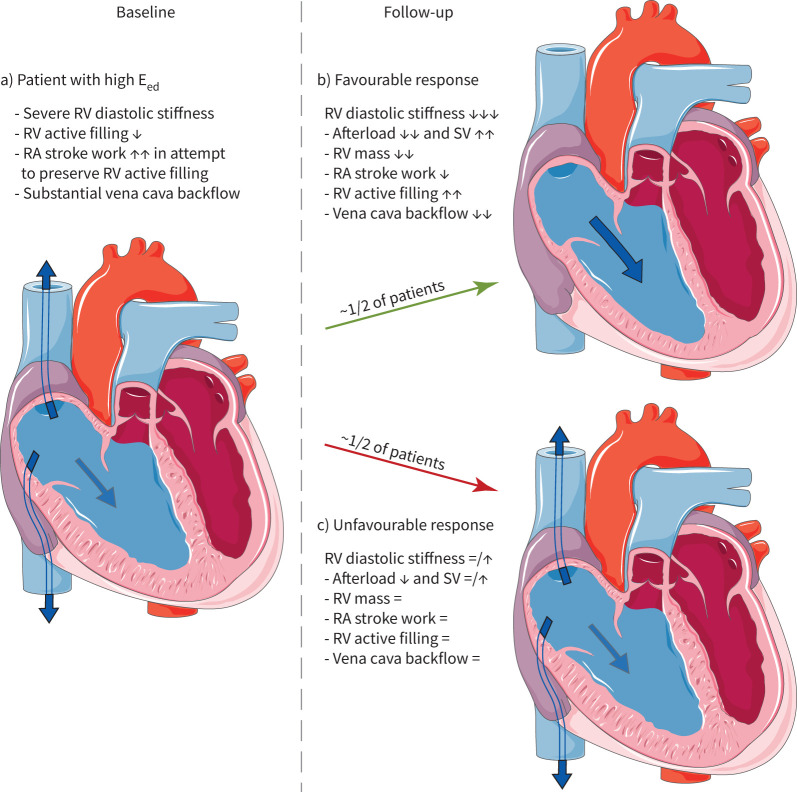
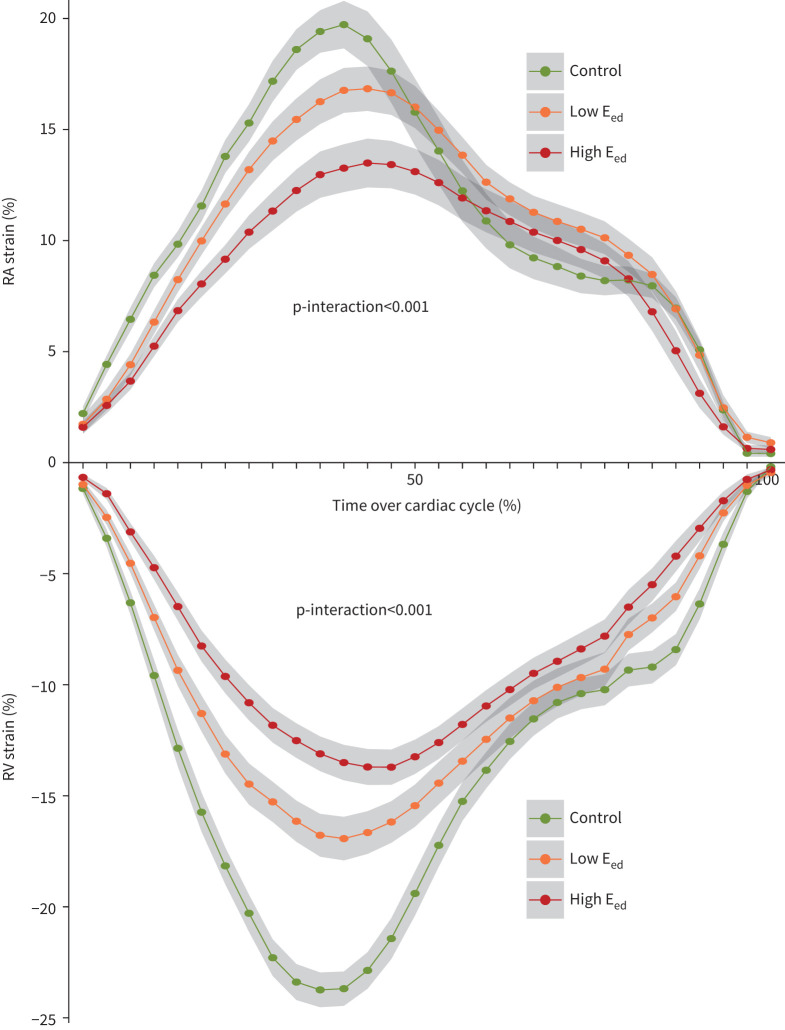
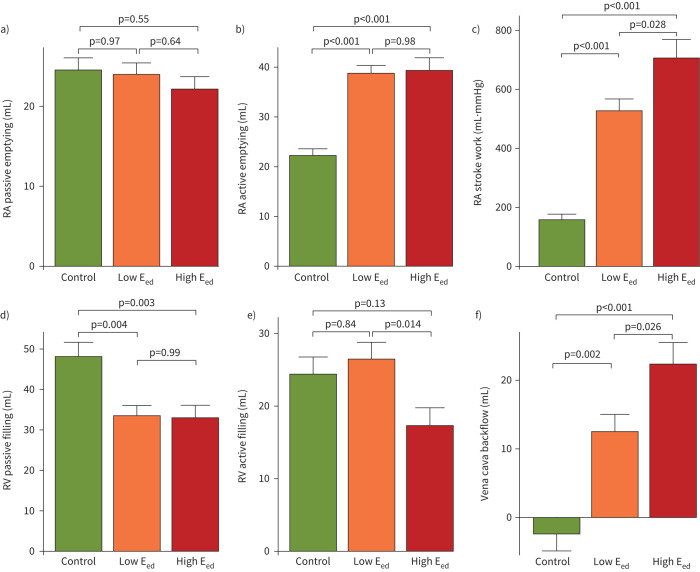
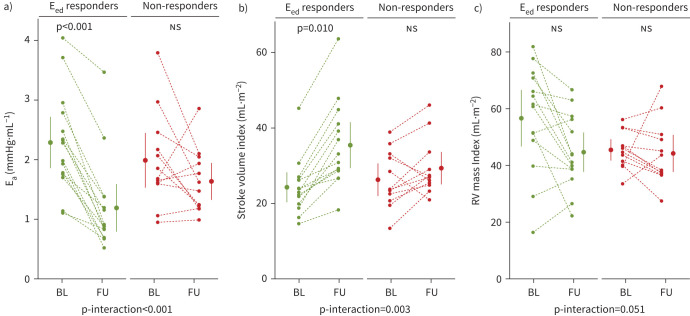
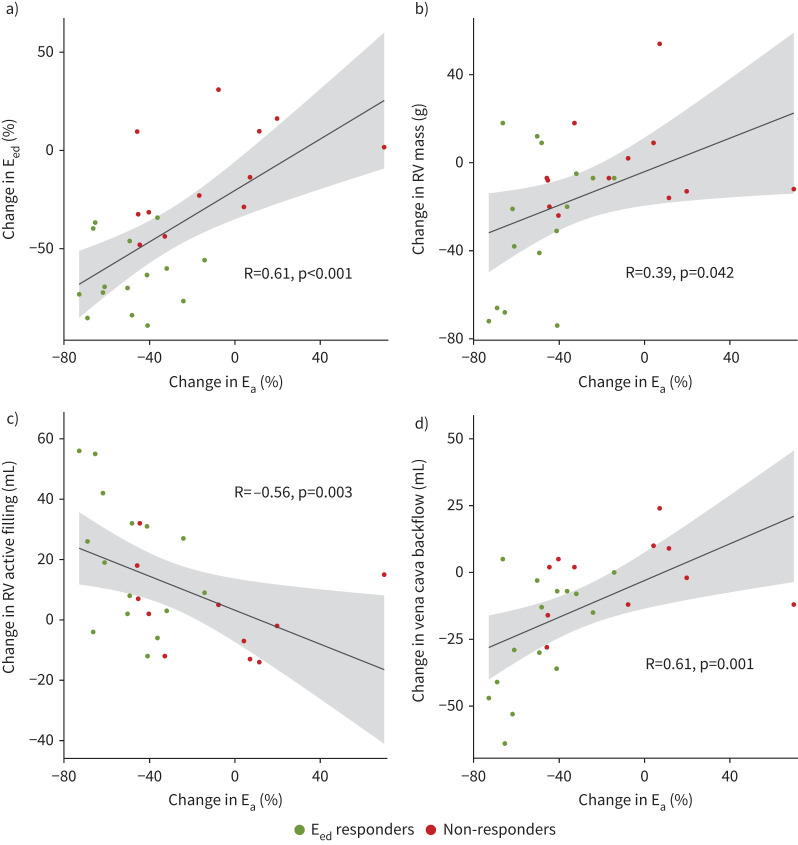
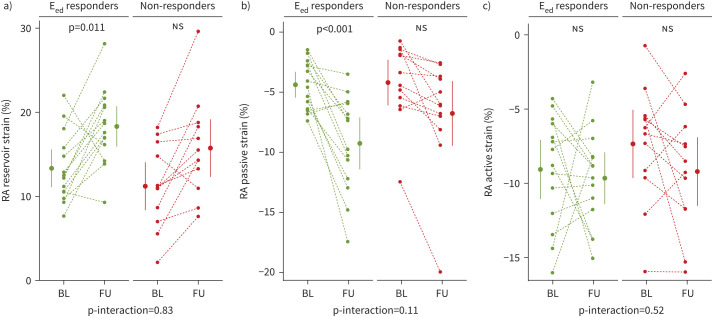
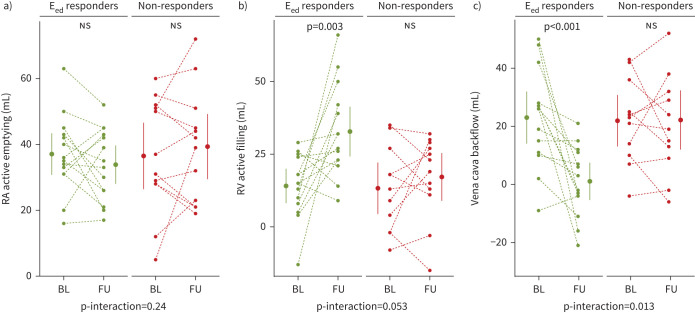
With increased E, RA and RV passive strain were reduced while active strain was preserved. In comparison to controls, patients had lower RV passive filling but higher RA active emptying and RA stroke work. RV active filling was lower in patients with high E, resulting in higher vena cava backflow. Upon treatment, E was reduced in ~50% of the patients with high E, which coincided with larger reductions in afterload, RV mass and vena cava backflow and greater improvements in RV active filling and stroke volume in comparison with patients in whom E remained high.
In PAH, RA function is associated with changes in RV function. Despite increased RA stroke work, severe RV diastolic stiffness is associated with reduced RV active filling and increased vena cava backflow. In 50% of patients with high baseline E, diastolic stiffness remained high, despite treatment. A reduction in E coincided with a large reduction in afterload, increased RV active filling and decreased vena cava backflow.
肺动脉高压(PAH)患者右心房(RA)功能改变,右心室(RV)舒张期僵硬度增加。本研究评估了RV舒张期僵硬度对RA - RV相互作用的影响。
将舒张期末弹性(E)低或高的PAH患者(n = 94)与对照组(n = 31)进行比较。对62例患者评估治疗反应。测定RV和RA纵向应变、RA排空和RV充盈,并将舒张期分为被动期和主动期。计算腔静脉反流为RA主动排空 - RV主动充盈,RA搏功为RA主动排空×RV舒张末期压力。
随着E增加,RA和RV被动应变降低,而主动应变保持不变。与对照组相比,患者RV被动充盈较低,但RA主动排空和RA搏功较高。E高的患者RV主动充盈较低,导致腔静脉反流较高。治疗后,约50%的E高的患者E降低,与后负荷、RV质量和腔静脉反流的更大降低以及RV主动充盈和每搏量的更大改善相关,而E仍高的患者则不然。
在PAH中,RA功能与RV功能变化相关。尽管RA搏功增加,但严重的RV舒张期僵硬度与RV主动充盈减少和腔静脉反流增加相关。在50%基线E高的患者中,尽管进行了治疗,舒张期僵硬度仍高。E降低与后负荷大幅降低、RV主动充盈增加和腔静脉反流减少相关。