NANOMISENE Laboratory, LR16CRMN01, Centre for Research on Microelectronics and Nanotechnology (CRMN), Sousse, Tunisia.
High School of Sciences and Technology of Hammam Sousse 4011, University of Sousse, Sousse, Tunisia.
Sci Rep. 2021 Nov 11;11(1):22060. doi: 10.1038/s41598-021-01609-4.
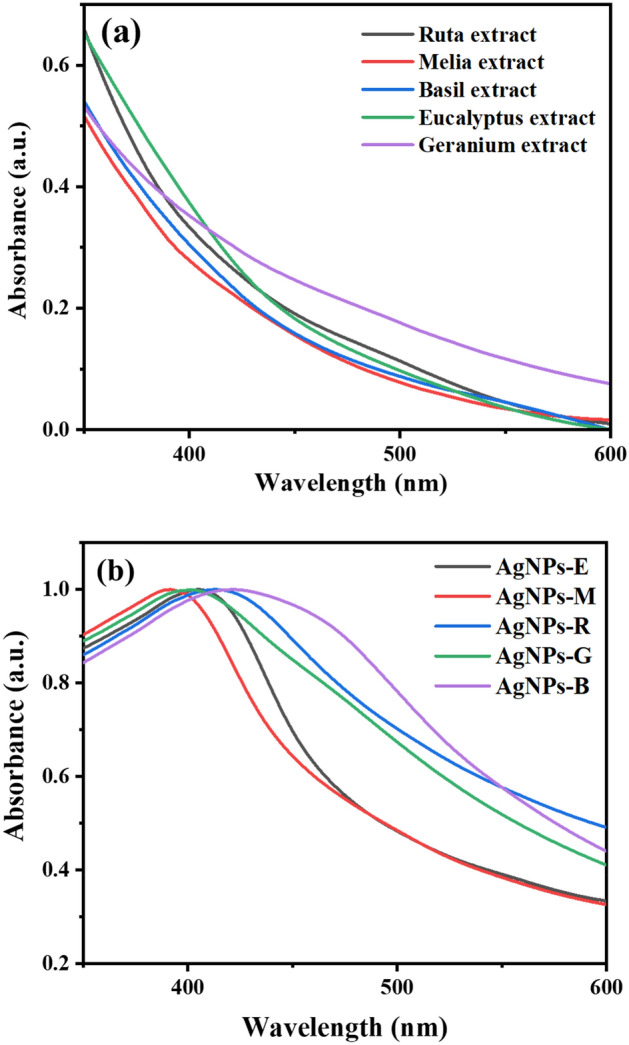
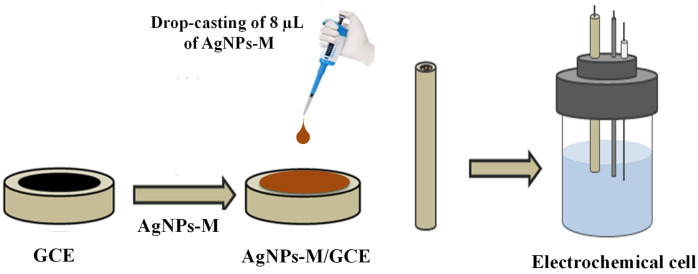
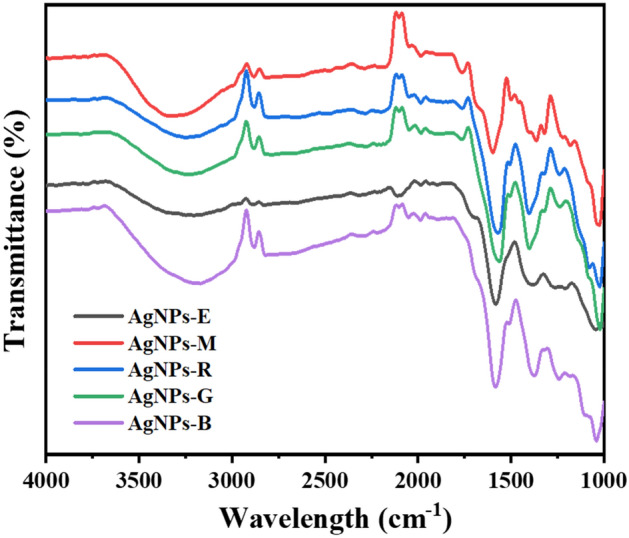
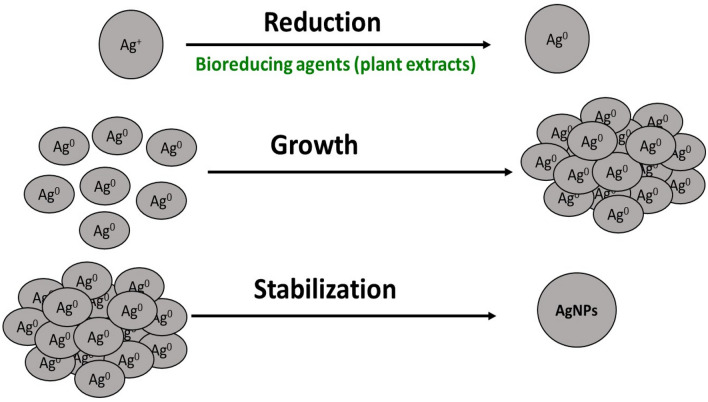
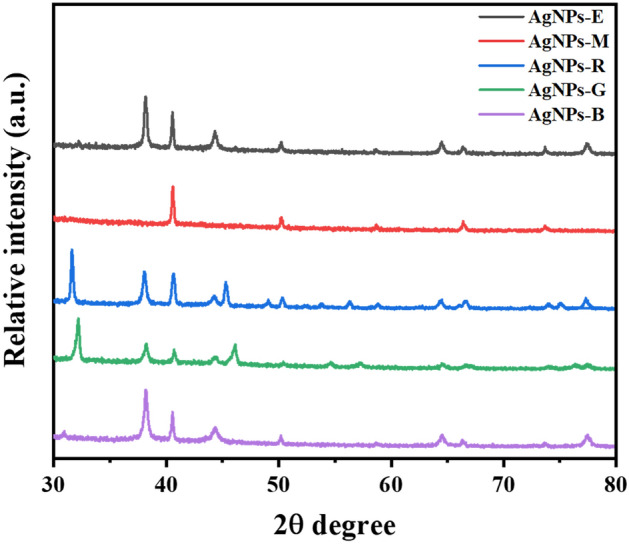
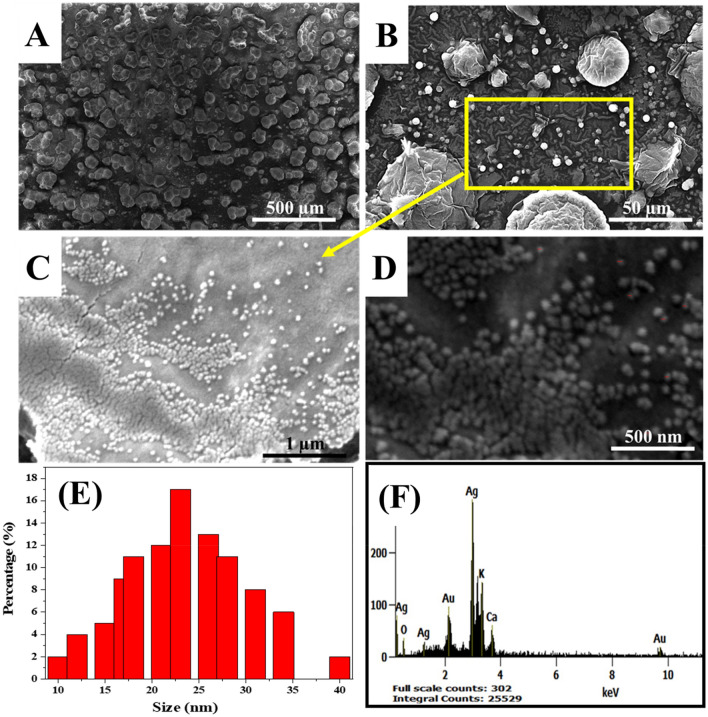
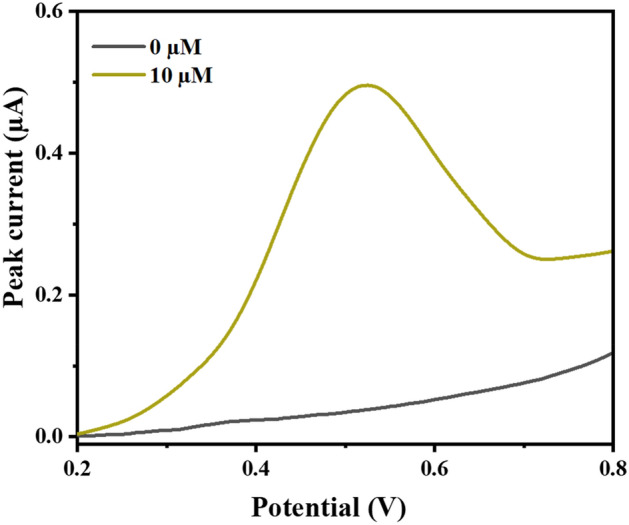
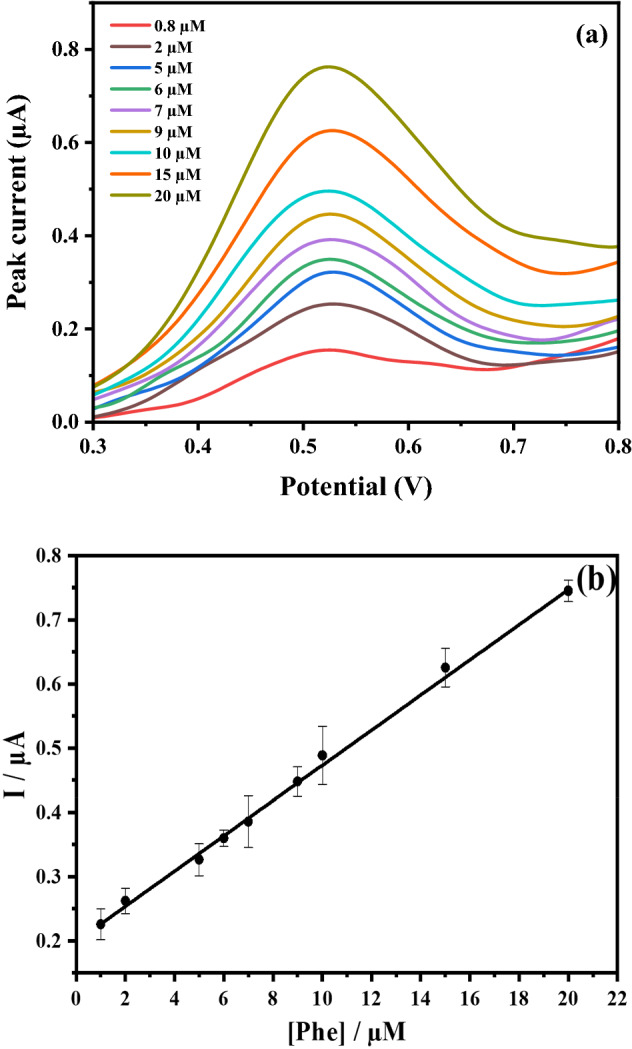
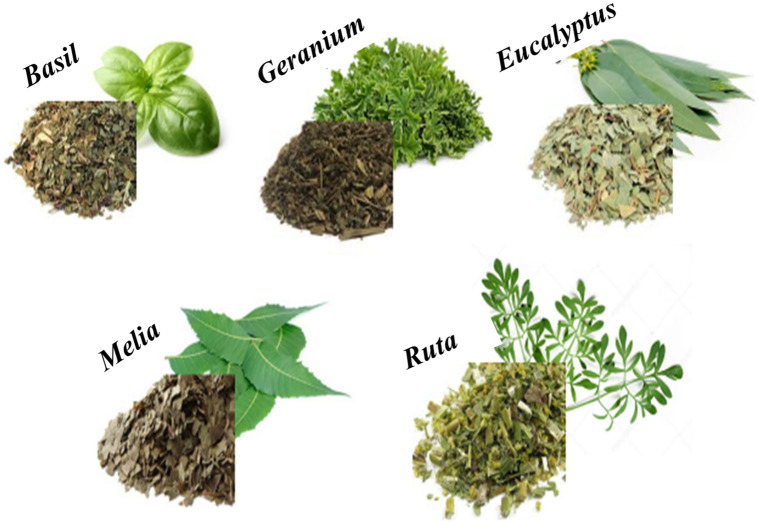
The production of environmentally friendly silver nanoparticles (AgNPs) has aroused the interest of the scientific community due to their wide applications mainly in the field of environmental pollution detection and water quality monitoring. Here, for the first time, five plant leaf extracts were used for the synthesis of AgNPs such as Basil, Geranium, Eucalyptus, Melia, and Ruta by a simple and eco-friendly method. Stable AgNPs were obtained by adding a silver nitrate (AgNO) solution with the leaves extract as reducers, stabilizers and cappers. Only, within ten minutes of reaction, the yellow mixture changed to brown due to the reduction of Ag ions to Ag atoms. The optical, structural, and morphology characteristics of synthesized AgNPs were determined using a full technique like UV-visible spectroscopy, FTIR spectrum, XRD, EDX spectroscopy, and the SEM. Thus, Melia azedarach was found to exhibit smaller nanoparticles (AgNPs-M), which would be interesting for electrochemical application. So, a highly sensitive electrochemical sensor based on AgNPs-M modified GCE for phenol determination in water samples was developed, indicating that the AgNPs-M displayed good electrocatalytic activity. The developed sensor showed good sensing performances: a high sensitivity, a low LOD of 0.42 µM and good stability with a lifetime of about one month, as well as a good selectivity towards BPA and CC (with a deviation less than 10%) especially for nanoplastics analysis in the water contained in plastics bottles. The obtained results are repeatable and reproducible with RSDs of 5.49% and 3.18% respectively. Besides, our developed sensor was successfully applied for the determination of phenol in tap and mineral water samples. The proposed new approach is highly recommended to develop a simple, cost effective, ecofriendly, and highly sensitive sensor for the electrochemical detection of phenol which can further broaden the applications of green silver NPs.
环保型银纳米粒子(AgNPs)的生产因其在环境污染检测和水质监测等领域的广泛应用而引起了科学界的兴趣。在这里,我们首次使用 Basil、Geranium、Eucalyptus、Melia 和 Ruta 等五种植物叶提取物,通过简单且环保的方法合成 AgNPs。通过将硝酸银(AgNO)溶液与叶提取物作为还原剂、稳定剂和封端剂混合,得到稳定的 AgNPs。仅在十分钟的反应时间内,由于 Ag 离子还原为 Ag 原子,黄色混合物就变成了棕色。使用全技术如紫外可见光谱、FTIR 光谱、XRD、EDX 光谱和 SEM 来确定合成 AgNPs 的光学、结构和形态特征。因此,发现楝树表现出较小的纳米粒子(AgNPs-M),这对于电化学应用很有趣。因此,开发了一种基于 AgNPs-M 修饰 GCE 的高度灵敏电化学传感器,用于测定水样中的苯酚,表明 AgNPs-M 显示出良好的电催化活性。所开发的传感器具有良好的传感性能:高灵敏度、低 LOD(0.42µM)和良好的稳定性,寿命约为一个月,对 BPA 和 CC(偏差小于 10%)具有良好的选择性,特别是对塑料瓶中含有的水中的纳米塑料进行分析。得到的结果具有可重复性和重现性,RSD 分别为 5.49%和 3.18%。此外,我们开发的传感器成功应用于测定自来水中和矿泉水样品中的苯酚。该新方法高度推荐用于开发简单、经济高效、环保且对苯酚电化学检测具有高灵敏度的传感器,可进一步拓宽绿色银纳米粒子的应用。