Wang Ariel, Valdez-Jasso Daniela
Bioengineering Department, University of California San Diego, La Jolla, CA USA.
Biophys Rev. 2021 Sep 2;13(5):747-756. doi: 10.1007/s12551-021-00828-3. eCollection 2021 Oct.
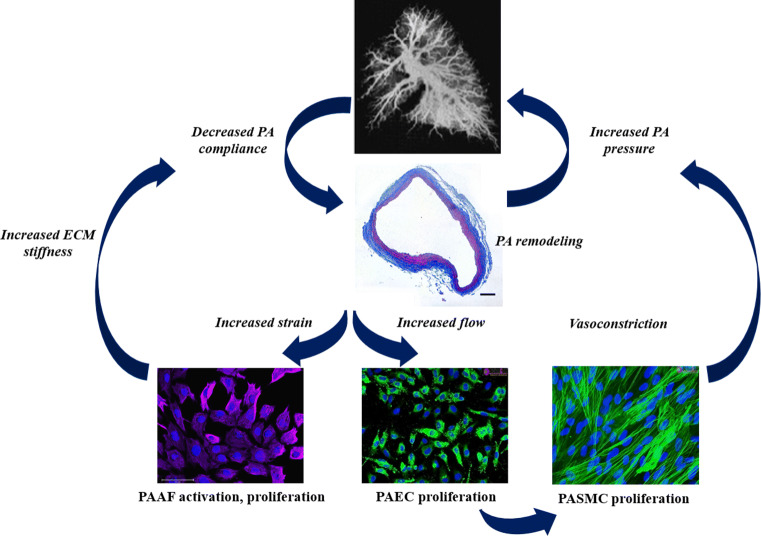
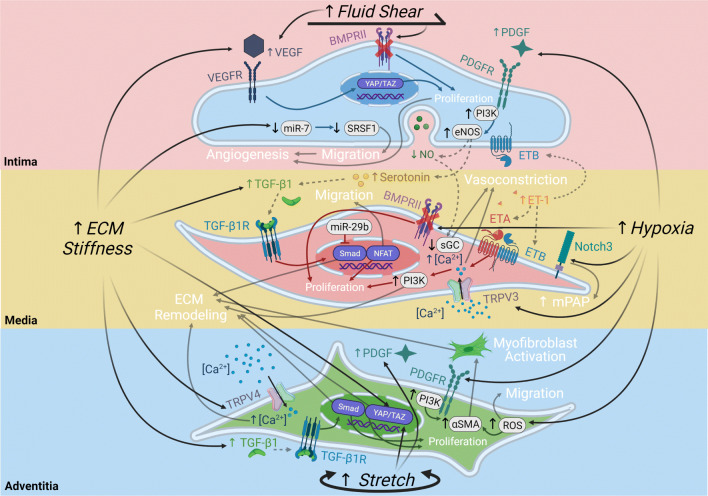
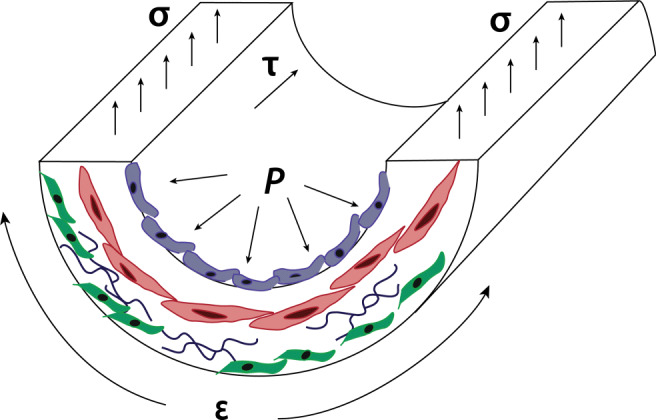
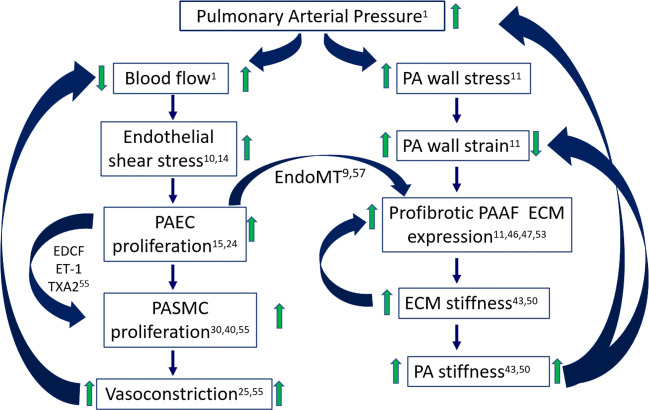
Pulmonary arterial hypertension (PAH) is a vasculopathy characterized by sustained elevated pulmonary arterial pressures in which the pulmonary vasculature undergoes significant structural and functional remodeling. To better understand disease mechanisms, in this review article we highlight recent insights into the regulation of pulmonary arterial cells by mechanical cues associated with PAH. Specifically, the mechanobiology of pulmonary arterial endothelial cells (PAECs), smooth muscle cells (PASMCs) and adventitial fibroblasts (PAAFs) has been investigated in vivo, in vitro, and in silico. Increased pulmonary arterial pressure increases vessel wall stress and strain and endothelial fluid shear stress. These mechanical cues promote vasoconstriction and fibrosis that contribute further to hypertension and alter the mechanical milieu and regulation of pulmonary arterial cells.
肺动脉高压(PAH)是一种血管病变,其特征是肺动脉压力持续升高,在此过程中肺血管会经历显著的结构和功能重塑。为了更好地理解疾病机制,在这篇综述文章中,我们重点介绍了与PAH相关的机械信号对肺动脉细胞调节的最新见解。具体而言,已经在体内、体外和计算机模拟中研究了肺动脉内皮细胞(PAECs)、平滑肌细胞(PASMCs)和外膜成纤维细胞(PAAFs)的力学生物学。肺动脉压力升高会增加血管壁的应力和应变以及内皮流体剪切应力。这些机械信号会促进血管收缩和纤维化,进而导致高血压,并改变肺动脉细胞的力学环境和调节。