Lima Giscard, Kolliari-Turner Alexander, Malinsky Fernanda Rossell, Guppy Fergus M, Martin Renan Paulo, Wang Guan, Voss Sven Christian, Georgakopoulos Costas, Borrione Paolo, Pigozzi Fabio, Pitsiladis Yannis
Department of Movement, Human and Health Sciences, University of Rome "Foro Italico", Rome, Italy.
School of Sport and Health Sciences, University of Brighton, Eastbourne, United Kingdom.
Front Mol Biosci. 2021 Oct 26;8:728273. doi: 10.3389/fmolb.2021.728273. eCollection 2021.
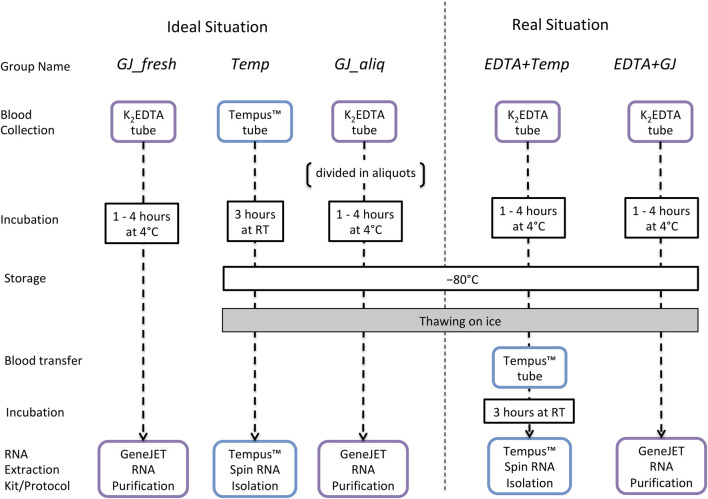
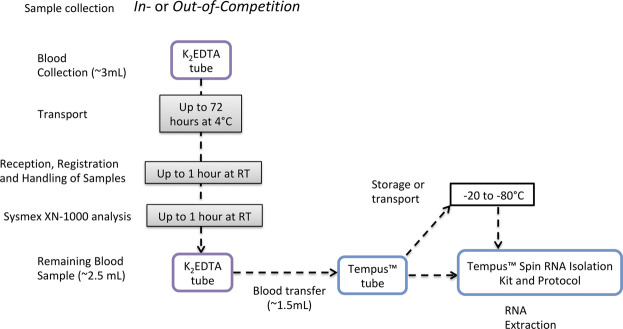
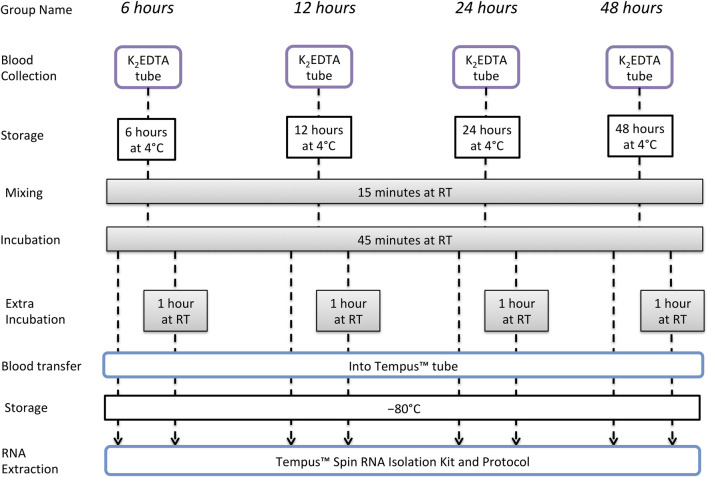
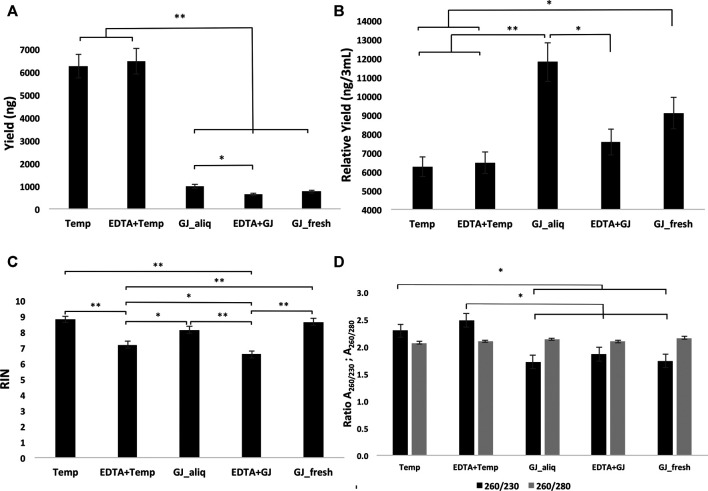
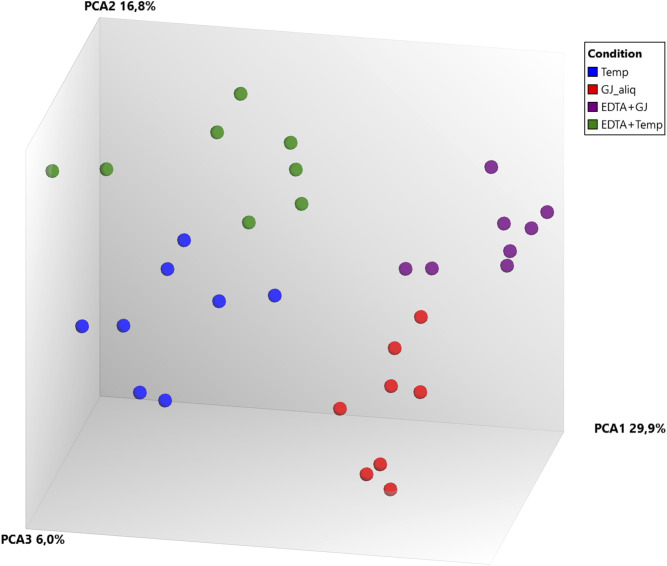
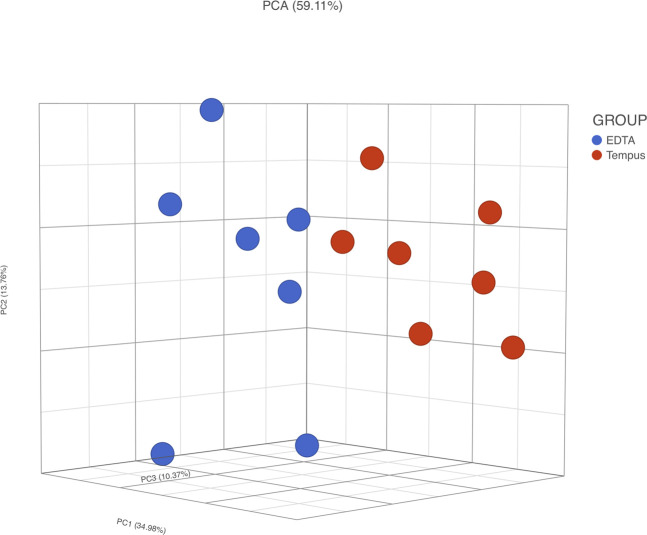
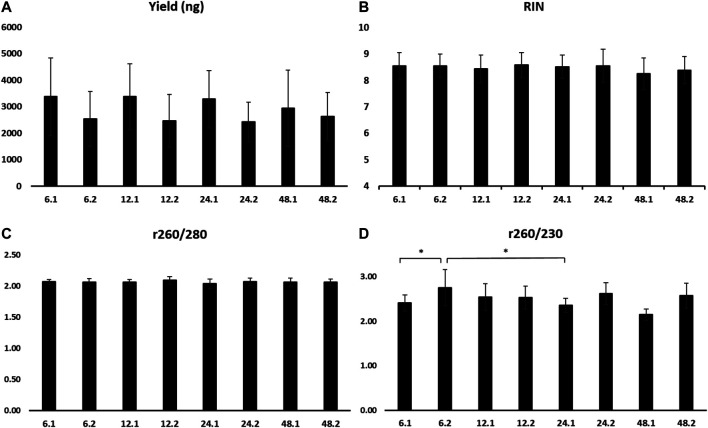
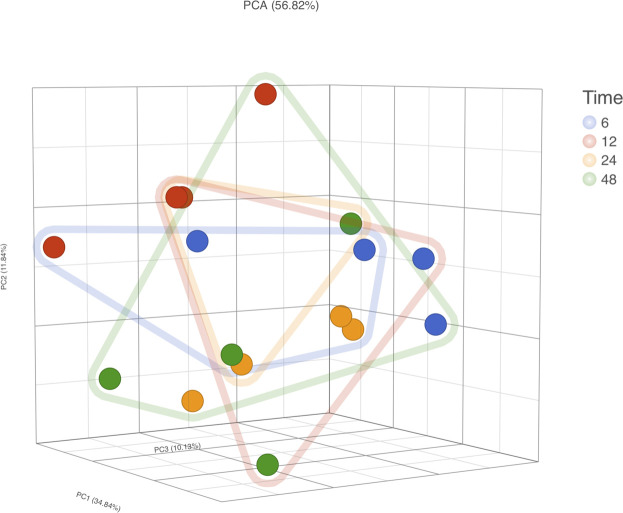
Recombinant human erythropoietin (rHuEPO) administration studies involving transcriptomic approaches have demonstrated a gene expression signature that could aid blood doping detection. However, current anti-doping testing does not involve collecting whole blood into tubes with RNA preservative. This study investigated if whole blood in long-term storage and whole blood left over from standard hematological testing in short-term storage could be used for transcriptomic analysis despite lacking RNA preservation. Whole blood samples were collected from twelve and fourteen healthy nonathletic males, for long-term and short-term storage experiments. Long-term storage involved whole blood collected into Tempus™ tubes and KEDTA tubes and subjected to long-term (i.e., ‒80°C) storage and RNA extracted. Short-term storage involved whole blood collected into KEDTA tubes and stored at 4°C for 6‒48 h and then incubated at room temperature for 1 and 2 h prior to addition of RNA preservative. RNA quantity, purity, and integrity were analyzed in addition to RNA-Seq using the MGI DNBSEQ-G400 on RNA from both the short- and long-term storage studies. Genes presenting a fold change (FC) of >1.1 or < ‒1.1 with ≤ 0.05 for each comparison were considered differentially expressed. Microarray analysis using the Affymetrix GeneChip® Human Transcriptome 2.0 Array was additionally conducted on RNA from the short-term study with a false discovery ratio (FDR) of ≤0.05 and an FC of >1.1 or < ‒1.1 applied to identify differentially expressed genes. RNA quantity, purity, and integrity from whole blood subjected to short- and long-term storage were sufficient for gene expression analysis. Long-term storage: when comparing blood tubes with and without RNA preservation 4,058 transcripts (6% of coding and non-coding transcripts) were differentially expressed using microarray and 658 genes (3.4% of mapped genes) were differentially expressed using RNA-Seq. Short-term storage: mean RNA integrity and yield were not significantly different at any of the time points. RNA-Seq analysis revealed a very small number of differentially expressed genes (70 or 1.37% of mapped genes) when comparing samples stored between 6 and 48 h without RNA preservative. None of the genes previously identified in rHuEPO administration studies were differently expressed in either long- or short-term storage experiments. RNA quantity, purity, and integrity were not significantly compromised from short- or long-term storage in blood storage tubes lacking RNA stabilization, indicating that transcriptomic analysis could be conducted using anti-doping samples collected or biobanked without RNA preservation.
涉及转录组学方法的重组人促红细胞生成素(rHuEPO)给药研究已经证明了一种基因表达特征,这可能有助于血液兴奋剂检测。然而,目前的反兴奋剂检测并不涉及将全血收集到含有RNA防腐剂的试管中。本研究调查了长期储存的全血以及短期储存的标准血液学检测剩余的全血,尽管缺乏RNA保存,是否可用于转录组分析。从12名和14名健康非运动员男性中采集全血样本,分别用于长期和短期储存实验。长期储存包括将全血收集到Tempus™管和KEDTA管中,进行长期(即-80°C)储存并提取RNA。短期储存包括将全血收集到KEDTA管中,在4°C下储存6至48小时,然后在添加RNA防腐剂之前在室温下孵育1和2小时。除了使用MGI DNBSEQ-G400对来自短期和长期储存研究的RNA进行RNA测序外,还分析了RNA的数量、纯度和完整性。每次比较中,折叠变化(FC)>1.1或<-1.1且P≤0.05的基因被认为是差异表达的。另外,对短期研究的RNA进行了使用Affymetrix GeneChip®人类转录组2.0阵列的微阵列分析,错误发现率(FDR)≤0.05且FC>1.1或<-1.1用于鉴定差异表达基因。短期和长期储存的全血的RNA数量、纯度和完整性足以进行基因表达分析。长期储存:在比较有无RNA保存的血样管时,使用微阵列分析有4058个转录本(占编码和非编码转录本的6%)差异表达,使用RNA测序有658个基因(占映射基因的3.4%)差异表达。短期储存:在任何时间点,平均RNA完整性和产量均无显著差异。在比较未添加RNA防腐剂储存6至48小时的样本时,RNA测序分析显示差异表达基因数量非常少(70个或占映射基因的1.37%)。在rHuEPO给药研究中先前鉴定的基因在长期或短期储存实验中均无差异表达。在缺乏RNA稳定化的血样储存管中,短期或长期储存并未显著损害RNA的数量、纯度和完整性,这表明可以使用未添加RNA保存而收集或生物储存的反兴奋剂样本进行转录组分析。