Faiss Raphael, Saugy Jonas, Zollinger Alix, Robinson Neil, Schuetz Frederic, Saugy Martial, Garnier Pierre-Yves
Research and Expertise in Anti-Doping Sciences, Institute of Sport Sciences, University of Lausanne, Lausanne, Switzerland.
Bioinformatics Core Facility, SIB Swiss Institute of Bioinformatics, Lausanne, Switzerland.
Front Physiol. 2020 Feb 25;11:160. doi: 10.3389/fphys.2020.00160. eCollection 2020.
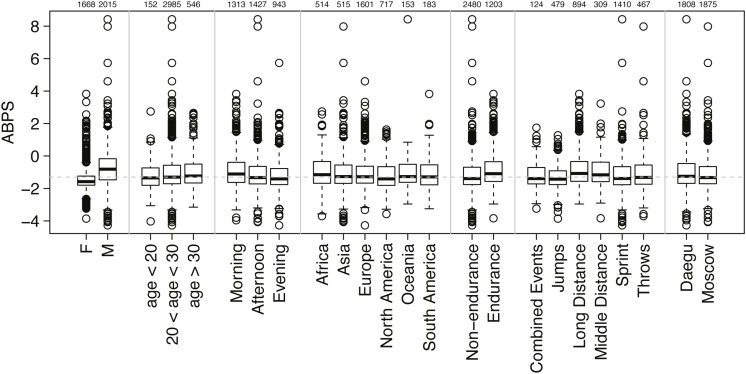
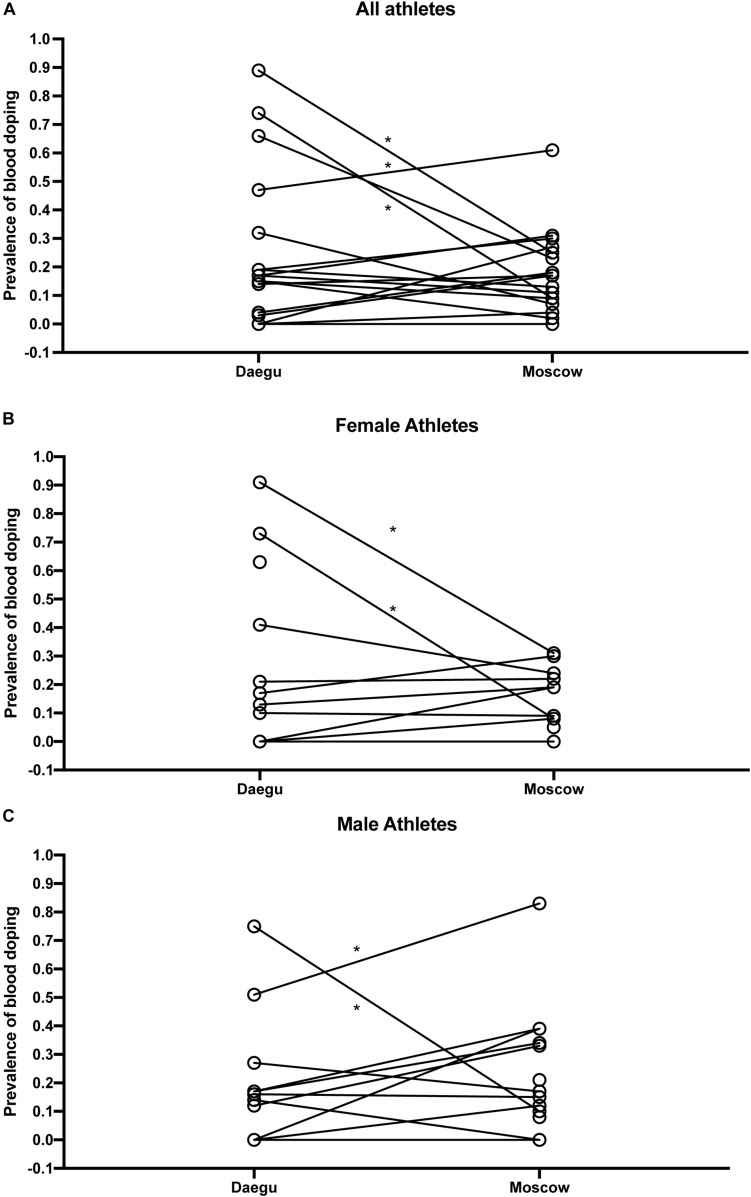
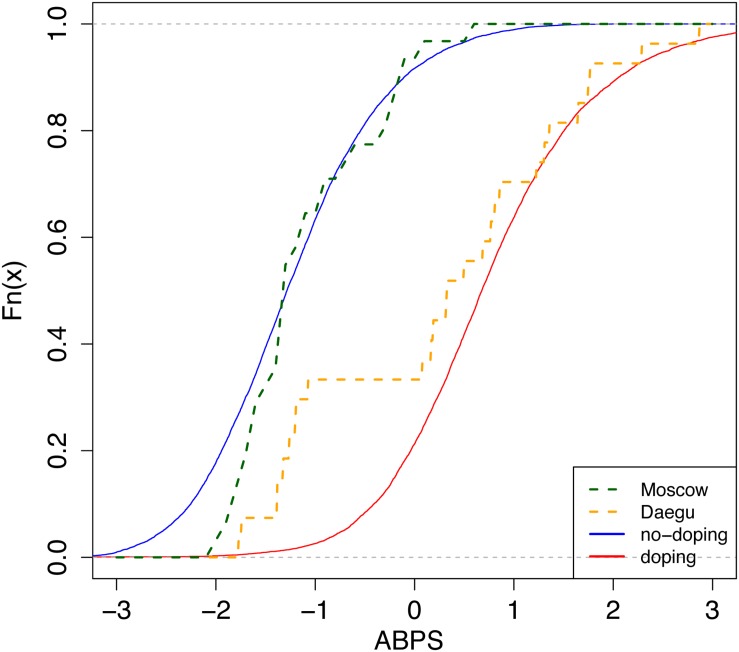
In elite sport, the Athlete Biological Passport (ABP) was invented to tackle cheaters by monitoring closely changes in biological parameters, flagging atypical variations. The hematological module of the ABP was indeed adopted in 2011 by World Athletics (WA). This study estimates the prevalence of blood doping based on hematological parameters in a large cohort of track and field athletes measured at two international major events (2011 and 2013 WA World Championships) with a hypothesized decrease in prevalence due to the ABP introduction. A total of 3683 blood samples were collected and analyzed from all participating athletes originating from 209 countries. The estimate of doping prevalence was obtained by using a Bayesian network with seven variables, as well as "blood doping" as a variable mimicking doping with low-doses of recombinant human erythropoietin (rhEPO), to generate reference cumulative distribution functions (CDFs) for the Abnormal Blood Profile Score (ABPS) from the ABP. Our results from robust hematological parameters indicate an estimation of an overall blood doping prevalence of 18% in 2011 and 15% in 2013 (non-significant difference) in average in endurance athletes [95% Confidence Interval (CI) 14-22 and 12-19% for 2011 and 2013, respectively]. A higher prevalence was observed in female athletes (22%, CI 16-28%) than in male athletes (15%, CI 9-20%) in 2011. In conclusion, this study presents the first comparison of blood doping prevalence in elite athletes based on biological measurements from major international events that may help scientists and experts to use the ABP in a more efficient and deterrent way.
在精英体育领域,运动员生物护照(ABP)应运而生,旨在通过密切监测生物参数的变化、标记异常变异来对付作弊者。ABP的血液学模块确实在2011年被世界田径(WA)采用。本研究基于在两项国际重大赛事(2011年和2013年WA世界锦标赛)中测量的大量田径运动员的血液学参数,估计血液兴奋剂使用的流行率,并假设由于ABP的引入,流行率会下降。共收集并分析了来自209个国家的所有参赛运动员的3683份血样。通过使用一个具有七个变量的贝叶斯网络以及将“血液兴奋剂使用”作为一个模拟低剂量重组人促红细胞生成素(rhEPO)兴奋剂使用的变量,来生成ABP异常血液 profile 评分(ABPS)的参考累积分布函数(CDF),从而获得兴奋剂使用流行率的估计值。我们从可靠的血液学参数得出的结果表明,耐力运动员中血液兴奋剂使用的总体流行率在2011年估计为18%,在2013年为15%(无显著差异)[2011年和2013年的95%置信区间(CI)分别为14 - 22%和12 - 19%]。2011年,女性运动员的流行率(22%,CI 16 - 28%)高于男性运动员(15%,CI 9 - 20%)。总之,本研究首次基于重大国际赛事的生物测量结果,对精英运动员中血液兴奋剂使用的流行率进行了比较,这可能有助于科学家和专家更有效地利用ABP并起到威慑作用。