Department of Molecular Cell Mechanisms, Medical University of Lodz, Mazowiecka 6/8, 92215 Lodz, Poland.
Int J Mol Sci. 2021 Oct 27;22(21):11607. doi: 10.3390/ijms222111607.
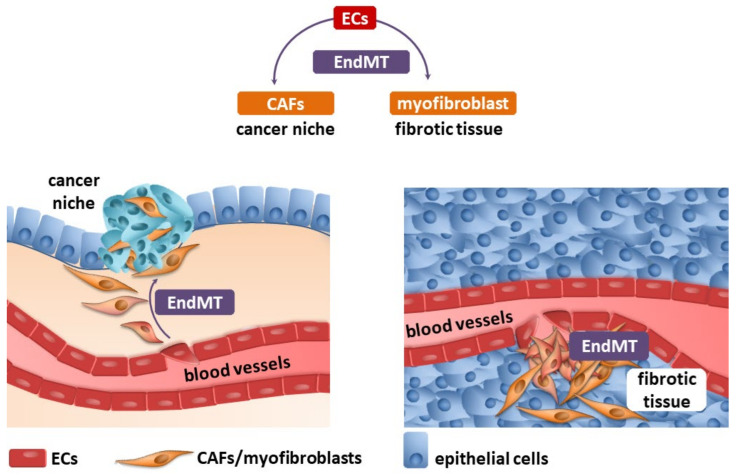
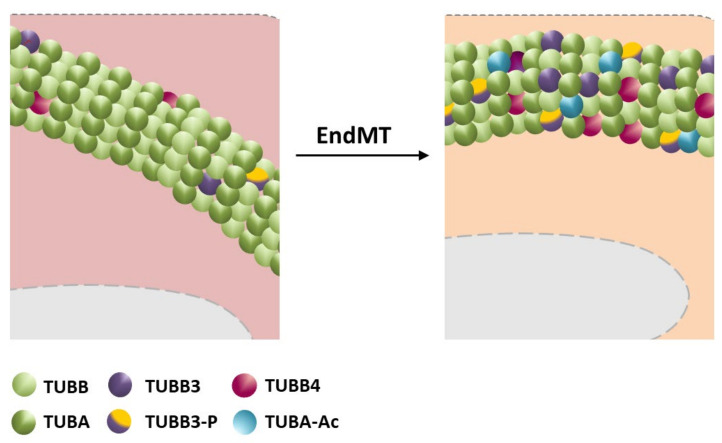
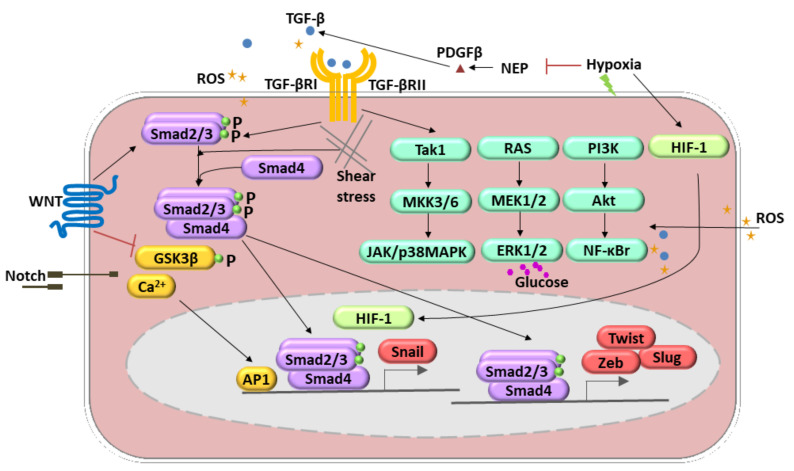
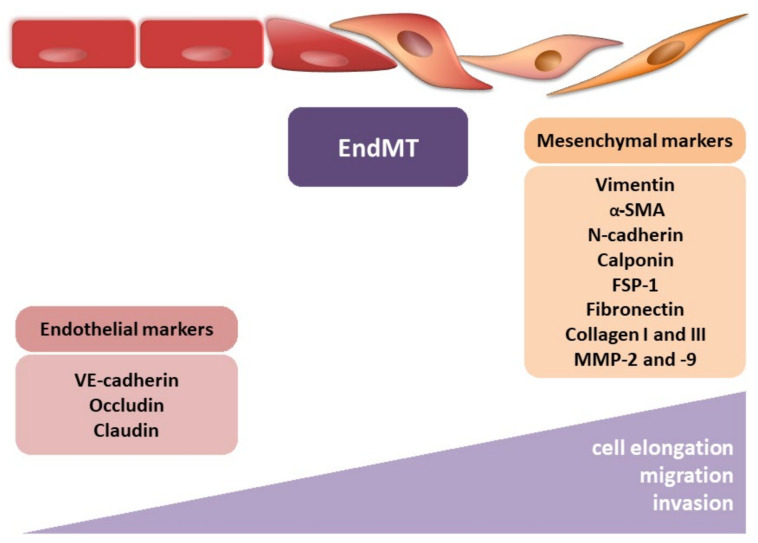
Chronic inflammation promotes endothelial plasticity, leading to the development of several diseases, including fibrosis and cancer in numerous organs. The basis of those processes is a phenomenon called the endothelial-mesenchymal transition (EndMT), which results in the delamination of tightly connected endothelial cells that acquire a mesenchymal phenotype. EndMT-derived cells, known as the myofibroblasts or cancer-associated fibroblasts (CAFs), are characterized by the loss of cell-cell junctions, loss of endothelial markers, and gain in mesenchymal ones. As a result, the endothelium ceases its primary ability to maintain patent and functional capillaries and induce new blood vessels. At the same time, it acquires the migration and invasion potential typical of mesenchymal cells. The observed modulation of cell shape, increasedcell movement, and invasion abilities are connected with cytoskeleton reorganization. This paper focuses on the review of current knowledge about the molecular pathways involved in the modulation of each cytoskeleton element (microfilaments, microtubule, and intermediate filaments) during EndMT and their role as the potential targets for cancer and fibrosis treatment.
慢性炎症促进内皮细胞可塑性,导致包括纤维化和癌症在内的多种疾病在多个器官中发生。这些过程的基础是一种称为内皮-间充质转化(EndMT)的现象,它导致紧密连接的内皮细胞分层,获得间充质表型。EndMT 衍生的细胞,称为肌成纤维细胞或癌症相关成纤维细胞(CAFs),其特征是细胞-细胞连接丧失、内皮标志物丧失和间充质标志物获得。结果,内皮细胞丧失了维持有功能的毛细血管通畅的主要能力,并诱导新的血管生成。同时,它获得了典型的间充质细胞的迁移和侵袭能力。观察到的细胞形状调节、细胞运动增加和侵袭能力与细胞骨架重组有关。本文重点综述了目前关于参与 EndMT 的每个细胞骨架成分(微丝、微管和中间丝)调节的分子途径的知识,以及它们作为癌症和纤维化治疗的潜在靶点的作用。