Infectious Disease Translational Research Program, National University of Singapore, Singapore 119228, Singapore.
Department of Physiology, Yong Loo Lin School of Medicine, National University of Singapore, Singapore 117593, Singapore.
Int J Mol Sci. 2021 Oct 27;22(21):11609. doi: 10.3390/ijms222111609.
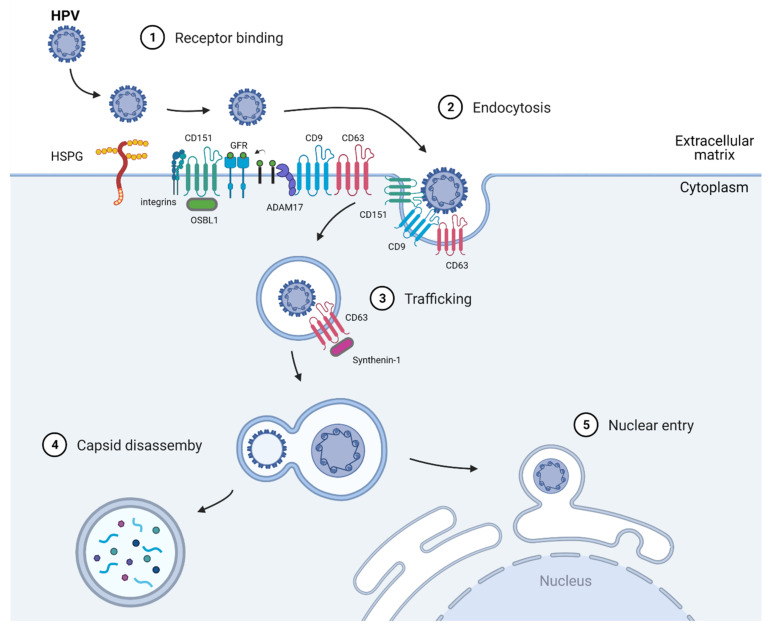
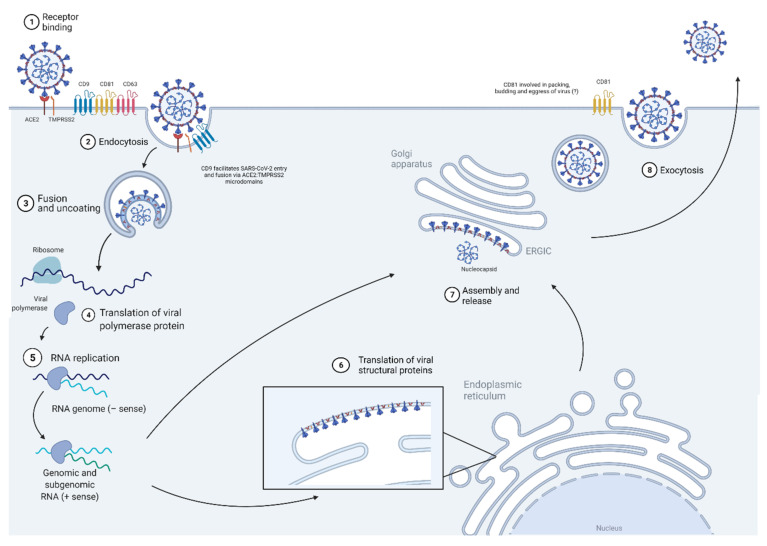
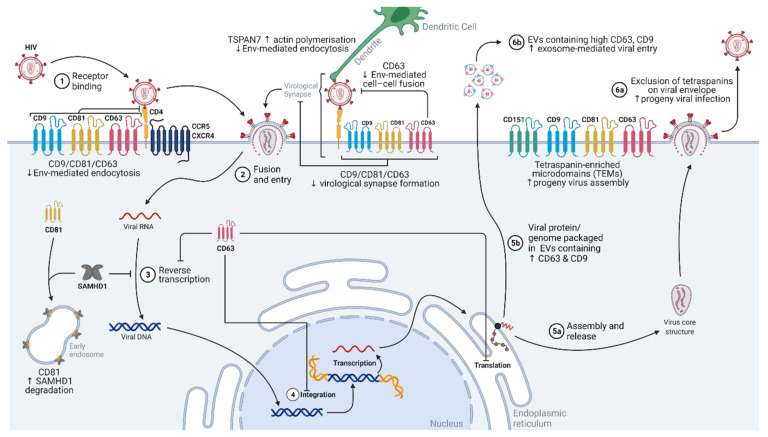
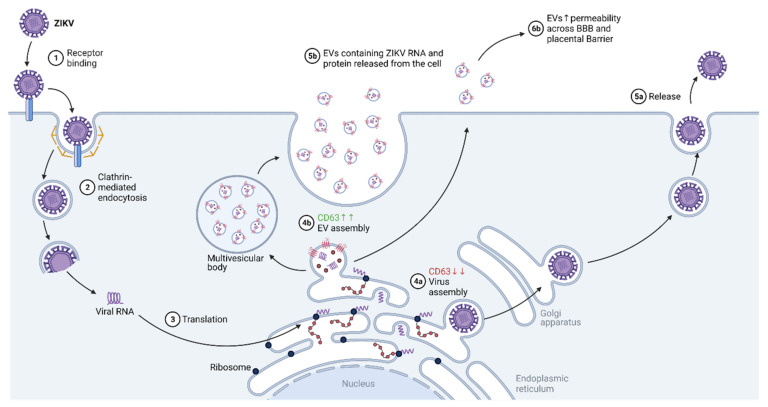
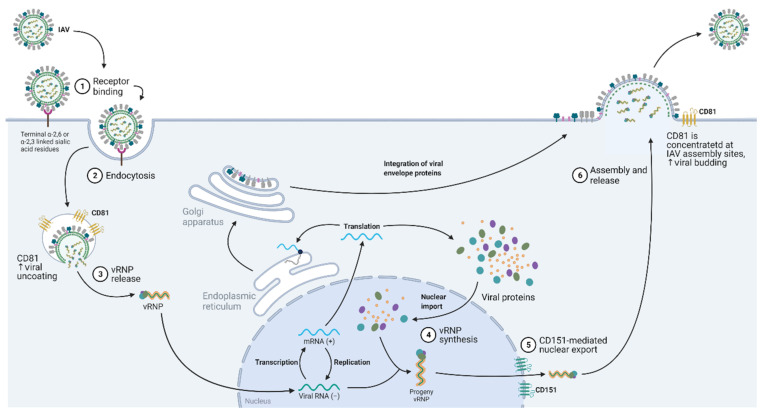
Tetraspanins are transmembrane glycoproteins that have been shown increasing interest as host factors in infectious diseases. In particular, they were implicated in the pathogenesis of both non-enveloped (human papillomavirus (HPV)) and enveloped (human immunodeficiency virus (HIV), Zika, influenza A virus, (IAV), and coronavirus) viruses through multiple stages of infection, from the initial cell membrane attachment to the syncytium formation and viral particle release. However, the mechanisms by which different tetraspanins mediate their effects vary. This review aimed to compare and contrast the role of tetraspanins in the life cycles of HPV, HIV, Zika, IAV, and coronavirus viruses, which cause the most significant health and economic burdens to society. In doing so, a better understanding of the relative contribution of tetraspanins in virus infection will allow for a more targeted approach in the treatment of these diseases.
四跨膜蛋白是一种跨膜糖蛋白,作为宿主因子在传染病中受到越来越多的关注。特别是,它们与非包膜(人乳头瘤病毒(HPV))和包膜(人类免疫缺陷病毒(HIV)、寨卡病毒、甲型流感病毒(IAV)和冠状病毒)病毒的发病机制有关,通过感染的多个阶段,从初始细胞膜附着到合胞体形成和病毒颗粒释放。然而,不同四跨膜蛋白介导其作用的机制不同。本综述旨在比较和对比四跨膜蛋白在 HPV、HIV、寨卡病毒、IAV 和冠状病毒生命周期中的作用,这些病毒给社会带来了最大的健康和经济负担。通过这样做,可以更好地了解四跨膜蛋白在病毒感染中的相对贡献,从而更有针对性地治疗这些疾病。