Institute of Animal Reproduction and Food Research, Polish Academy of Sciences, Tuwima 10, 10-748 Olsztyn, Poland.
Int J Mol Sci. 2021 Oct 29;22(21):11740. doi: 10.3390/ijms222111740.
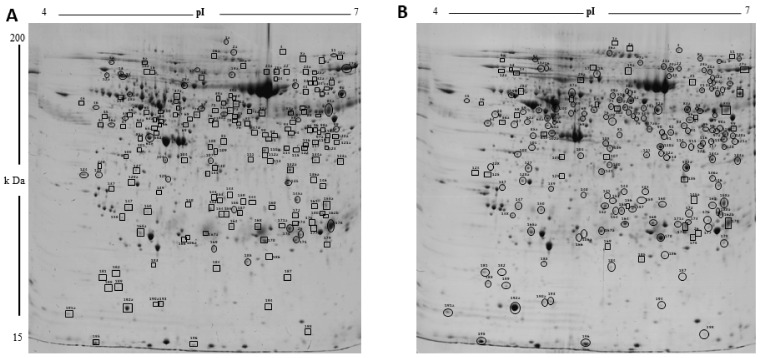
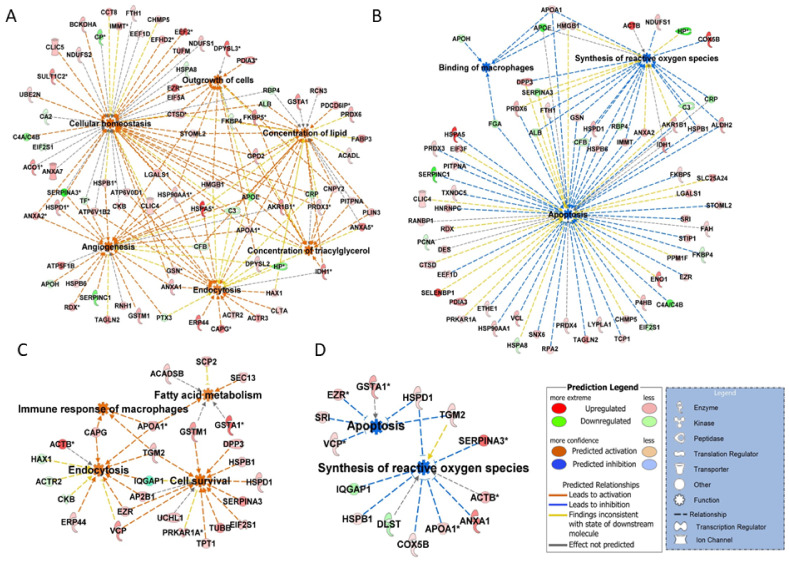
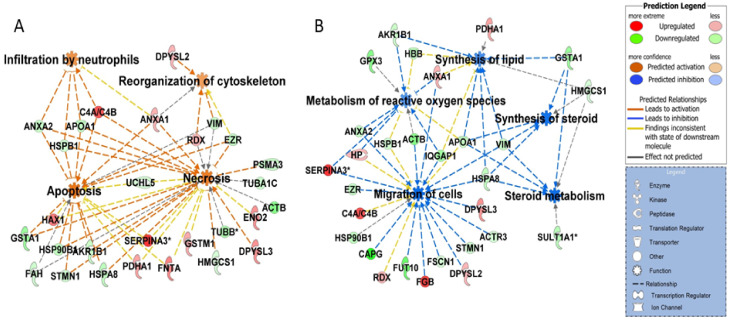
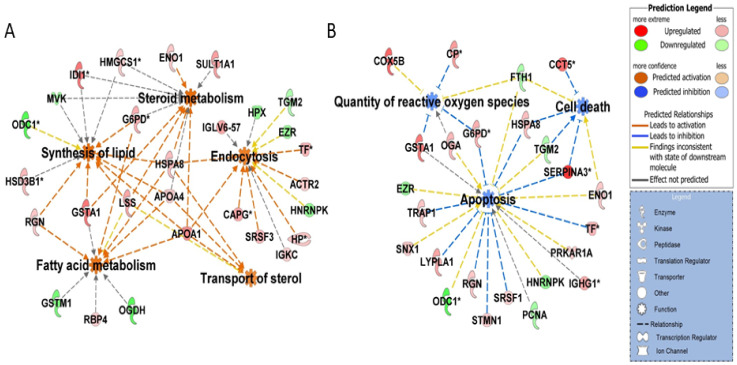
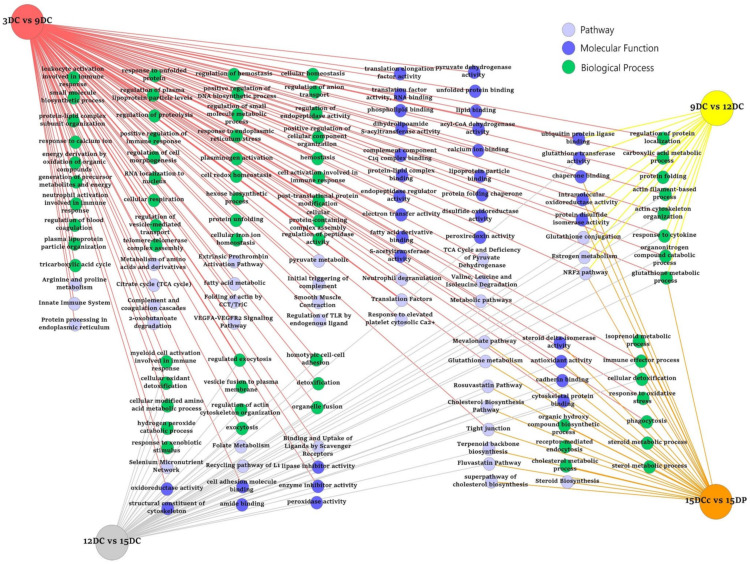
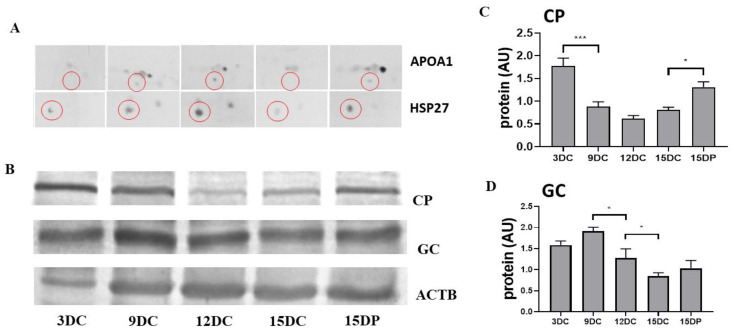
Corpus luteum (CL), a transitory gland, undergoes rapid growth in a limited time to produce progesterone (P4) followed by its regression. A complex molecular signaling is involved in controlling luteal P4 production. In the present study, 2D gel electrophoresis-based proteomics and in silico functional analysis were used to identify changes in key proteins and pathways in CL along the different stages of the estrous cycle as its development progresses from early (Day 3) to mid-luteal phase (Day 9), effective functioning (Day 12) followed by regression (Day 15) or, in the case of pregnancy, rescue of function (Day 15). A total of 273 proteins were identified by MALDI-MS/MS analysis that showed significant changes in abundances at different stages of CL development or regression and rescue. Functional annotation of differentially abundant proteins suggested enrichment of several important pathways and functions during CL development and function maintenance including cell survival, endocytosis, oxidative stress response, estradiol metabolism, and angiogenesis. On the other hand, differentially abundant proteins during CL regression were associated with decreased steroid synthesis and metabolism and increased apoptosis, necrosis, and infiltration of immune cells. Establishment of pregnancy rescues CL from regression by maintaining the expression of proteins that support steroidogenesis as pathways such as the super-pathway of cholesterol biosynthesis, RhoA signaling, and functions such as fatty acid metabolism and sterol transport were enriched in CL of pregnancy. In this study, some novel proteins were identified along CL development that advances our understanding of CL survival and steroidogenesis.
黄体(CL)是一种短暂的腺体,在有限的时间内迅速生长以产生孕激素(P4),随后发生退化。复杂的分子信号参与控制黄体 P4 的产生。在本研究中,我们使用基于 2D 凝胶电泳的蛋白质组学和计算机功能分析来鉴定 CL 中关键蛋白和途径的变化,这些蛋白和途径在发情周期的不同阶段发生变化,因为其从早期(第 3 天)到中期黄体阶段(第 9 天)、有效功能(第 12 天)、随后退化(第 15 天)的发育进展,或者在怀孕的情况下,功能恢复(第 15 天)。通过 MALDI-MS/MS 分析鉴定了 273 种蛋白质,这些蛋白质在 CL 发育或退化和恢复的不同阶段的丰度显示出显著变化。差异丰度蛋白的功能注释表明,在 CL 发育和功能维持期间,包括细胞存活、内吞作用、氧化应激反应、雌二醇代谢和血管生成等几个重要途径和功能都得到了富集。另一方面,CL 退化过程中差异丰度蛋白与类固醇合成和代谢减少以及细胞凋亡、坏死和免疫细胞浸润增加有关。妊娠的建立通过维持支持类固醇生成的蛋白质的表达,使 CL 免于退化,例如胆固醇生物合成的超级途径、RhoA 信号转导以及脂肪酸代谢和固醇转运等途径在妊娠 CL 中得到了富集。在这项研究中,我们鉴定了一些在 CL 发育过程中表达的新蛋白,这加深了我们对 CL 存活和类固醇生成的理解。