Emergency Medicine Department, Derriford Hospital, University Hospitals Plymouth, Plymouth PL6 8DH, UK.
Department of Pediatrics, University of Washington, Seattle, WA 98195, USA.
Int J Mol Sci. 2021 Oct 31;22(21):11826. doi: 10.3390/ijms222111826.
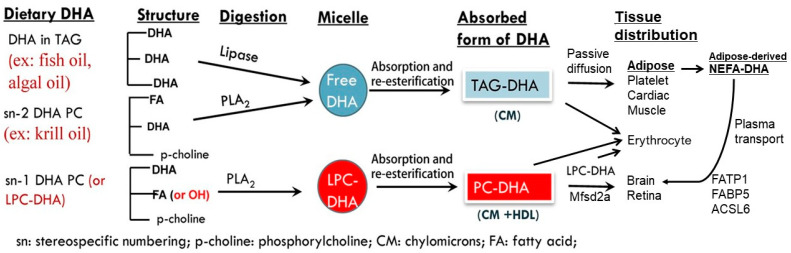
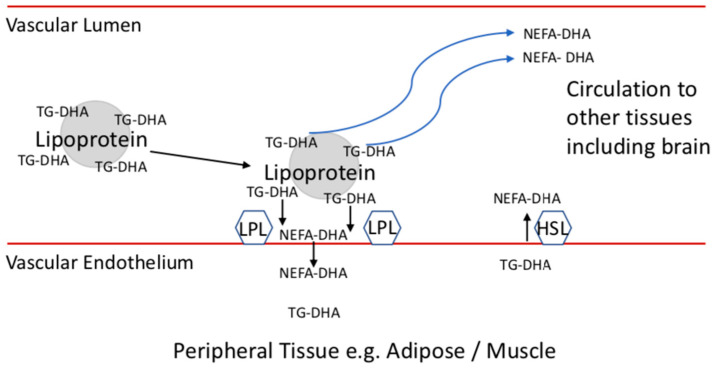
Docosahexaenoic acid (DHA), an omega-3 fatty acid rich in seafood, is linked to Alzheimer's Disease via strong epidemiological and pre-clinical evidence, yet fish oil or other DHA supplementation has not consistently shown benefit to the prevention or treatment of Alzheimer's Disease. Furthermore, autopsy studies of Alzheimer's Disease brain show variable DHA status, demonstrating that the relationship between DHA and neurodegeneration is complex and not fully understood. Recently, it has been suggested that the forms of DHA in the diet and plasma have specific metabolic fates that may affect brain uptake; however, the effect of DHA form on brain uptake is less pronounced in studies of longer duration. One major confounder of studies relating dietary DHA and Alzheimer's Disease may be that adipose tissue acts as a long-term depot of DHA for the brain, but this is poorly understood in the context of neurodegeneration. Future work is required to develop biomarkers of brain DHA and better understand DHA-based therapies in the setting of altered brain DHA uptake to help determine whether brain DHA should remain an important target in the prevention of Alzheimer's Disease.
二十二碳六烯酸(DHA)是一种富含海鲜的ω-3 脂肪酸,有强有力的流行病学和临床前证据表明它与阿尔茨海默病有关,但鱼油或其他 DHA 补充剂并未一致显示出对预防或治疗阿尔茨海默病有益。此外,对阿尔茨海默病大脑的尸检研究显示 DHA 状态存在差异,这表明 DHA 与神经退行性变之间的关系复杂且尚未完全了解。最近,有人提出饮食和血浆中 DHA 的形式具有特定的代谢命运,可能会影响大脑摄取;然而,在持续时间较长的研究中,DHA 形式对大脑摄取的影响并不明显。与饮食 DHA 和阿尔茨海默病相关的研究的一个主要混杂因素可能是脂肪组织是大脑 DHA 的长期储存库,但在神经退行性变的背景下,这一点尚不清楚。未来需要开展工作以开发大脑 DHA 的生物标志物,并更好地了解在改变大脑 DHA 摄取的情况下基于 DHA 的治疗方法,以帮助确定大脑 DHA 是否应仍然是预防阿尔茨海默病的一个重要目标。