OncoPharma Research Group, Center for Health Technology and Services Research (CINTESIS), Rua Doutor Plácido da Costa, 4200-450 Porto, Portugal.
Faculty of Pharmacy, University of Porto, Rua Jorge Viterbo Ferreira, 228, 4050-313 Porto, Portugal.
Int J Mol Sci. 2021 Nov 5;22(21):11984. doi: 10.3390/ijms222111984.
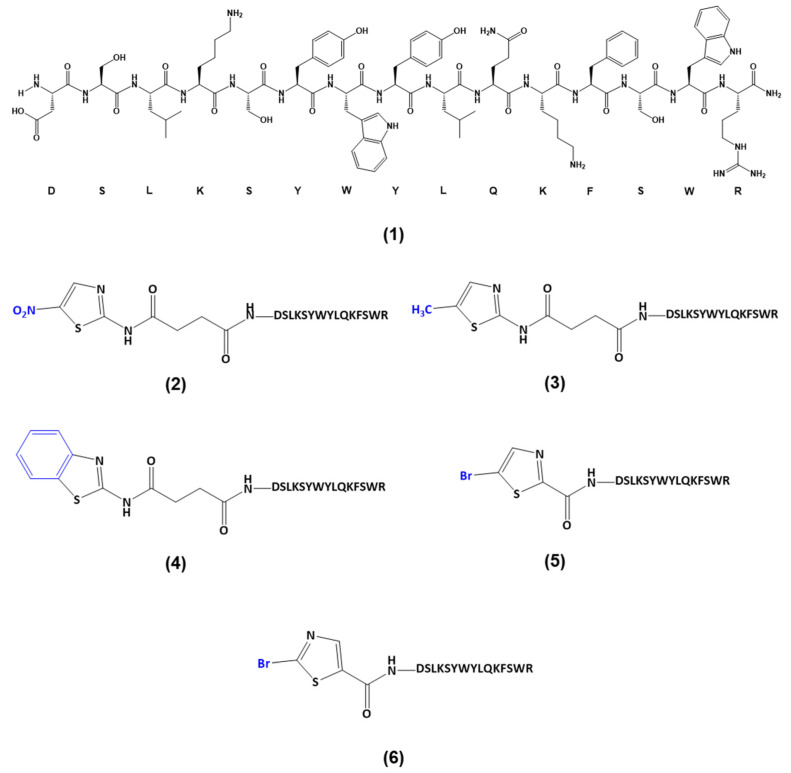
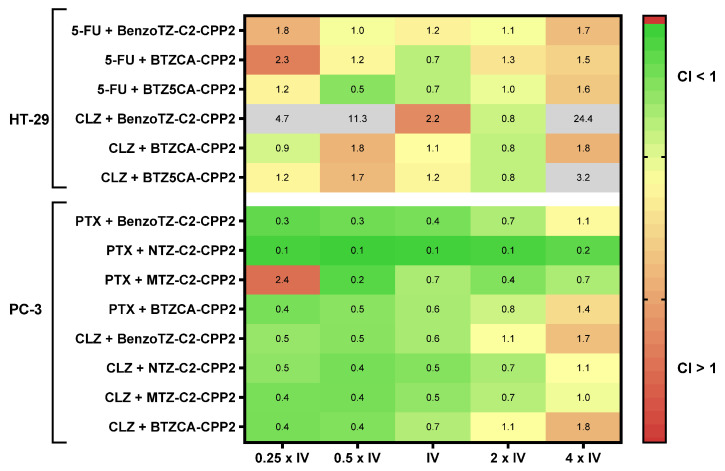
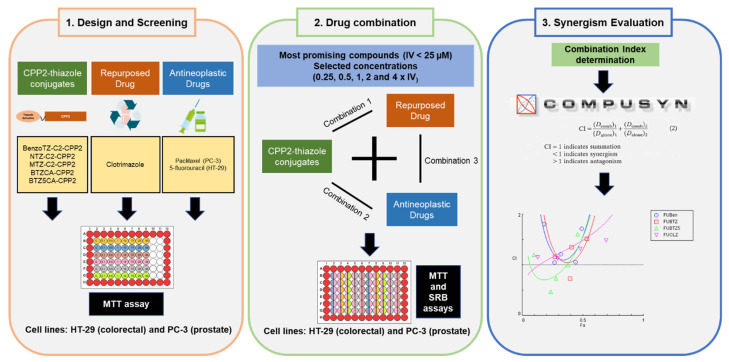
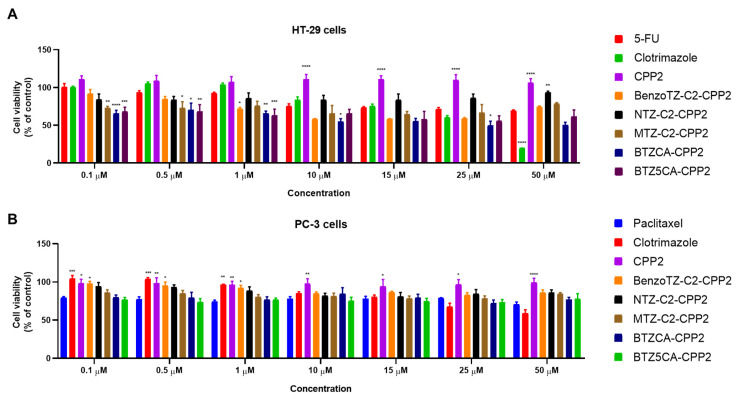
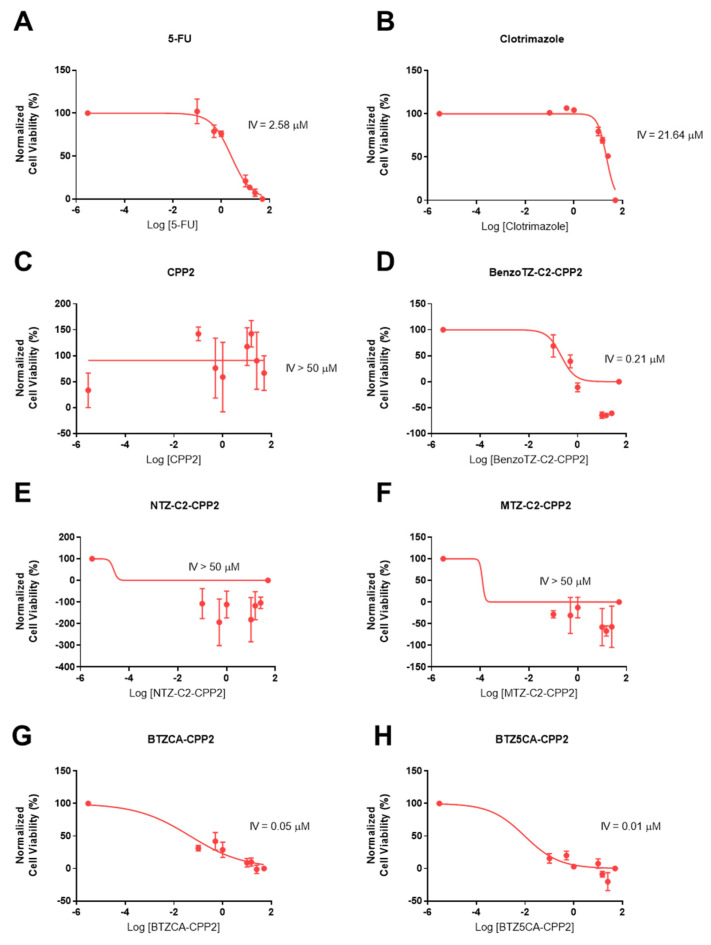
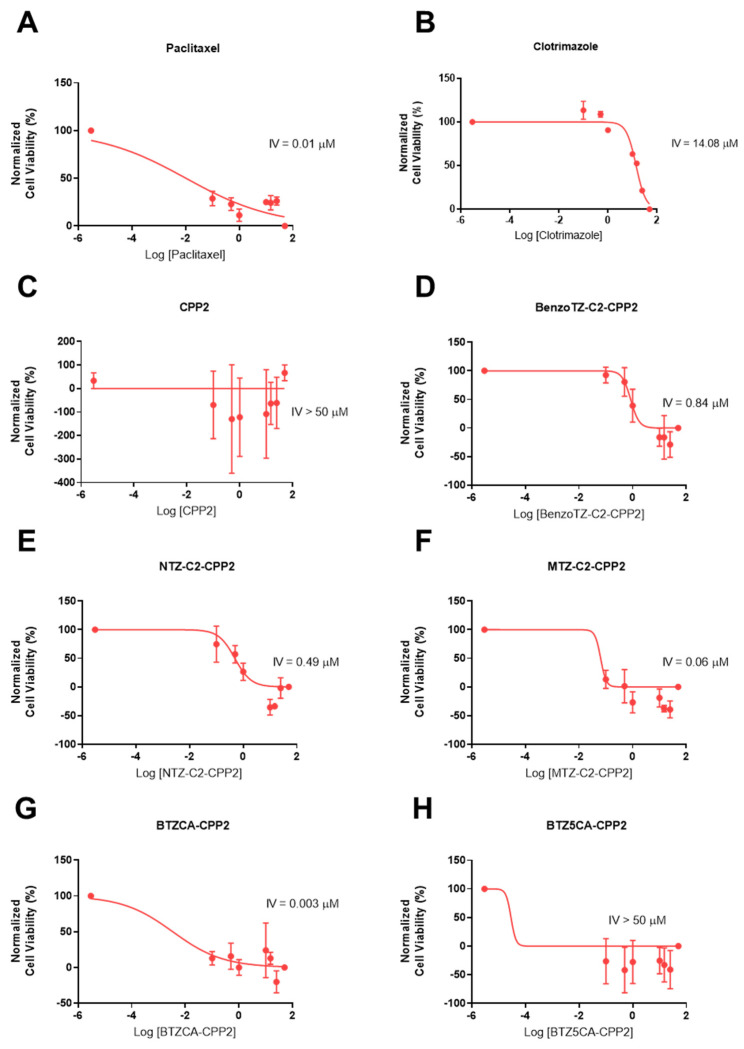
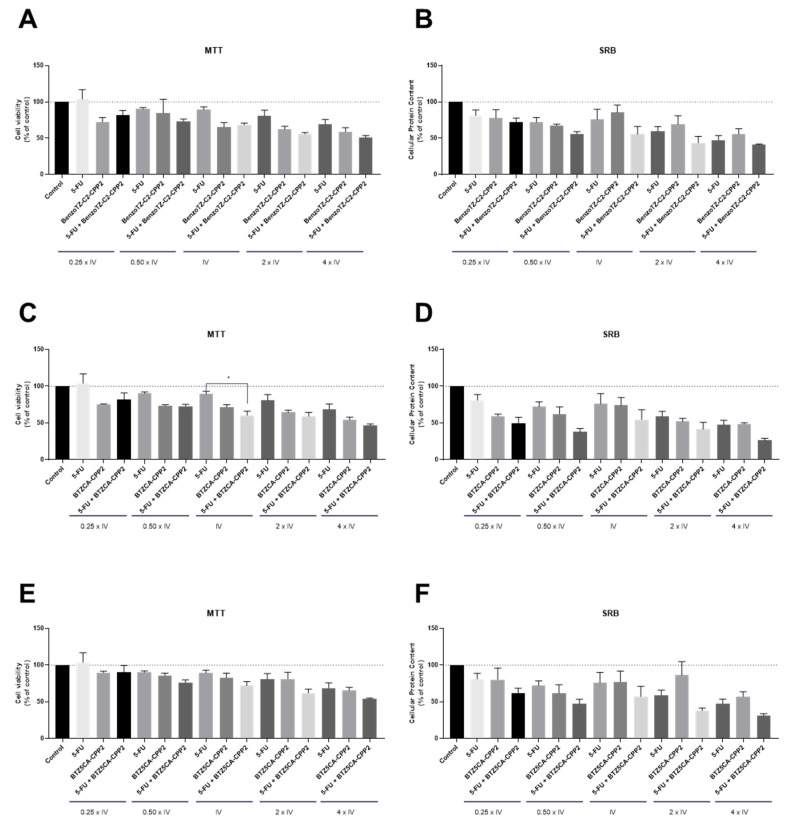
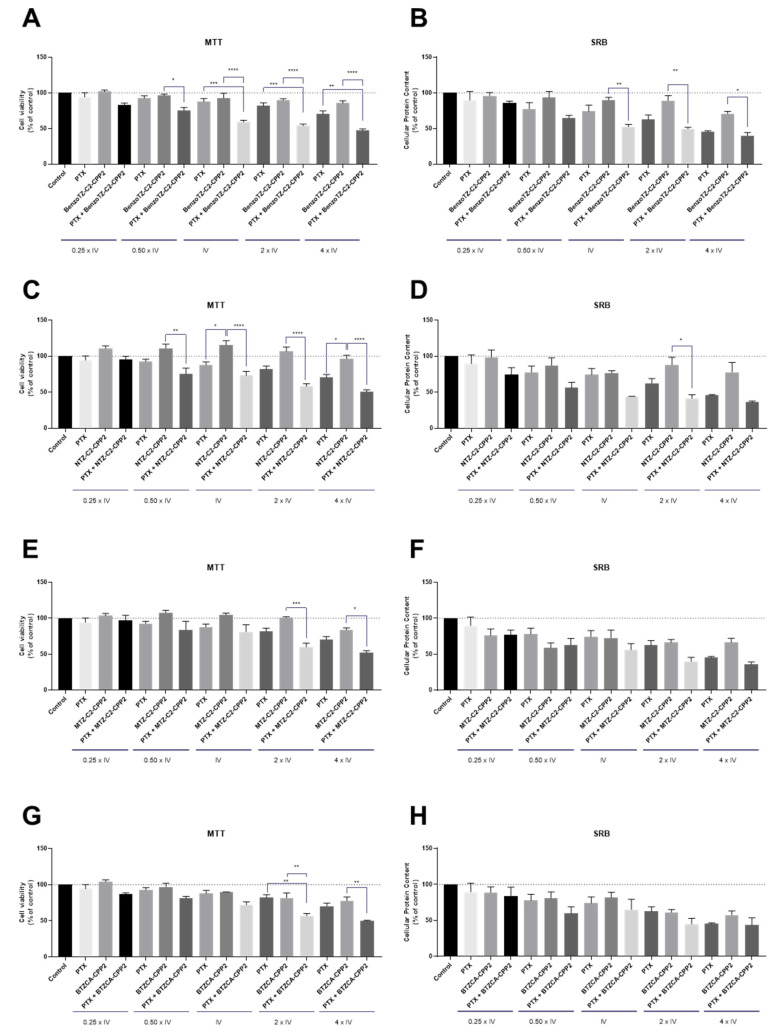
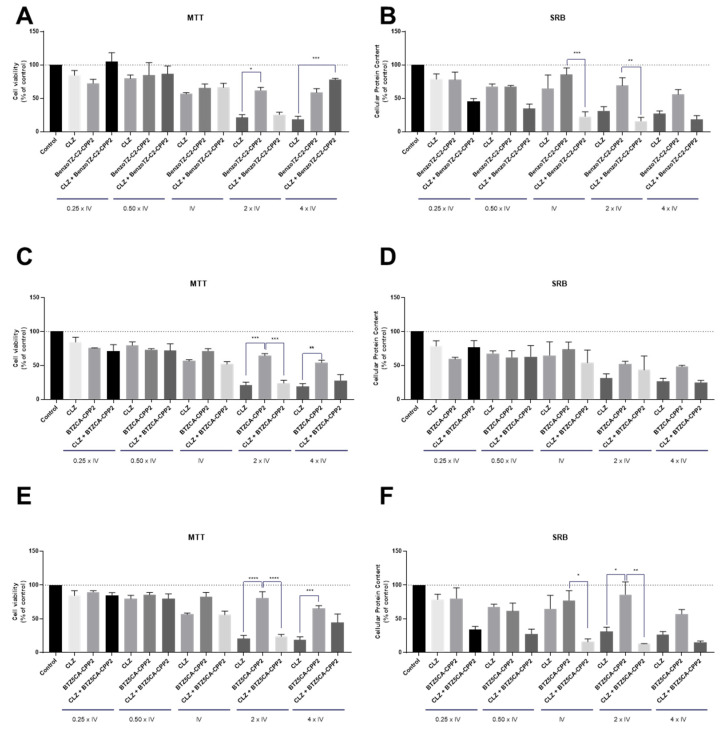
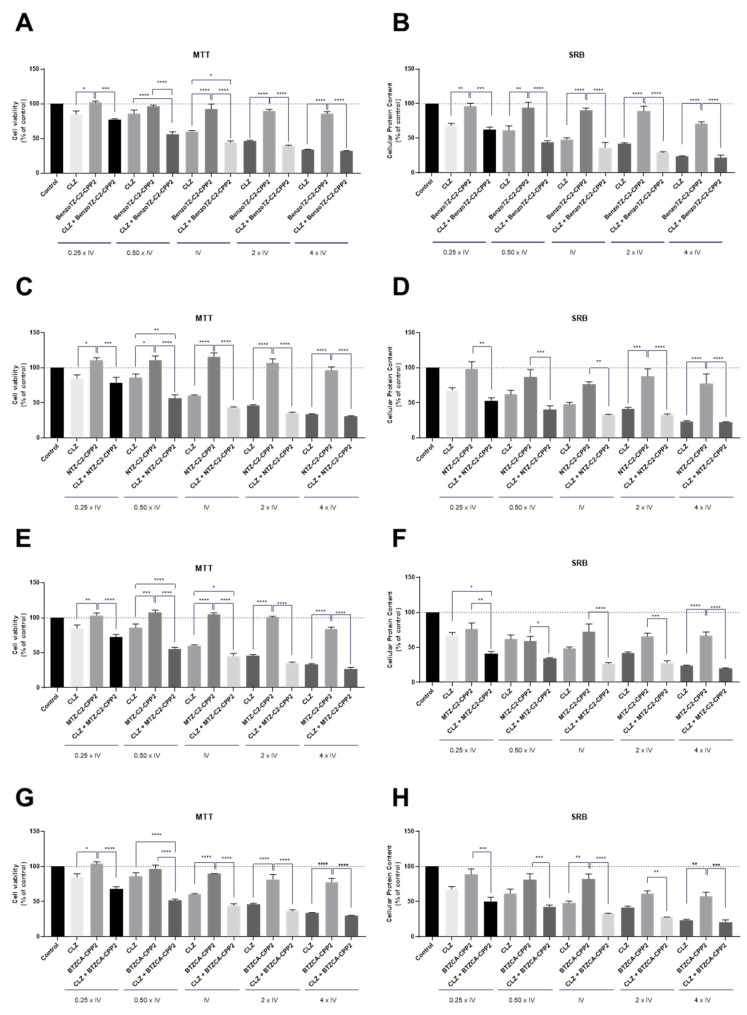
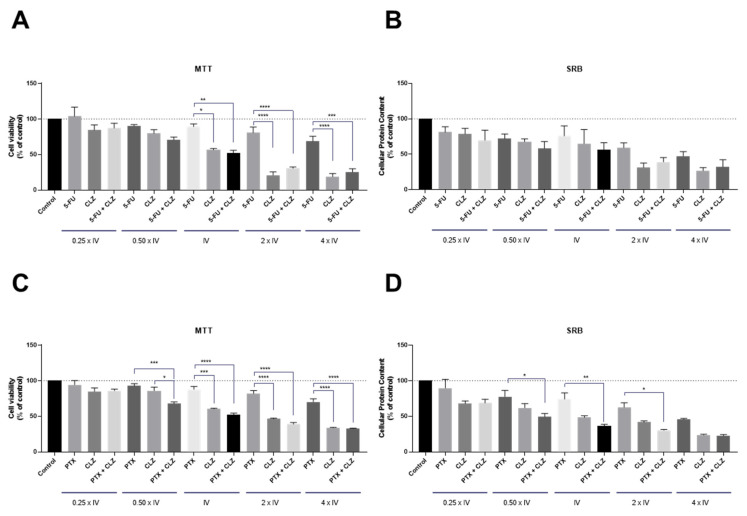
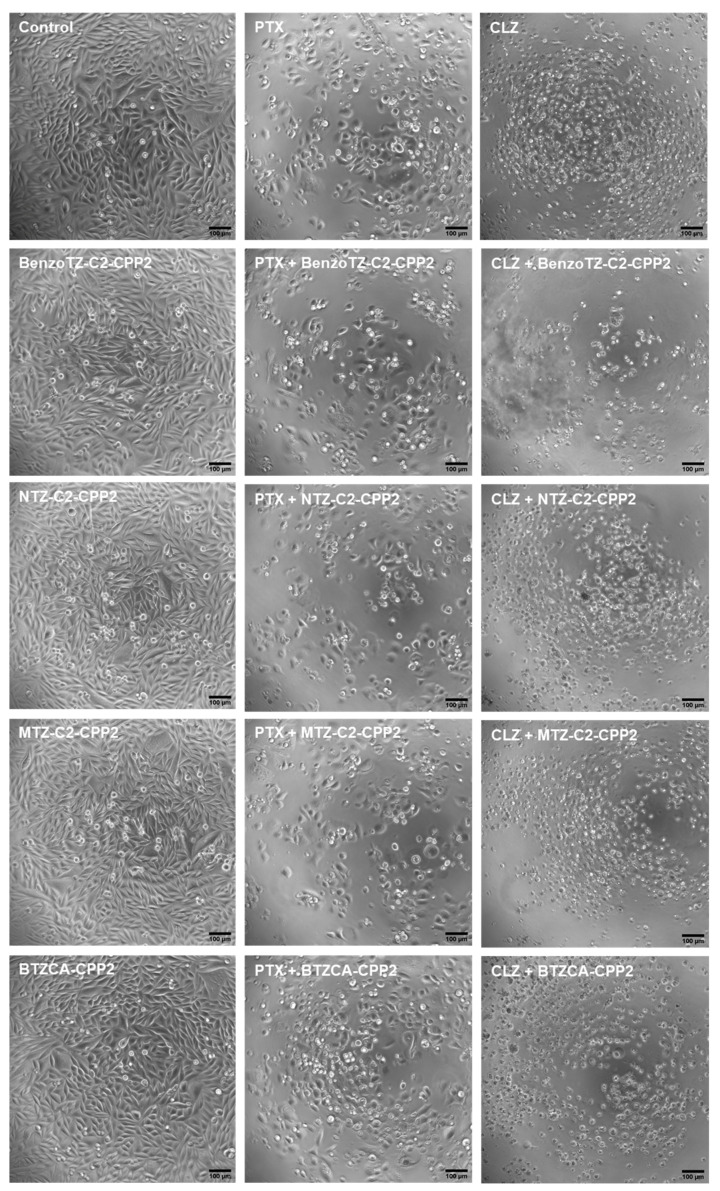
Cell-penetrating peptides (CPPs) are small peptide sequences used mainly as cellular delivery agents that are able to efficiently deliver cargo into cells. Some CPPs also demonstrate intrinsic anticancer properties. Previously, our group developed a new family of CPP2-thiazole conjugates that have been shown to effectively reduce the proliferation of different cancer cells. This work aimed to combine these CPP2-thiazole conjugates with paclitaxel (PTX) and 5-fluorouracil (5-FU) in PC-3 prostate and HT-29 colon cancer cells, respectively, to evaluate the cytotoxic effects of these combinations. We also combined these CPP2-thiazole conjugates with clotrimazole (CLZ), an antifungal agent that has been shown to decrease cancer cell proliferation. Cell viability was evaluated using MTT and SRB assays. Drug interaction was quantified using the Chou-Talalay method. We determined that CPP2 did not have significant activity in these cells and demonstrate that N-terminal modification of this peptide enhanced its anticancer activity in both cell lines. Our results also showed an uneven response between cell lines to the proposed combinations. PC-3 cells were more responsive to the combination of CPP2-thiazole conjugates with CLZ than PTX and were more sensitive to these combinations than HT-29 cells. In addition, the interaction of drugs resulted in more synergism in PC-3 cells. These results suggest that N-terminal modification of CPP2 results in the enhanced anticancer activity of the peptide and demonstrates the potential of CPPs as adjuvants in cancer therapy. These results also validate that CLZ has significant anticancer activity both alone and in combination and support the strategy of drug repurposing coupled to drug combination for prostate cancer therapy.
细胞穿透肽(CPPs)是一种小肽序列,主要用作细胞递药载体,能够有效地将 cargo 递送到细胞内。一些 CPPs 还具有内在的抗癌特性。以前,我们小组开发了一种新的 CPP2-噻唑缀合物家族,这些缀合物已被证明能够有效地减少不同癌细胞的增殖。这项工作旨在将这些 CPP2-噻唑缀合物与紫杉醇(PTX)和 5-氟尿嘧啶(5-FU)分别在前列腺癌 PC-3 和结肠癌 HT-29 细胞中结合,以评估这些组合的细胞毒性作用。我们还将这些 CPP2-噻唑缀合物与克霉唑(CLZ)结合,CLZ 是一种已被证明能降低癌细胞增殖的抗真菌剂。使用 MTT 和 SRB 测定法评估细胞活力。使用 Chou-Talalay 方法量化药物相互作用。我们确定 CPP2 在这些细胞中没有显著的活性,并证明该肽的 N 端修饰增强了其在两种细胞系中的抗癌活性。我们的结果还表明,细胞系之间对所提出的组合的反应不均匀。PC-3 细胞对 CPP2-噻唑缀合物与 CLZ 的组合比 PTX 更敏感,并且对这些组合比 HT-29 细胞更敏感。此外,药物相互作用导致 PC-3 细胞中协同作用更多。这些结果表明,CPP2 的 N 端修饰导致肽的抗癌活性增强,并证明 CPPs 作为癌症治疗佐剂的潜力。这些结果还表明,CLZ 单独使用和联合使用均具有显著的抗癌活性,并支持药物重新定位与药物联合用于前列腺癌治疗的策略。