Tripathi Prem Prakash, Arami Hamed, Banga Ivneet, Gupta Jalaj, Gandhi Sonu
CSIR-Indian Institute of Chemical Biology (CSIR-IICB), Kolkata, India.
IICB-Translational Research Unit of Excellence, Kolkata, India.
Oncotarget. 2018 Dec 14;9(98):37252-37267. doi: 10.18632/oncotarget.26442.
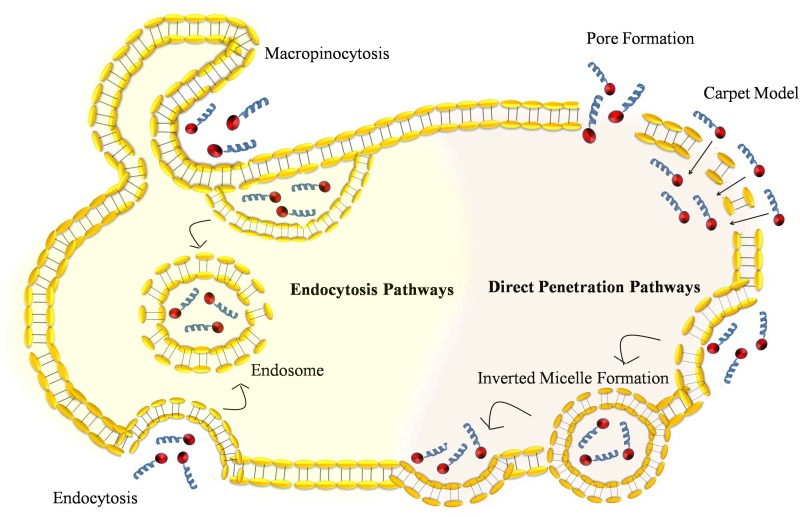
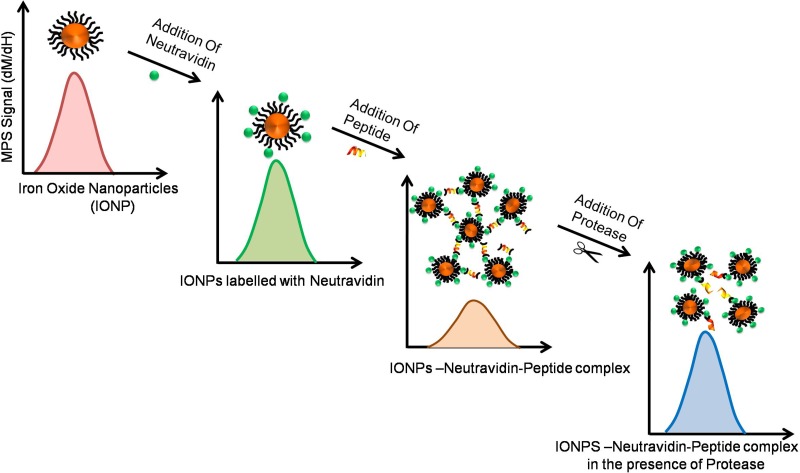
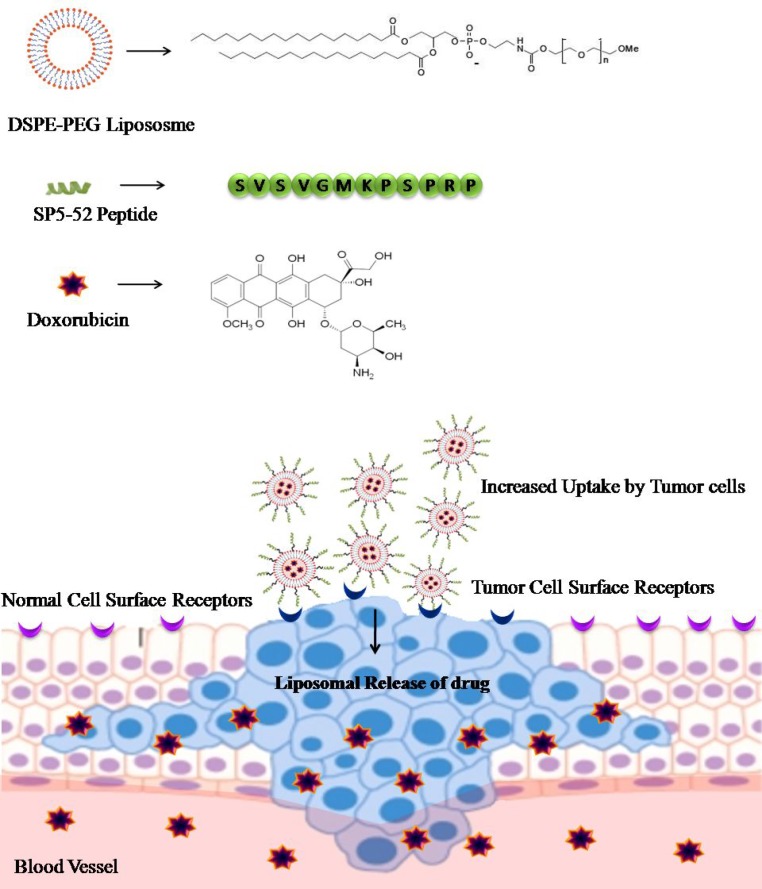
Delivery of imaging reagents and drugs to tumors is essential for cancer diagnosis and therapy. In addition to therapeutic and diagnostic functionalities, peptides have potential benefits such as biocompatibility, ease to synthesize, smaller size, by-passing off-target side effects, and achieving the beneficial effects with lower-administered dosages. A particular type of peptide known as cell penetrating peptides (CPP) have been predominantly studied during last twenty years as they are not only capable to translocate themselves across membranes but also allow carrier drugs to translocate across plasma membrane, by different mechanisms depending on the CPP. This is of great potential importance in drug delivery systems, as the ability to pass across membranes is crucial to many drug delivery systems. In spite of significant progress in design and application of CPP, more investigations are required to further improve their delivery to tumors, with reduced side-effect and enhanced therapeutic efficacy. In this review, we emphasis on current advancements in preclinical and clinical trials based on using CPP for more efficient delivery of anti-cancer drugs and imaging reagents to cancer tissues and individual cells associated with them. We discuss the evolution of the CPPs-based strategies for targeted delivery, their current status and strengths, along with summarizing the role of CPPs in targeted drug delivery. We also discuss some recently reported diagnostic applications of engineered protease-responsive substrates and activable imaging complexes. We highlight the recent clinical trial data by providing a road map for better design of the CPPs for future preclinical and clinical applications.
将成像试剂和药物递送至肿瘤对于癌症诊断和治疗至关重要。除了治疗和诊断功能外,肽还具有一些潜在优势,如生物相容性、易于合成、尺寸较小、可避免脱靶副作用以及以较低给药剂量实现有益效果。一种特殊类型的肽,即细胞穿透肽(CPP),在过去二十年中受到了广泛研究,因为它们不仅能够自身跨膜转运,还能使载体药物通过不同机制(取决于CPP)跨质膜转运。这在药物递送系统中具有极大的潜在重要性,因为跨膜能力对许多药物递送系统至关重要。尽管在CPP的设计和应用方面取得了显著进展,但仍需要更多研究来进一步改善其向肿瘤的递送,同时减少副作用并提高治疗效果。在本综述中,我们重点介绍基于使用CPP将抗癌药物和成像试剂更有效地递送至癌组织及其相关单个细胞的临床前和临床试验的当前进展。我们讨论基于CPP的靶向递送策略的演变、它们的现状和优势,同时总结CPP在靶向药物递送中的作用。我们还讨论了一些最近报道的工程化蛋白酶响应底物和可激活成像复合物的诊断应用。我们通过提供路线图来突出最近的临床试验数据,以便为未来临床前和临床应用更好地设计CPP。