Duarte Diana, Falcão Soraia I, El Mehdi Iouraouine, Vilas-Boas Miguel, Vale Nuno
OncoPharma Research Group, Center for Health Technology and Services Research (CINTESIS), Rua Doutor Plácido da Costa, 4200-450 Porto, Portugal.
Faculty of Pharmacy, University of Porto, Rua Jorge Viterbo Ferreira, 228, 4050-313 Porto, Portugal.
Pharmaceutics. 2022 Feb 25;14(3):511. doi: 10.3390/pharmaceutics14030511.
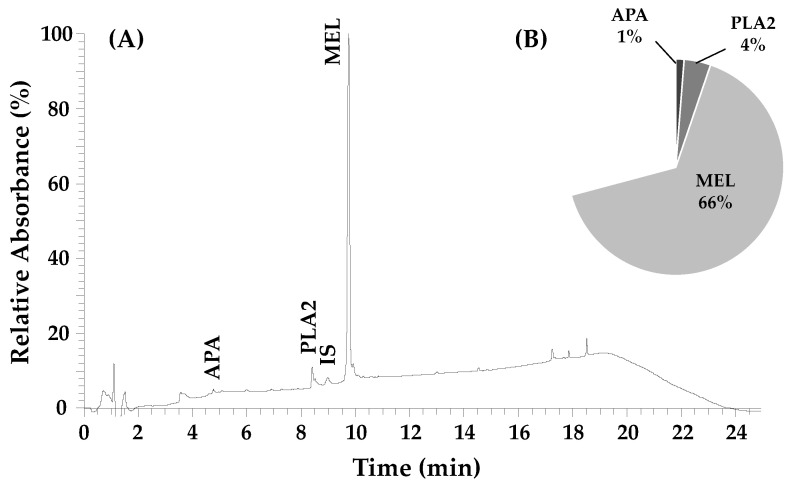
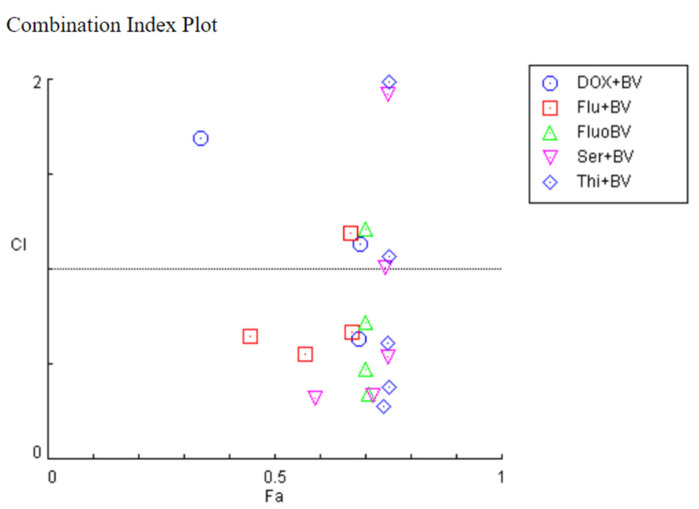
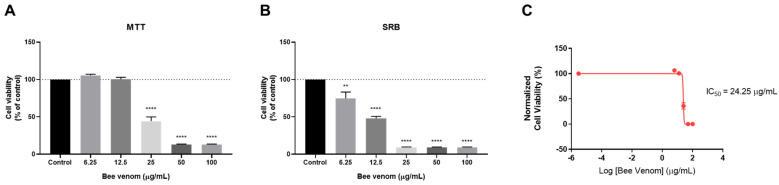
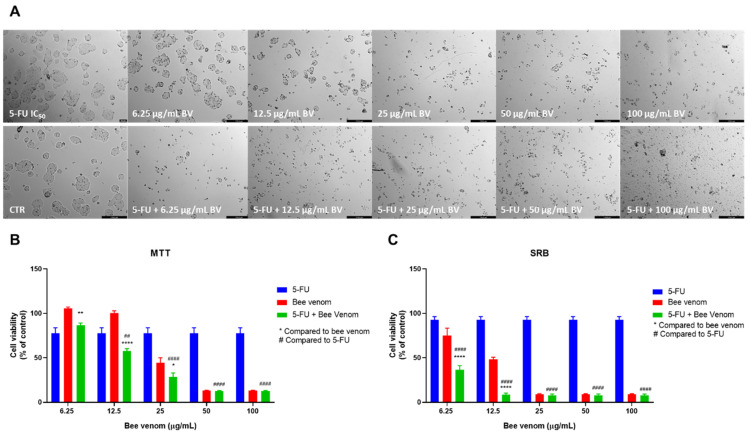
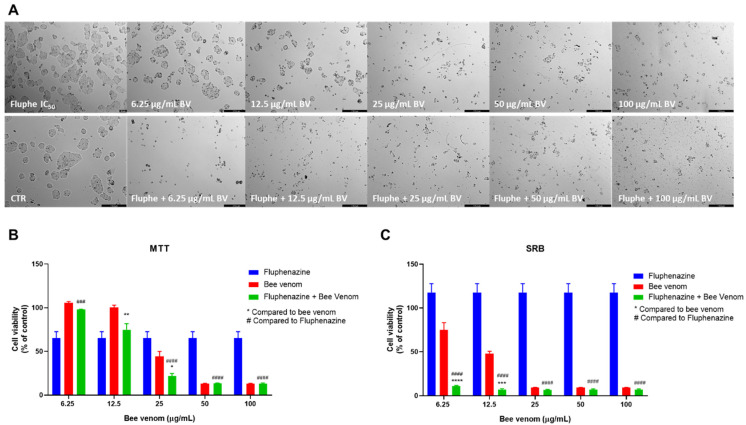
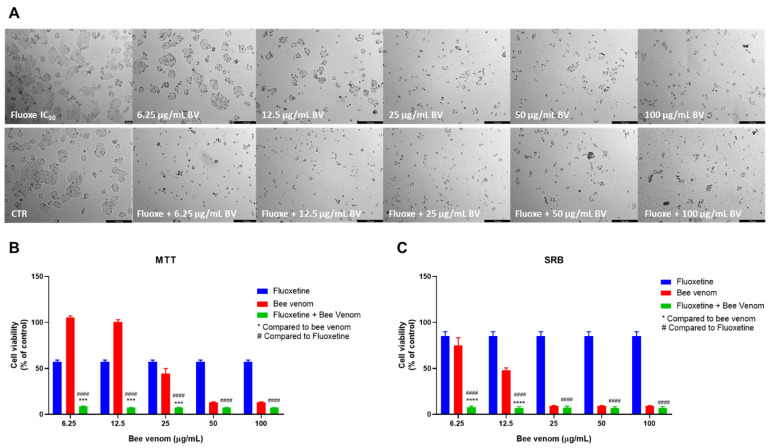
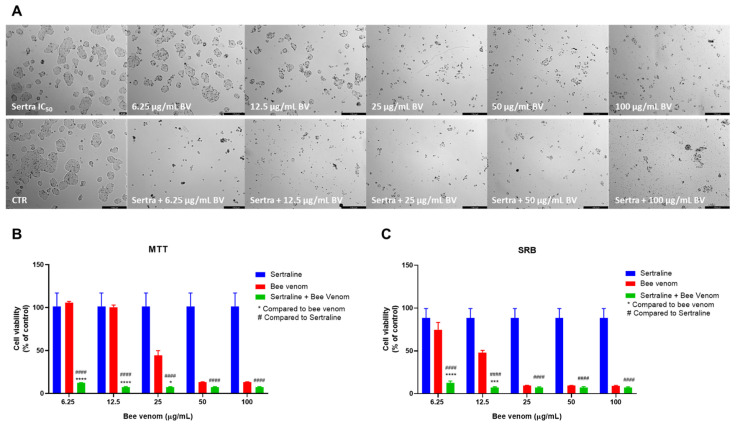
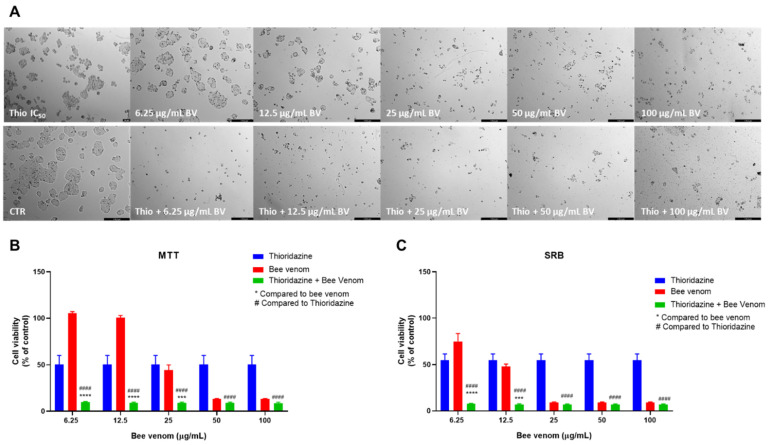
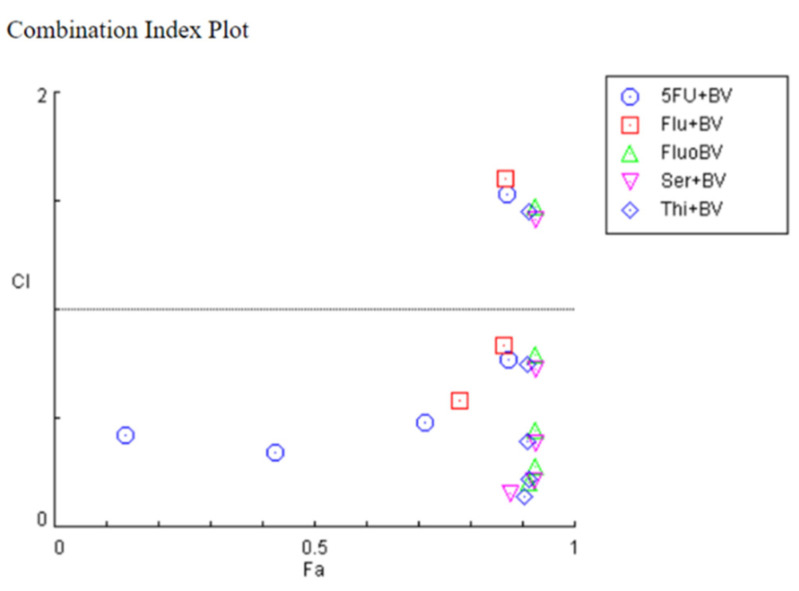
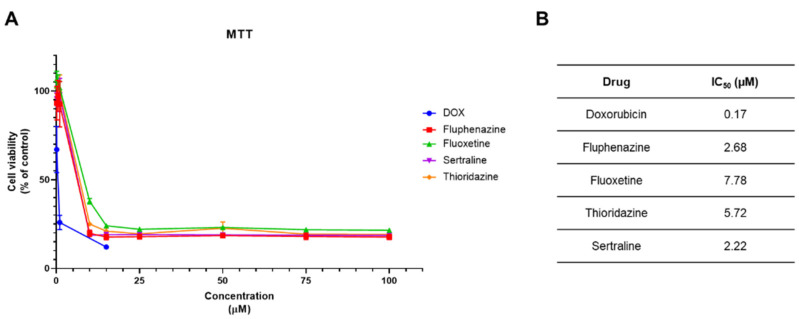
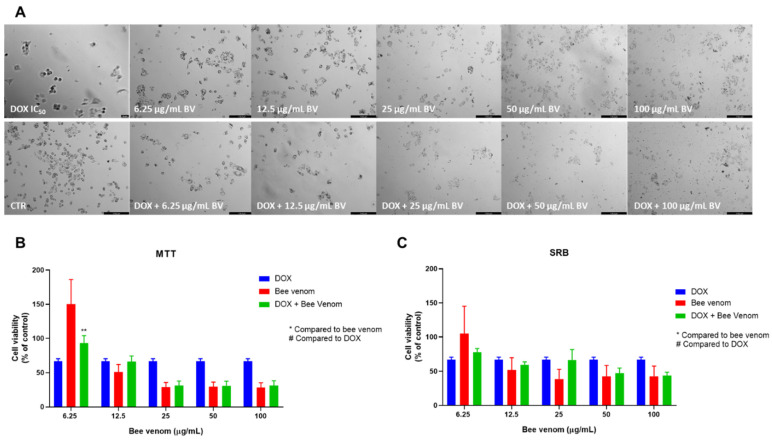
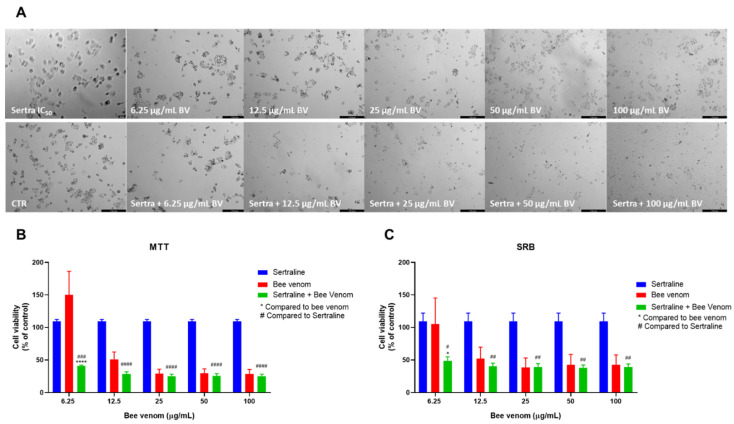
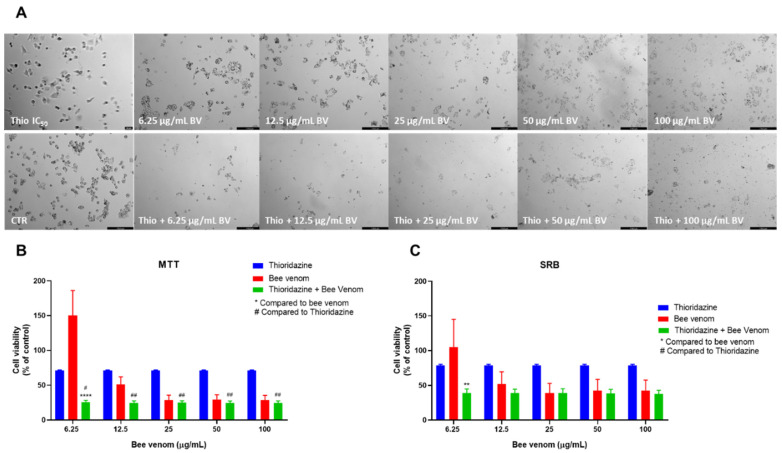
5-fluorouracil (5-FU) and doxorubicin (DOX) are potent anti-tumour agents commonly used for colon and breast cancer therapy, respectively. However, their clinical application is limited by their side effects and the development of drug resistance. Honeybee venom is a complex mixture of substances that has been reported to be effective against different cancer cells. Its active compound is melittin, a positively charged amphipathic peptide that interacts with the phospholipids of the cell membrane, forming pores that enable the internalization of small molecules with cytotoxic activities, and consequently, causing cell death. Some central nervous system (CNS) drugs have recently demonstrated great anti-cancer potential, both in vitro, in vivo and in clinical trials, being promising candidates for drug repurposing in oncology. The present work evaluated the anti-cancer efficacy of honeybee venom in combination with chemotherapeutic or CNS drugs in HT-29 colon and MCF-7 breast cancer cell lines. The chemical characterization of a Portuguese sample of honeybee venom was done by LC-DAD-ESI/MSn analysis. For single treatments, cells were incubated with increasing concentrations of bee venom. For combination treatments, increasing concentrations of bee venom were first combined with the half-maximal inhibitory concentration (IC) of 5-FU and DOX, in HT-29 and MCF-7 cells, respectively. Cells were also treated with increasing concentrations of bee venom in combination with the IC value of four CNS drugs (fluphenazine, fluoxetine, sertraline and thioridazine). Cytotoxicity was evaluated by MTT and SRB assays. The combination index (CI) value was calculated using CompuSyn software, based on the Chou-Talalay method. Synergy scores of different reference models (HSA, Loewe, ZIP and Bliss) were also calculated using SynergyFinder. The results demonstrate that honeybee venom is active against HT-29 colon and MCF-7 breast cancer cells, having better anti-tumour activity in MCF-7 cells. It was found that bee venom combined with 5-FU and fluphenazine in HT-29 cells resulted in less cytotoxic effects compared to the co-treatment of fluoxetine, sertraline and thioridazine plus bee venom, which resulted in less than 15% of viable cells for the whole range of concentrations. The combination of MCF-7 cells with repurposed drugs plus honeybee venom resulted in better anti-cancer efficacies than with DOX, notably for lower concentrations. A combination of fluoxetine and thioridazine plus honeybee venom resulted in less than 40% of viable cells for all ranges of concentrations. These results support that the combination of honeybee venom with repurposed drugs and chemotherapeutic agents can help improve their anti-cancer activity, especially for lower concentrations, in both cell lines. Overall, the present study corroborates the enormous bioactive potential of honeybee venom for colon and breast cancer treatments, both alone and in combination with chemotherapy or repurposed drugs.
5-氟尿嘧啶(5-FU)和多柔比星(DOX)是常用的强效抗肿瘤药物,分别用于结肠癌和乳腺癌的治疗。然而,它们的临床应用受到副作用和耐药性发展的限制。蜂毒是一种复杂的物质混合物,据报道对不同癌细胞有效。其活性成分是蜂毒肽,一种带正电荷的两亲性肽,它与细胞膜的磷脂相互作用,形成使具有细胞毒性活性的小分子内化的孔,从而导致细胞死亡。一些中枢神经系统(CNS)药物最近在体外、体内和临床试验中都显示出巨大的抗癌潜力,有望成为肿瘤学中药物重新利用的候选药物。本研究评估了蜂毒与化疗药物或中枢神经系统药物联合使用对HT-29结肠癌细胞系和MCF-7乳腺癌细胞系的抗癌效果。通过LC-DAD-ESI/MSn分析对葡萄牙蜂毒样本进行了化学表征。对于单一处理,将细胞与浓度递增的蜂毒孵育。对于联合处理,分别将浓度递增的蜂毒与HT-29和MCF-7细胞中5-FU和DOX的半数最大抑制浓度(IC)相结合。细胞还分别与浓度递增的蜂毒以及四种中枢神经系统药物(氟奋乃静、氟西汀、舍曲林和硫利达嗪)的IC值联合处理。通过MTT和SRB测定评估细胞毒性。使用CompuSyn软件基于Chou-Talalay方法计算联合指数(CI)值。还使用SynergyFinder计算不同参考模型(HSA、Loewe、ZIP和Bliss)的协同得分。结果表明,蜂毒对HT-29结肠癌细胞和MCF-7乳腺癌细胞具有活性,在MCF-7细胞中具有更好的抗肿瘤活性。研究发现,与氟西汀、舍曲林和硫利达嗪加蜂毒的联合处理相比,HT-29细胞中蜂毒与5-FU和氟奋乃静联合处理产生的细胞毒性作用较小,在整个浓度范围内活细胞少于15%。MCF-7细胞与重新利用的药物加蜂毒联合使用比与DOX联合使用产生更好的抗癌效果,尤其是在较低浓度时。氟西汀和硫利达嗪加蜂毒联合处理在所有浓度范围内活细胞均少于40%。这些结果支持蜂毒与重新利用的药物和化疗药物联合使用可以帮助提高它们的抗癌活性,特别是在较低浓度时,在两种细胞系中均如此。总体而言,本研究证实了蜂毒在单独使用以及与化疗药物或重新利用的药物联合使用时对结肠癌和乳腺癌治疗具有巨大的生物活性潜力。