Institute of Neurogenetics, University of Luebeck, Ratzeburger Allee 160, 23562 Lübeck, Germany.
Int J Mol Sci. 2021 Nov 5;22(21):11998. doi: 10.3390/ijms222111998.
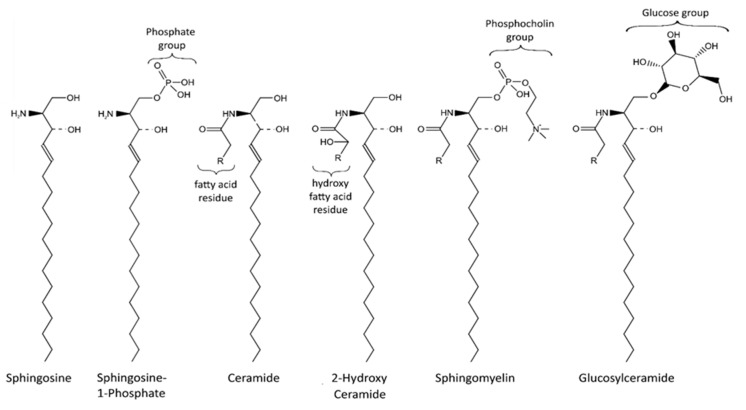
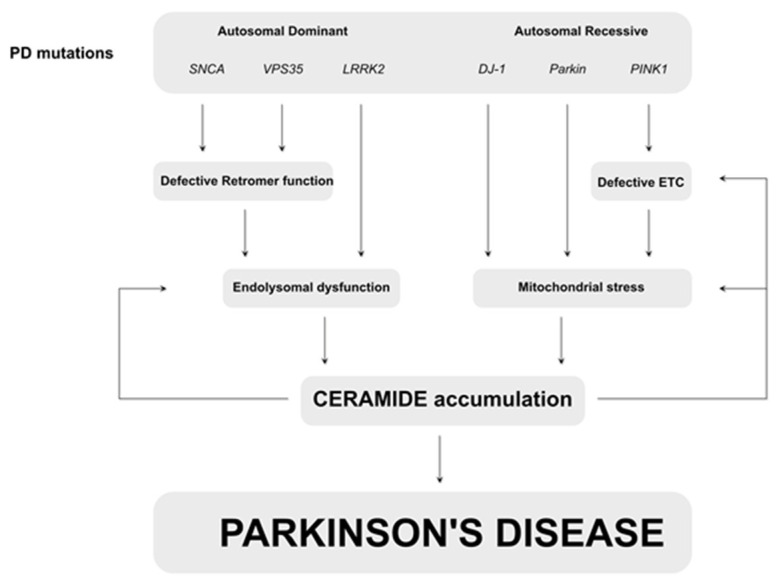
Neurodegenerative diseases are incurable diseases of the nervous system that lead to a progressive loss of brain areas and neuronal subtypes, which is associated with an increase in symptoms that can be linked to the affected brain areas. The key findings that appear in many neurodegenerative diseases are deposits of proteins and the damage of mitochondria, which mainly affect energy production and mitophagy. Several causative gene mutations have been identified in various neurodegenerative diseases; however, a large proportion are considered sporadic. In the last decade, studies linking lipids, and in particular sphingolipids, to neurodegenerative diseases have shown the importance of these sphingolipids in the underlying pathogenesis. Sphingolipids are bioactive lipids consisting of a sphingoid base linked to a fatty acid and a hydrophilic head group. They are involved in various cellular processes, such as cell growth, apoptosis, and autophagy, and are an essential component of the brain. In this review, we will cover key findings that demonstrate the relevance of sphingolipids in neurodegenerative diseases and will focus on neurodegeneration with brain iron accumulation and Parkinson's disease.
神经退行性疾病是神经系统的不治之症,会导致脑区和神经元亚型的进行性丧失,从而导致症状加重,这些症状可以与受影响的脑区相关联。在许多神经退行性疾病中出现的主要发现是蛋白质沉积和线粒体损伤,这主要影响能量产生和自噬。在各种神经退行性疾病中已经确定了几个致病基因突变;然而,很大一部分被认为是散发性的。在过去的十年中,将脂质,特别是鞘脂与神经退行性疾病联系起来的研究表明,这些鞘脂在潜在发病机制中非常重要。鞘脂是由连接脂肪酸和亲水头部基团的神经酰胺组成的生物活性脂质。它们参与各种细胞过程,如细胞生长、细胞凋亡和自噬,并且是大脑的重要组成部分。在这篇综述中,我们将介绍证明鞘脂在神经退行性疾病中的相关性的关键发现,并重点介绍伴有脑铁积累的神经退行性变和帕金森病。