Laboratory of Separation and Spectroscopic Method Applications, Centre for Interdisciplinary Research, Faculty of Science and Health, The John Paul II Catholic University of Lublin, 20-708 Lublin, Poland.
Sensors (Basel). 2021 Oct 28;21(21):7152. doi: 10.3390/s21217152.
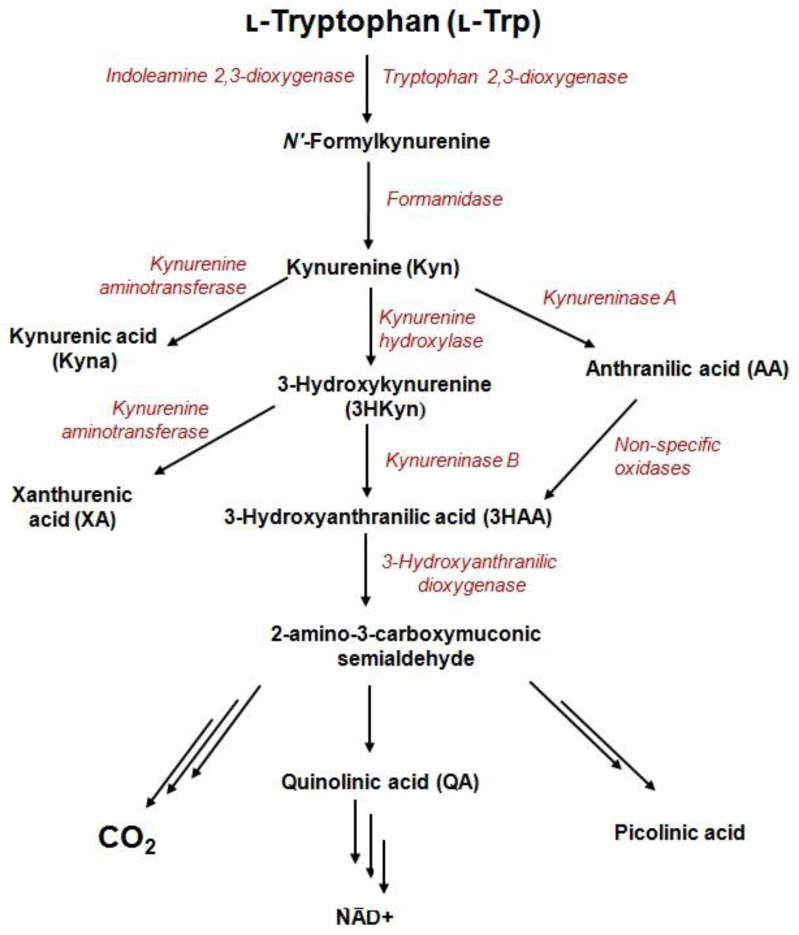
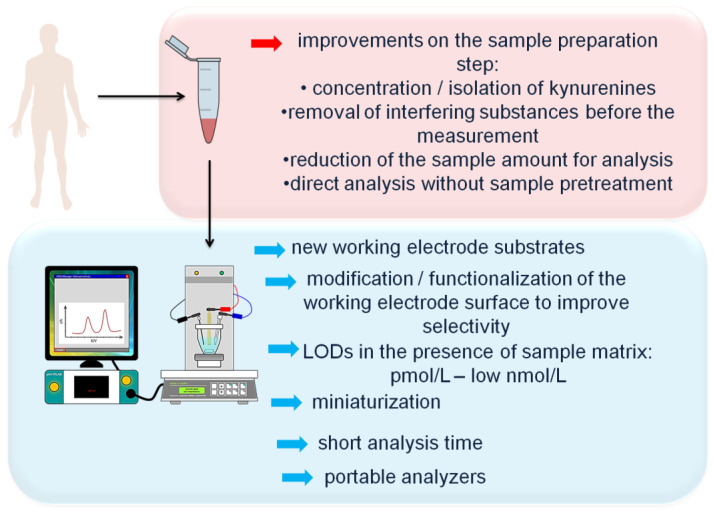
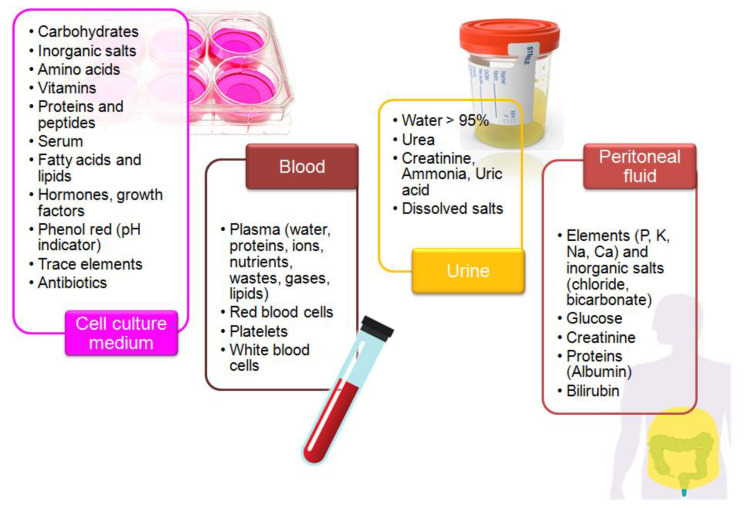
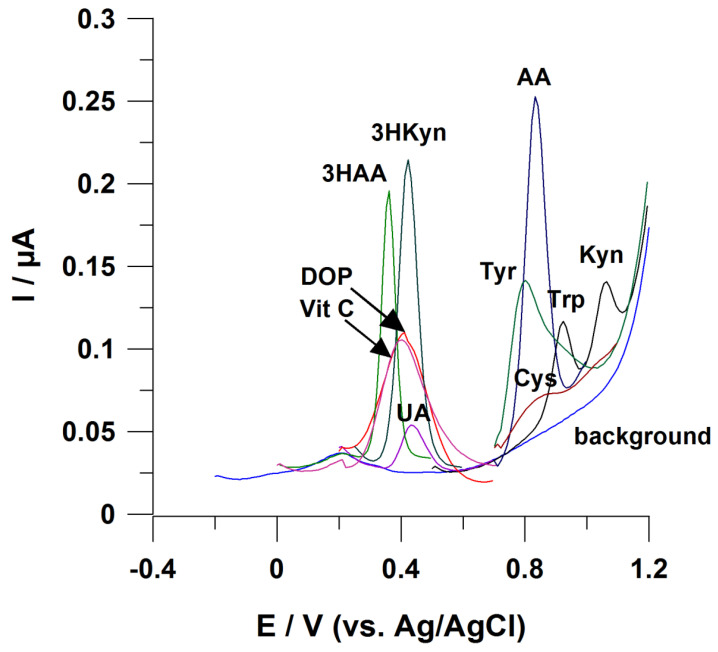
In recent years, tryptophan metabolism via the kynurenine pathway has become one of the most active research areas thanks to its involvement in a variety of physiological processes, especially in conditions associated with immune dysfunction, central nervous system disorders, autoimmunity, infection, diabetes, and cancer. The kynurenine pathway generates several metabolites with immunosuppressive functions or neuroprotective, antioxidant, or toxic properties. An increasing body of work on this topic uncovers a need for reliable analytical methods to help identify and quantify tryptophan metabolites at physiological concentrations in biological samples of different origins. Recent methodological advances in the fabrication and application of electrochemical sensors promise a rise in the future generation of novel analytical systems. This work summarizes current knowledge and provides important suggestions with respect to direct electrochemical determinations of kynurenine pathway metabolites (kynurenines) in complex biological matrices. Measurement challenges, limitations, and future opportunities of electroanalytical methods to advance study of the implementation of kynurenines in disease conditions are discussed.
近年来,色氨酸通过犬尿酸途径的代谢已成为最活跃的研究领域之一,这要归功于其参与了多种生理过程,特别是在与免疫功能障碍、中枢神经系统紊乱、自身免疫、感染、糖尿病和癌症相关的情况下。犬尿酸途径产生了几种具有免疫抑制功能或神经保护、抗氧化或毒性的代谢物。这一主题的大量研究工作揭示了对可靠分析方法的需求,以帮助在不同来源的生物样本中识别和定量生理浓度下的色氨酸代谢物。电化学传感器制造和应用方面的最新方法进展有望为新一代新型分析系统的出现提供支持。这项工作总结了当前的知识,并就复杂生物基质中犬尿酸途径代谢物(犬尿氨酸)的直接电化学测定提供了重要建议。本文讨论了电分析方法在推进犬尿氨酸在疾病状况中的应用研究方面的测量挑战、局限性和未来机遇。