Kohli Kanchan, Mujtaba Ali, Malik Rozina, Amin Saima, Alam Md Sarfaraz, Ali Abuzer, Barkat Md Abul, Ansari Mohammad Javed
Department of Pharmaceutics, School of Pharmaceutical Education & Research, Jamia Hamdard, New Delhi 110062, India.
Departments of Pharmaceutics, Faculty of Pharmacy, Northern Border University, Rafha 73213, Saudi Arabia.
Polymers (Basel). 2021 Nov 5;13(21):3833. doi: 10.3390/polym13213833.
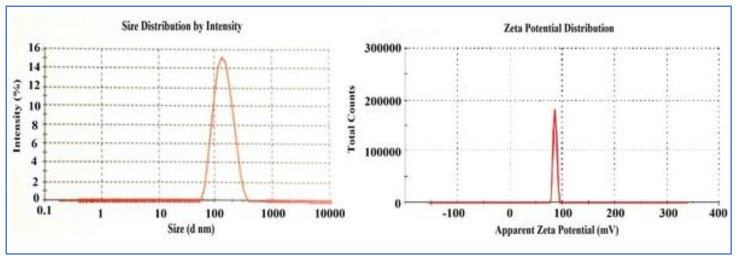
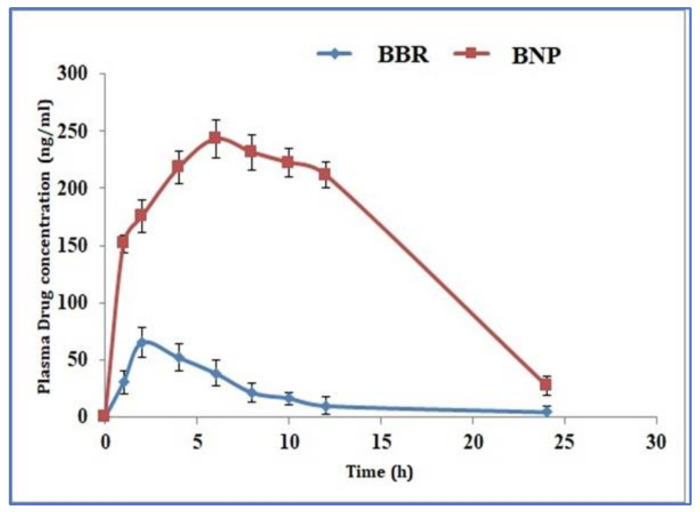
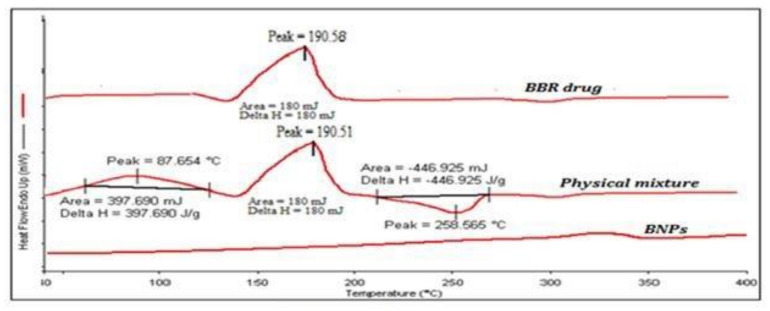
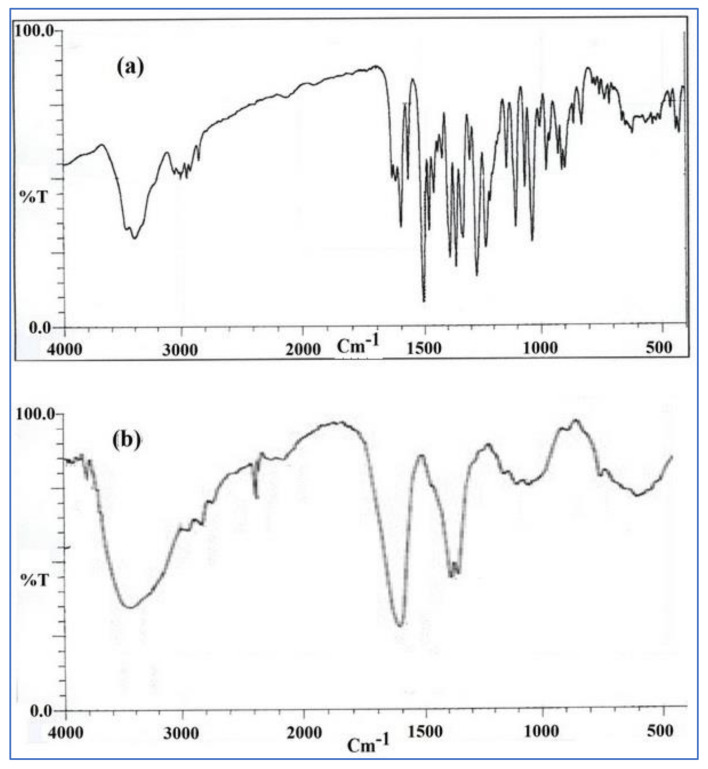
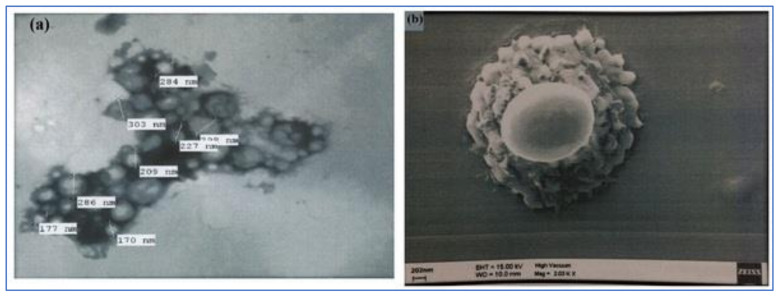
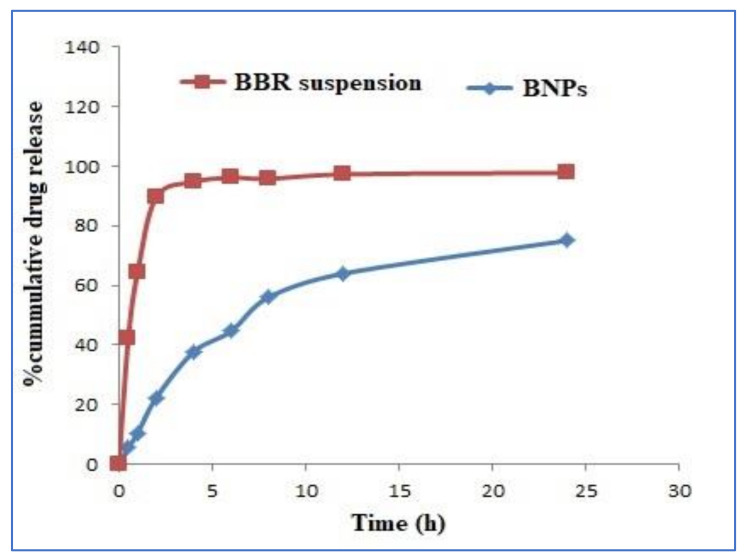
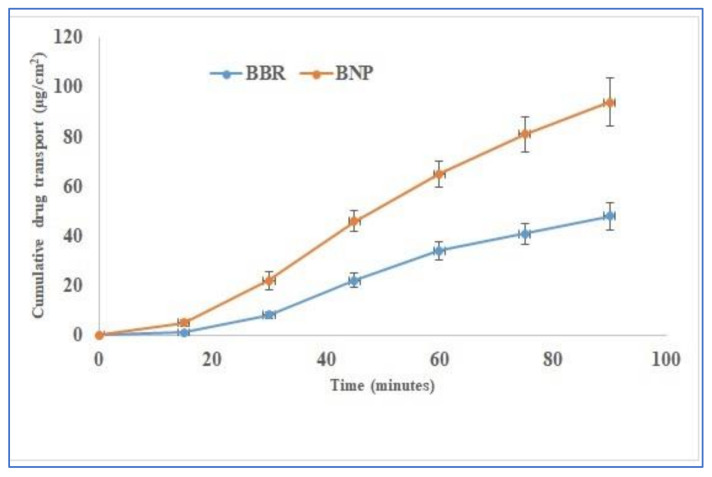
The phytogenous alkaloid berberine (BBR) has become a potential drug for the treatment of diabetes, hyperlipidemia, and cancer. However, its therapeutic potential is limited because ofpoor intestinal absorption due to its efflux by the -gp expressed in the intestinal lumen. Therefore, we aimed to design and fabricate a nanoparticulate system for delivery of BBR employing naturally derived biodegradable and biocompatible polymers, mainly chitosan and alginate, to enhance the oral bioavailability of BBR. A chitosan-alginate nanoparticle system loaded with BBR (BNPs) was formulated by ionic gelation method and was optimized by employing a three-factor, three-level Box-Behnken statistical design. BNPs were characterized for various physicochemical properties, ex vivo, and in vivo evaluations. The optimized BNPs were found to be 202.2 ± 4.9 nm in size, with 0.236 ± 0.02 of polydispersity index, zeta potential -14.8 ± 1.1 mV, and entrapment efficiency of 85.69 ± 2.6%. BNPs showed amorphous nature with no prominent peak in differential scanning calorimetry (DSC) investigation. Similarly, fourier-transform infrared spectroscopy (FTIR) studies did not reveal any interaction between BBR and excipients used. The drug release followed Higuchi kinetics, since these plots demonstrated the highest linearity (R = 0.9636), and the mechanism of release was determined to be anomalous or non-Fickian in nature. An ex-vivo gut permeation study showed that BNPs were better internalized into the cells and more highly permeated through the intestine. Furthermore, in vivo pharmacokinetic analysis in female Wistar rats showed a 4.10-fold increase in the oral bioavailability of BBR from BNPs as compared to BBR suspension. With these findings, we have gained new insight into the effective delivery of poorly soluble and permeable drugs via a chitosan-alginate nanoparticle system to improve the therapeutic performance of an oral nanomedicine.
植物源生物碱黄连素(BBR)已成为治疗糖尿病、高脂血症和癌症的潜在药物。然而,由于其在肠腔中通过 -gp 外排导致肠道吸收不良,其治疗潜力受到限制。因此,我们旨在设计并制备一种用于递送 BBR 的纳米颗粒系统,采用天然衍生的可生物降解和生物相容性聚合物,主要是壳聚糖和海藻酸盐,以提高 BBR 的口服生物利用度。通过离子凝胶法制备了负载 BBR 的壳聚糖 - 海藻酸盐纳米颗粒系统(BNPs),并采用三因素、三水平的 Box-Behnken 统计设计进行优化。对 BNPs 的各种物理化学性质进行了表征,并进行了体外和体内评价。优化后的 BNPs 尺寸为 202.2±4.9 nm,多分散指数为 0.236±0.02,zeta 电位为 -14.8±1.1 mV,包封率为 85.69±2.6%。BNPs 在差示扫描量热法(DSC)研究中显示为无定形性质,无明显峰。同样,傅里叶变换红外光谱(FTIR)研究未揭示 BBR 与所用辅料之间的任何相互作用。药物释放遵循 Higuchi 动力学,因为这些图显示出最高的线性度(R = 0.9636),并且释放机制被确定为性质上为异常或非菲克型。体外肠道渗透研究表明,BNPs 能更好地被细胞内化并更高效地透过肠道。此外,在雌性 Wistar 大鼠中的体内药代动力学分析表明,与 BBR 悬浮液相比,BNPs 使 BBR 的口服生物利用度提高了 4.10 倍。基于这些发现,我们对通过壳聚糖 - 海藻酸盐纳米颗粒系统有效递送难溶性和渗透性差的药物以改善口服纳米药物的治疗性能有了新的认识。