
[大学医院在应对新冠疫情的区域医疗管理中的作用]
[The role of university hospitals in regional health care management for coping with the COVID-19 pandemic].
作者信息
Panchyrz Ivonne, Pohl Solveig, Hoffmann Julia, Gatermann Carina, Walther Felix, Harst Lorenz, Held Hanns-Christoph, Kleber Christian, Albrecht Michael, Schmitt Jochen
机构信息
Zentrum für Evidenzbasierte Gesundheitsversorgung, Universitätsklinikum Dresden und Medizinische Fakultät Carl Gustav Carus, Technische Universität Dresden, Dresden, Deutschland.
Zentrum für Evidenzbasierte Gesundheitsversorgung, Universitätsklinikum Dresden und Medizinische Fakultät Carl Gustav Carus, Technische Universität Dresden, Dresden, Deutschland; Zentralbereich Qualitäts- und Medizinisches Risikomanagement, Universitätsklinikum Carl Gustav Carus an der Technische Universität Dresden, Dresden, Deutschland.
出版信息
Z Evid Fortbild Qual Gesundhwes. 2021 Dec;167:68-77. doi: 10.1016/j.zefq.2021.09.004. Epub 2021 Nov 10.
INTRODUCTION
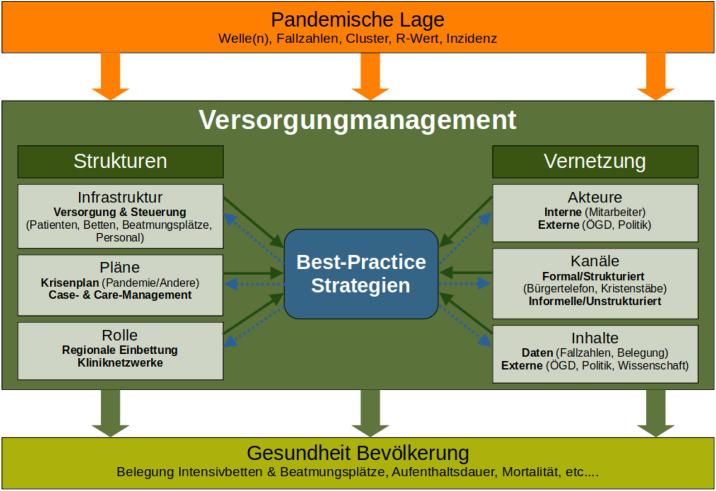
The complex and dynamic situation in the current pandemic requires a regionally coordinated and interconnected cooperation between the different stakeholders within the health care system, such as the inpatient sector or the public health service. The aim of this study is to analyze health care management during the COVID-19 pandemic in 2020 with a focus on regional networking and communication structures.
METHODS
As part of the BMBF-funded project "egePan Unimed", an online questionnaire on pandemic management was sent to the boards of all 35 German university hospitals in November 2020. The questionnaire focused on the core topics of regional networking, crisis management, data exchange, and communication with political stakeholders. The questionnaire consisted of 37 closed and three open-ended questions. After piloting, the invitation to the survey was extended three times by mail and once by telephone.
RESULTS
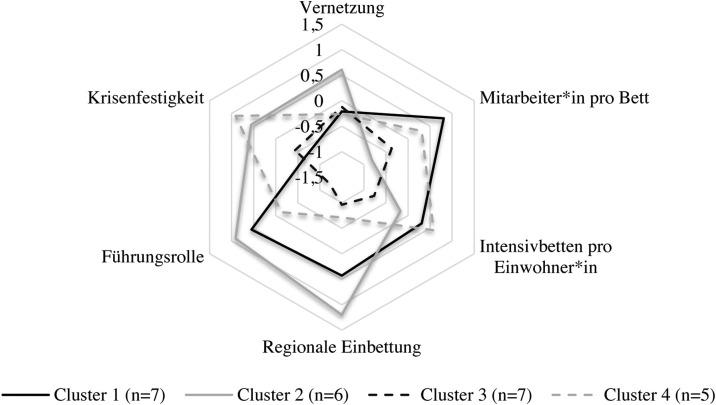
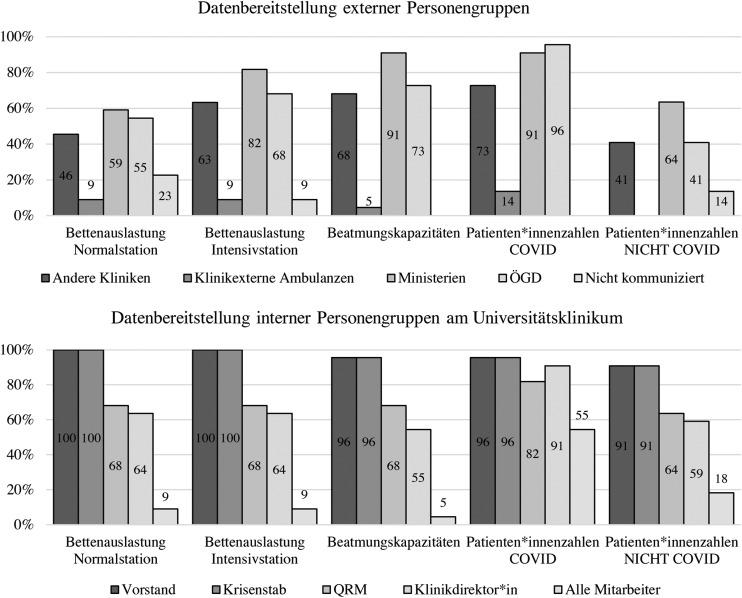
The results (n=25, response 71.4%) show that 68% of the clinics surveyed were connected to representatives from the inpatient sector and 86% to representatives from the public health service. Networking with representatives from the outpatient sector was less common (26%). Of the university hospitals surveyed, 84% had a leadership role in a regional COVID-19 pandemic management effort. Data exchange with regional hospitals in the course of pandemic management took place at 75% of the participating university hospitals and with supra-regional hospitals at 67% of the clinics surveyed.
CONCLUSION
To manage regional medical care during the COVID-19 pandemic in 2020, university hospitals often assumed a coordinating role in the complex pandemic care process. There were often structured collaborations with regional clinics and health departments and comparatively few cooperations with the outpatient care sector. However, this cooperation has the potential to prevent overcrowding in hospitals.
引言
当前疫情形势复杂多变,需要医疗保健系统内不同利益相关者之间进行区域协调和相互关联的合作,例如住院部门或公共卫生服务部门。本研究的目的是分析2020年新冠疫情期间的医疗保健管理情况,重点关注区域网络和沟通结构。
方法
作为德国联邦教育与研究部资助项目“egePan Unimed”的一部分,2020年11月向德国所有35家大学医院的董事会发送了一份关于疫情管理的在线调查问卷。该问卷聚焦于区域网络、危机管理、数据交换以及与政治利益相关者沟通等核心主题。问卷由37个封闭式问题和3个开放式问题组成。在进行试点后,通过邮件三次、电话一次延长了调查邀请。
结果
结果(n = 25,回复率71.4%)显示,68%接受调查的诊所与住院部门的代表有联系,86%与公共卫生服务部门的代表有联系。与门诊部门代表的网络联系较少见(26%)。在接受调查的大学医院中,84%在区域新冠疫情管理工作中发挥了领导作用。在疫情管理过程中,75%的参与调查的大学医院与区域医院进行了数据交换,67%的诊所与超区域医院进行了数据交换。
结论
为了在2020年新冠疫情期间管理区域医疗保健,大学医院在复杂的疫情护理过程中常常承担协调角色。与区域诊所和卫生部门通常有结构化的合作,而与门诊护理部门的合作相对较少。然而,这种合作有防止医院过度拥挤的潜力。


 Zotero 插件