Bergmann Anke, Baiocchi Jaqueline Munaretto Timm, de Andrade Mauro Figueiredo Carvalho
Instituto Nacional de Câncer, Rio de Janeiro, RJ, Brasil.
Instituto Oncofisio, São Paulo, SP, Brasil.
J Vasc Bras. 2021 Oct 11;20:e20200091. doi: 10.1590/1677-5449.200091. eCollection 2021.
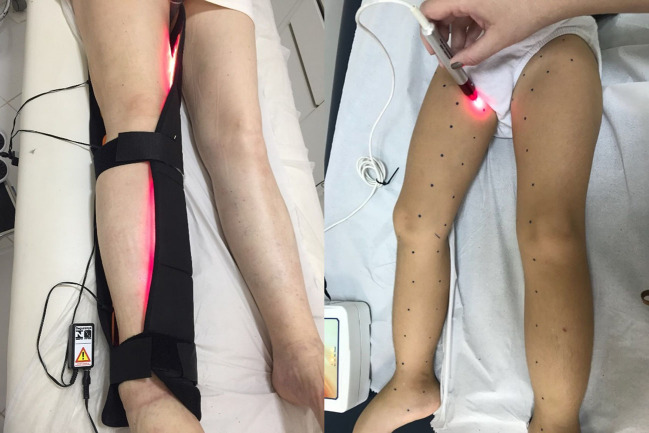
This article aims to discuss the possibilities of conservative and non-pharmacological treatments for lymphedema. A non-systematic review of the literature was carried out, including studies involving human subjects with different types of lymphedema. Several approaches to lymphedema treatment have been reported and Complex Decongestive Therapy (CDT) has been considered the most effective treatment for limb lymphedema. Other conservative treatments have been proposed such as Taping, Extracorporeal Shock Wave Therapy, Acupuncture, Photobiomodulation Therapy, Endermologie, Intermittent Pneumatic Compression, and Low-frequency, Low-intensity Electrotherapy. The choice of the therapeutic approach to be employed should consider lymphedema characteristics, the therapist's experience, and the patient's wishes. In addition, since this is a chronic condition, the patient must adhere to the treatment. To this end, the therapeutic proposal may be the key to better control of limb volume.
本文旨在探讨淋巴水肿保守及非药物治疗的可能性。我们对文献进行了非系统性综述,纳入了涉及不同类型淋巴水肿患者的研究。已有多种淋巴水肿治疗方法被报道,其中综合消肿疗法(CDT)被认为是肢体淋巴水肿最有效的治疗方法。还提出了其他保守治疗方法,如贴扎、体外冲击波疗法、针灸、光生物调节疗法、机械滚轴按摩疗法、间歇性气动压迫以及低频、低强度电疗法。所采用的治疗方法选择应考虑淋巴水肿的特征、治疗师的经验以及患者的意愿。此外,由于这是一种慢性病,患者必须坚持治疗。为此,治疗方案可能是更好控制肢体体积的关键。