Zhang Shugang, Lu Weigang, Wei Zhiqiang, Zhang Henggui
Computational Cardiology Group, College of Computer Science and Technology, Ocean University of China, Qingdao, China.
Biological Physics Group, School of Physics and Astronomy, University of Manchester, Manchester, United Kingdom.
Front Cardiovasc Med. 2021 Oct 28;8:736151. doi: 10.3389/fcvm.2021.736151. eCollection 2021.
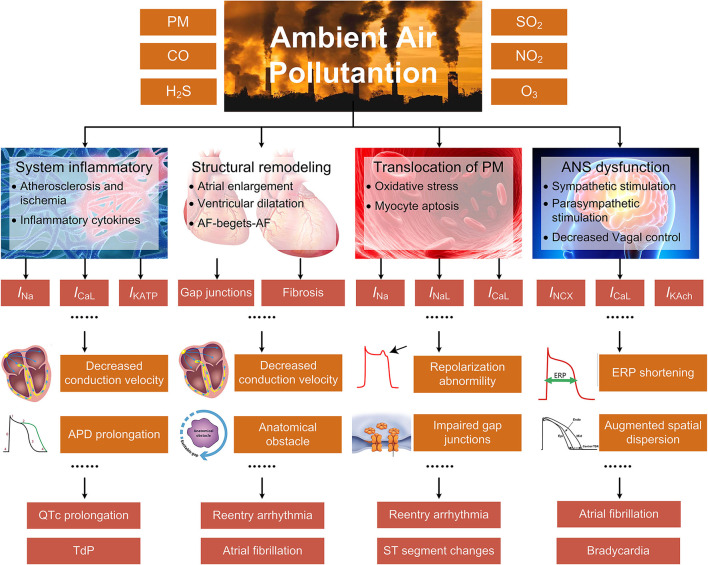
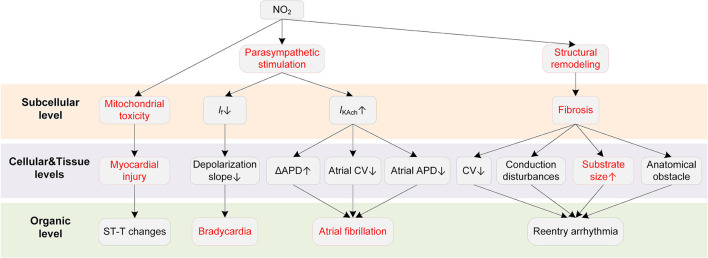
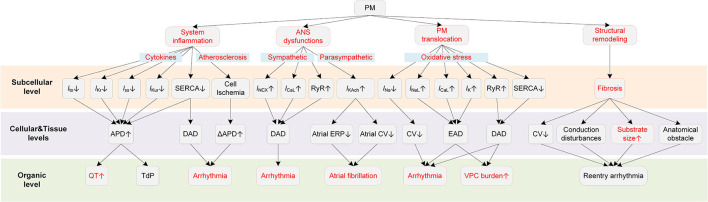
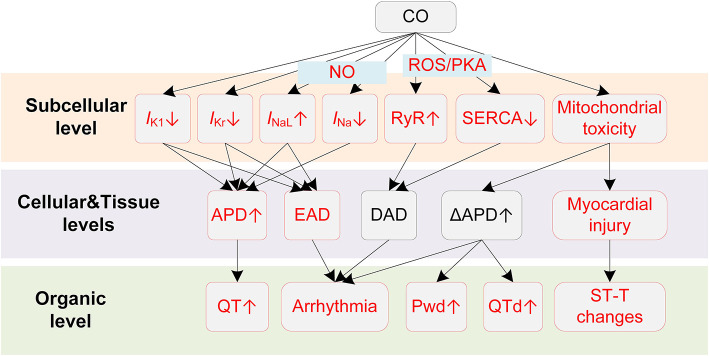
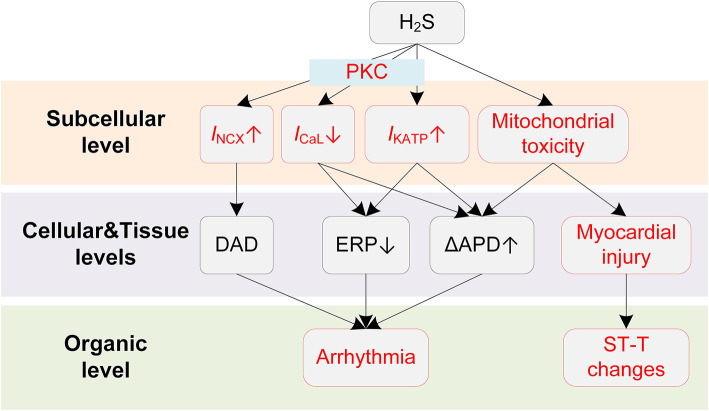
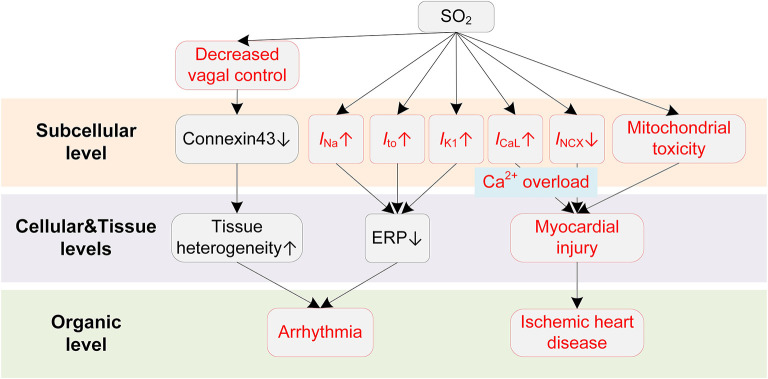
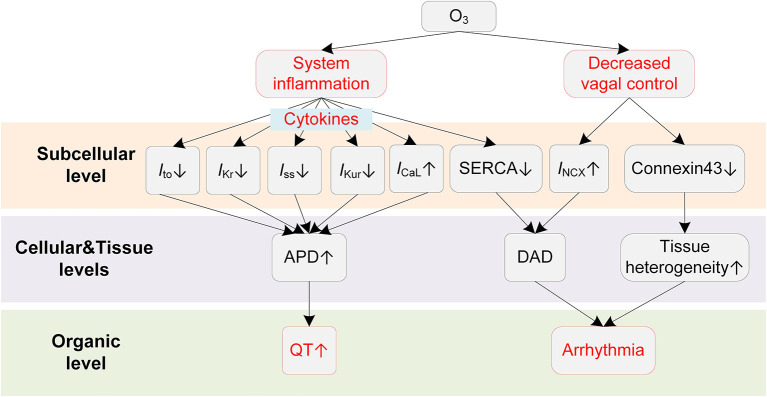
Cardiovascular disease is the leading cause of death worldwide and kills over 17 million people per year. In the recent decade, growing epidemiological evidence links air pollution and cardiac arrhythmias, suggesting a detrimental influence of air pollution on cardiac electrophysiological functionality. However, the proarrhythmic mechanisms underlying the air pollution-induced cardiac arrhythmias are not fully understood. The purpose of this work is to provide recent advances in air pollution-induced arrhythmias with a comprehensive review of the literature on the common air pollutants and arrhythmias. Six common air pollutants of widespread concern are discussed, namely particulate matter, carbon monoxide, hydrogen sulfide, sulfur dioxide, nitrogen dioxide, and ozone. The epidemiological and clinical reports in recent years are reviewed by pollutant type, and the recently identified mechanisms including both the general pathways and the direct influences of air pollutants on the cellular electrophysiology are summarized. Particularly, this review focuses on the impaired ion channel functionality underlying the air pollution-induced arrhythmias. Alterations of ionic currents directly by the air pollutants, as well as the alterations mediated by intracellular signaling or other more general pathways are reviewed in this work. Finally, areas for future research are suggested to address several remaining scientific questions.
心血管疾病是全球主要的死亡原因,每年导致超过1700万人死亡。在最近十年中,越来越多的流行病学证据将空气污染与心律失常联系起来,这表明空气污染对心脏电生理功能有不利影响。然而,空气污染诱发心律失常的促心律失常机制尚未完全明确。这项工作的目的是通过对常见空气污染物和心律失常相关文献的全面综述,介绍空气污染诱发心律失常的最新进展。文中讨论了六种普遍关注的常见空气污染物,即颗粒物、一氧化碳、硫化氢、二氧化硫、二氧化氮和臭氧。按污染物类型对近年来的流行病学和临床报告进行了综述,并总结了最近确定的机制,包括一般途径以及空气污染物对细胞电生理学的直接影响。特别地,本综述重点关注空气污染诱发心律失常背后的离子通道功能受损。本文综述了空气污染物直接引起的离子电流变化,以及由细胞内信号传导或其他更一般途径介导的变化。最后,针对几个尚存的科学问题,提出了未来的研究方向。