Prevention of Metabolic Disorders Research Center Research Institute for Endocrine Sciences Shahid Beheshti University of Medical Sciences Tehran Iran.
Endocrine Research Center Research Institute for Endocrine Sciences Shahid Beheshti University of Medical Sciences Tehran Iran.
J Am Heart Assoc. 2021 Dec 7;10(23):e021922. doi: 10.1161/JAHA.121.021922. Epub 2021 Nov 15.
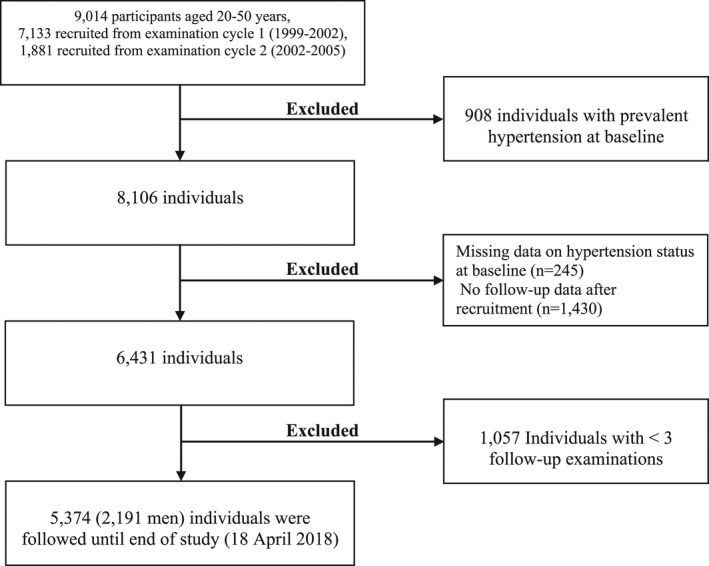
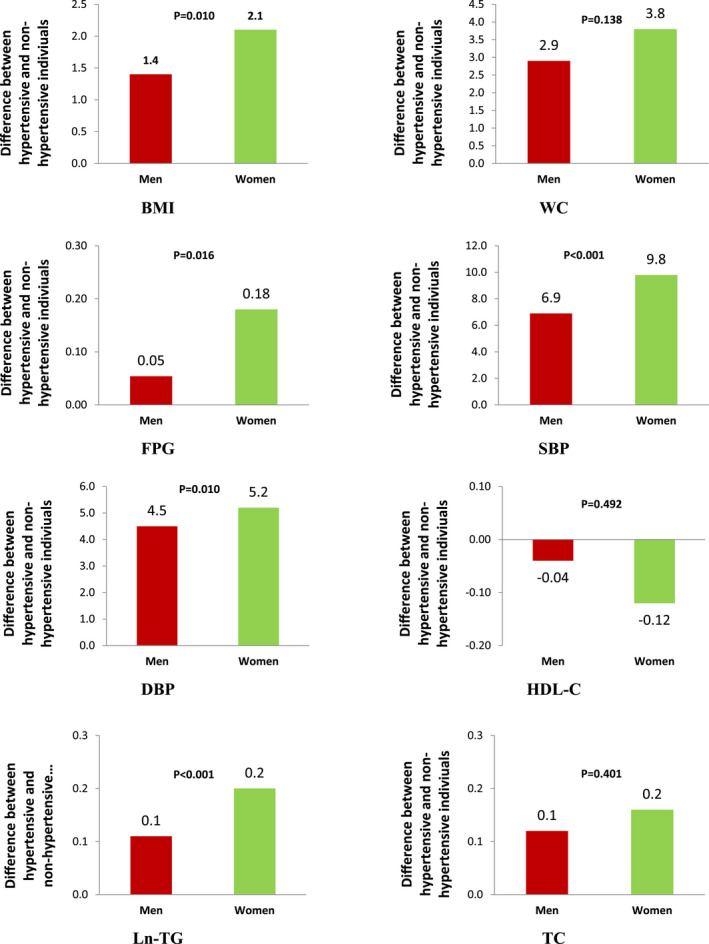
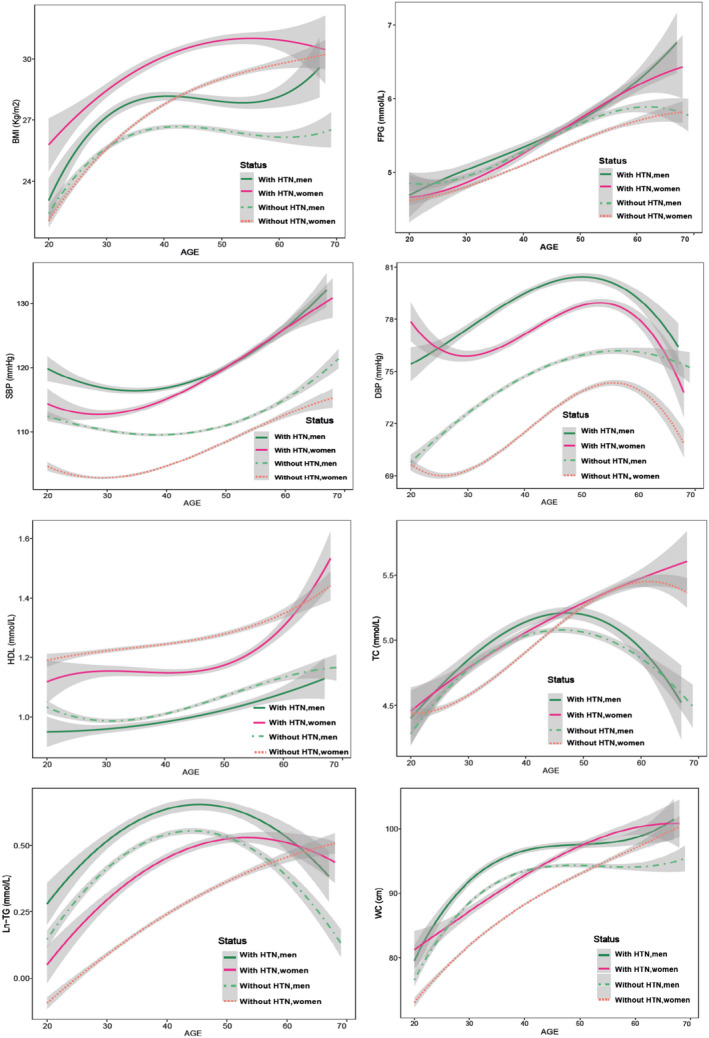
Background Previous studies have shown a sex difference in the association between hypertension and cardiovascular disease; however, the precise mechanism remains unclear. Because there are strong associations between metabolic risk factors (MRFs) and hypertension, a sex-specific analysis of MRFs before hypertension onset could offer new insights and expand our understanding of sex differences in cardiovascular disease. We evaluated cumulative exposure to major MRFs and rate of change of those factors, including body mass index, waist circumference, systolic blood pressure, diastolic blood pressure, fasting plasma glucose, total cholesterol, triglycerides, and high-density lipoprotein cholesterol among individuals who did and did not develop hypertension at follow-up. Methods and Results We included 5374 participants (2191 men) initially without hypertension with age range of 20-50 years at baseline who participated in the Tehran Lipid and Glucose Study, and had been examined at least 3 times during the study period (1999-2018). In both sexes, the cumulative exposure to all MRFs (except for fasting plasma glucose and high-density lipoprotein cholesterol in men) were higher in those who developed hypertension, compared with those who did not develop hypertension. However, women experienced greater cumulative exposure to major MRFs, compared with their male counterparts. Also, they experienced a faster increase in waist circumference, systolic blood pressure, diastolic blood pressure, and high-density lipoprotein cholesterol than men. Furthermore, rapid increase in systolic blood pressure began earlier in women than men, at the age of 30 years. We also found that those men who developed hypertension experienced unfavorable change in major MRFs during young adulthood (<50 years of age). Conclusions Women exhibited more metabolic disturbances than men before onset of hypertension, which may explain the stronger impact of hypertension for major types of cardiovascular disease in women, compared with men.
先前的研究表明,高血压与心血管疾病之间的关联存在性别差异;然而,确切的机制仍不清楚。由于代谢危险因素(MRFs)与高血压之间存在很强的关联,因此在高血压发病前对 MRFs 进行性别特异性分析可能会提供新的见解,并扩展我们对心血管疾病中性别差异的理解。我们评估了个体在随访期间发生高血压和未发生高血压的情况下,主要 MRFs 的累积暴露量和这些因素的变化率,包括体重指数、腰围、收缩压、舒张压、空腹血糖、总胆固醇、甘油三酯和高密度脂蛋白胆固醇。
我们纳入了 5374 名参与者(2191 名男性),他们在基线时年龄在 20-50 岁之间,最初没有高血压,参加了德黑兰血脂和血糖研究,并且在研究期间至少接受了 3 次检查(1999-2018 年)。在男性和女性中,与未发生高血压的个体相比,发生高血压的个体累积暴露于所有 MRFs(男性的空腹血糖和高密度脂蛋白胆固醇除外)较高。然而,女性经历了更高的主要 MRF 累积暴露,与男性相比。此外,与男性相比,女性经历了腰围、收缩压、舒张压和高密度脂蛋白胆固醇更快的增加。此外,女性的收缩压快速增加比男性更早开始,年龄为 30 岁。我们还发现,那些发生高血压的男性在青年期(<50 岁)经历了主要 MRF 的不利变化。
与男性相比,女性在高血压发病前表现出更多的代谢紊乱,这可能解释了高血压对女性主要类型心血管疾病的影响比男性更强的原因。