Department of Biochemistry, Microbiology and Immunology, University of Saskatchewan, 107 Wiggins Road, Saskatoon, Saskatchewan S7N 5E5, Canada.
Department of Biochemistry, Microbiology and Immunology, University of Saskatchewan, 107 Wiggins Road, Saskatoon, Saskatchewan S7N 5E5, Canada; Molecular and Environmental Sciences Group, Department of Geological Sciences, University of Saskatchewan, 114 Science Place, Saskatoon, Saskatchewan S7N 5E2, Canada.
J Mol Biol. 2022 Jan 30;434(2):167357. doi: 10.1016/j.jmb.2021.167357. Epub 2021 Nov 12.
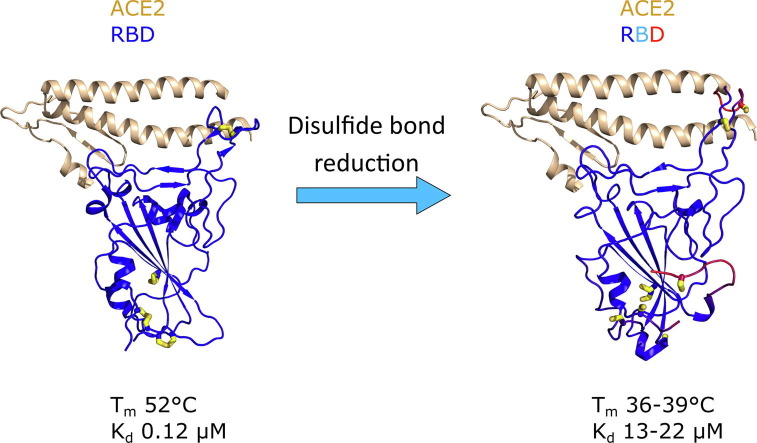
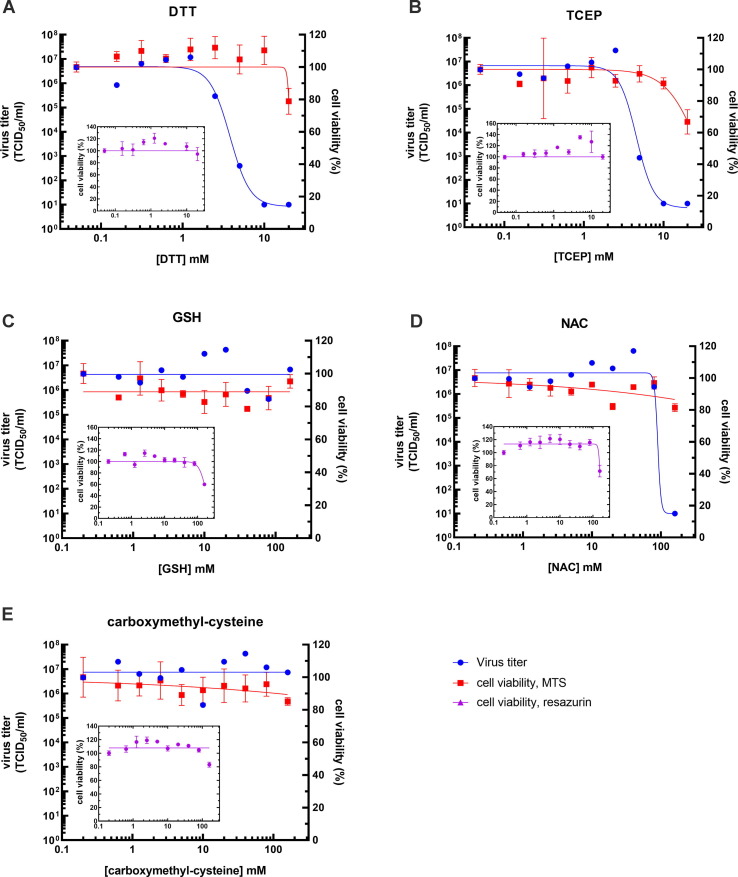
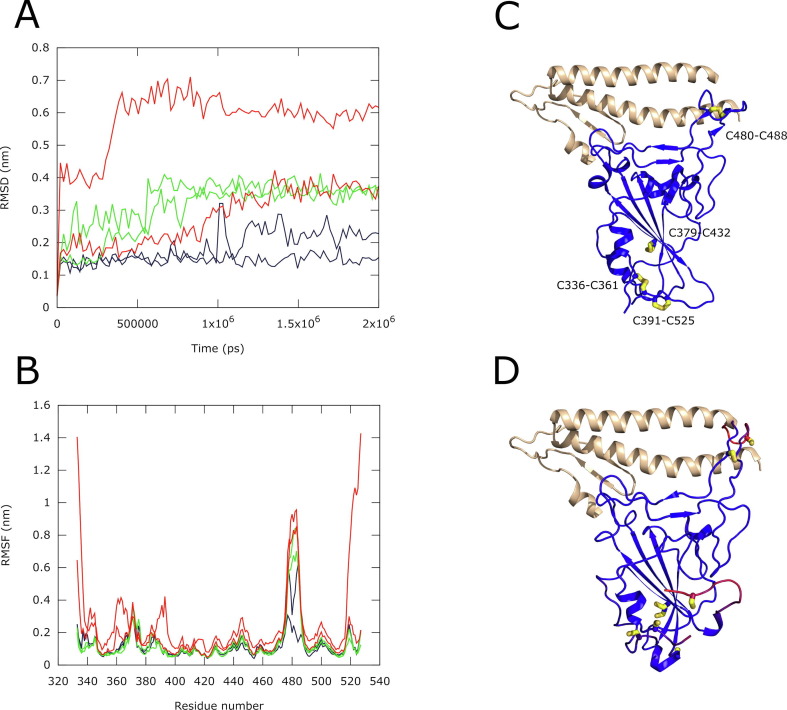
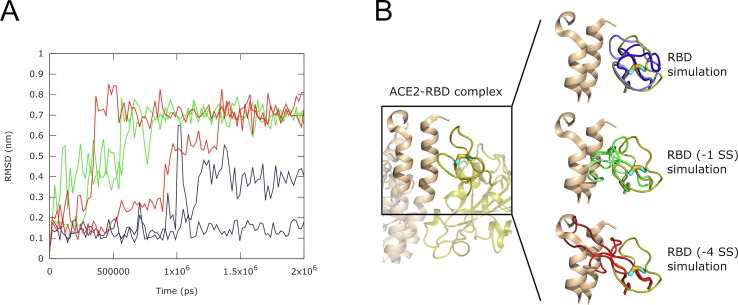
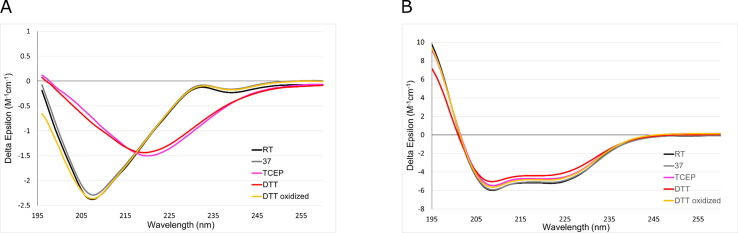
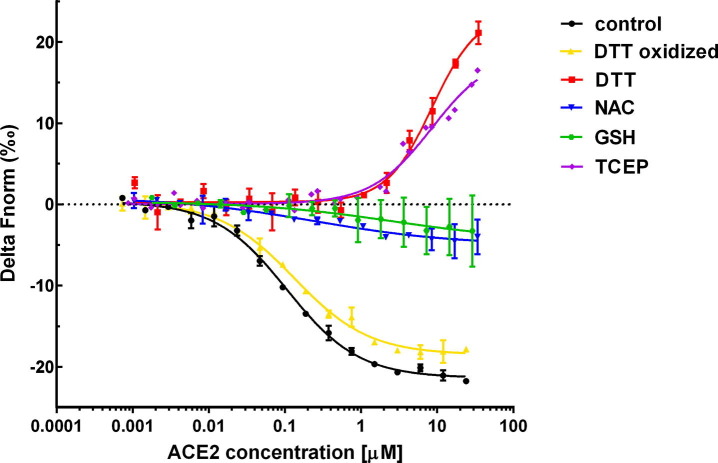
The current coronavirus pandemic is exerting a tremendously detrimental impact on global health. The Spike proteins of coronaviruses, responsible for cell receptor binding and viral internalization, possess multiple and frequently conserved disulfide bonds raising the question about their role in these proteins. Here, we present a detailed structural and functional investigation of the disulfide bonds of the SARS-CoV-2 Spike receptor-binding domain (RBD). Molecular dynamics simulations of the RBD predict increased flexibility of the surface loops when the four disulfide bonds of the domain are reduced. This flexibility is particularly prominent for the disulfide bond-containing surface loop (residues 456-490) that participates in the formation of the interaction surface with the Spike cell receptor ACE2. In vitro, disulfide bond reducing agents affect the RBD secondary structure, lower its melting temperature from 52 °C to 36-39 °C and decrease its binding affinity to ACE2 by two orders of magnitude at 37 °C. Consistent with these in vitro findings, the reducing agents tris(2-carboxyethyl)phosphine (TCEP) and dithiothreitol (DTT) were able to inhibit viral replication at low millimolar levels in cell-based assays. Our research demonstrates the mechanism by which the disulfide bonds contribute to the molecular structure of the RBD of the Spike protein, allowing the RBD to execute its viral function.
当前的冠状病毒大流行对全球健康造成了巨大的不利影响。冠状病毒的 Spike 蛋白负责细胞受体结合和病毒内化,具有多个经常保守的二硫键,这引发了关于它们在这些蛋白中的作用的问题。在这里,我们对 SARS-CoV-2 Spike 受体结合域 (RBD) 的二硫键进行了详细的结构和功能研究。RBD 的分子动力学模拟预测,当该结构域的四个二硫键减少时,表面环的灵活性会增加。这种灵活性在参与与 Spike 细胞受体 ACE2 形成相互作用表面的含有二硫键的表面环(残基 456-490)中尤为明显。在体外,二硫键还原剂会影响 RBD 的二级结构,将其熔点从 52°C 降低至 36-39°C,并在 37°C 时将其与 ACE2 的结合亲和力降低两个数量级。与这些体外发现一致,还原剂三(2-羧乙基)膦 (TCEP) 和二硫苏糖醇 (DTT) 能够在基于细胞的测定中以低毫摩尔水平抑制病毒复制。我们的研究证明了二硫键有助于 Spike 蛋白 RBD 分子结构的机制,使 RBD 能够执行其病毒功能。