Terasaki Institute for Biomedical Innovation, Los Angeles, California 90064, United States.
Department of Bioengineering, University of California-Los Angeles, Los Angeles, California 90095, United States.
ACS Biomater Sci Eng. 2023 May 8;9(5):2048-2069. doi: 10.1021/acsbiomaterials.1c00741. Epub 2021 Nov 16.
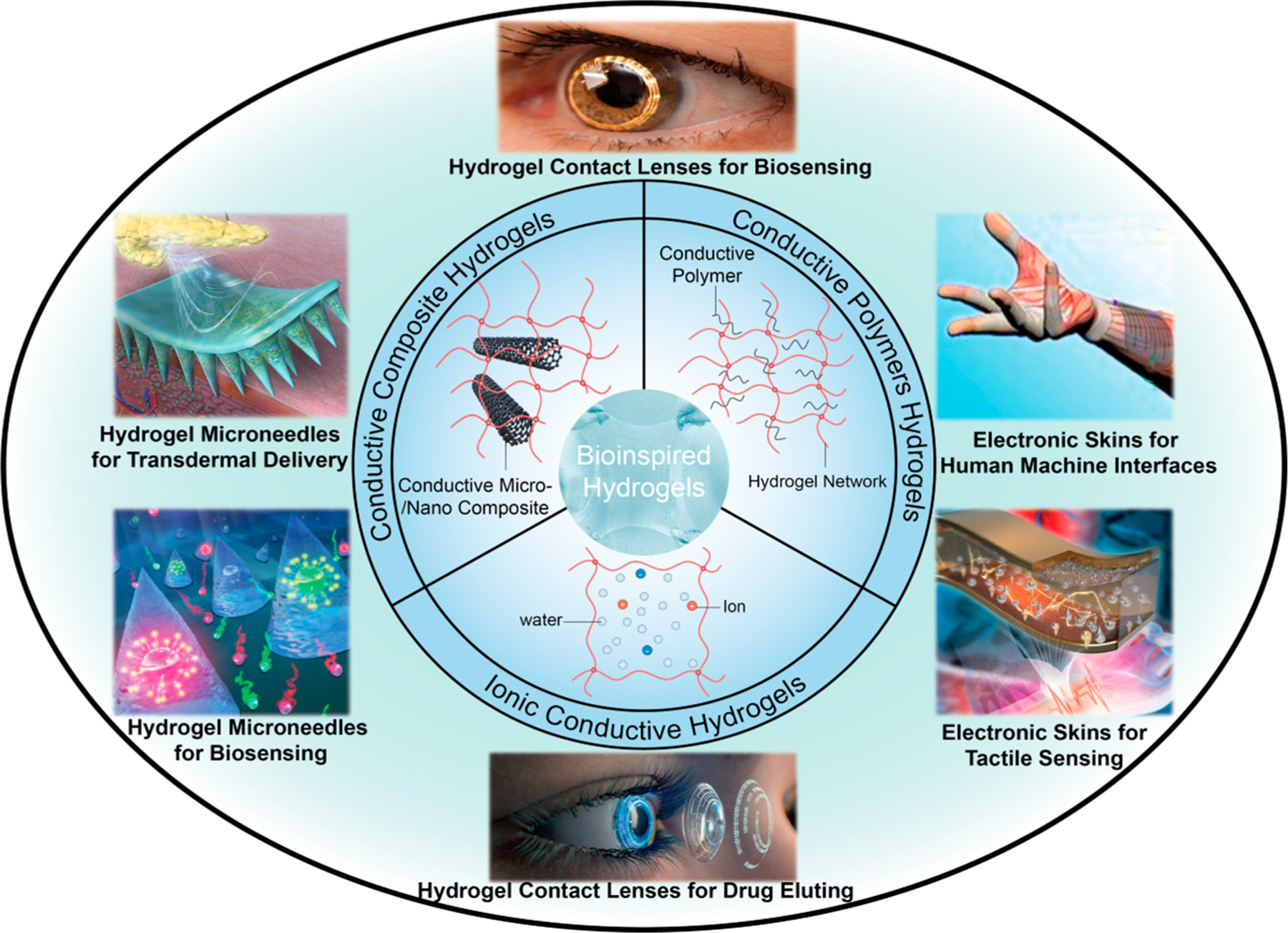
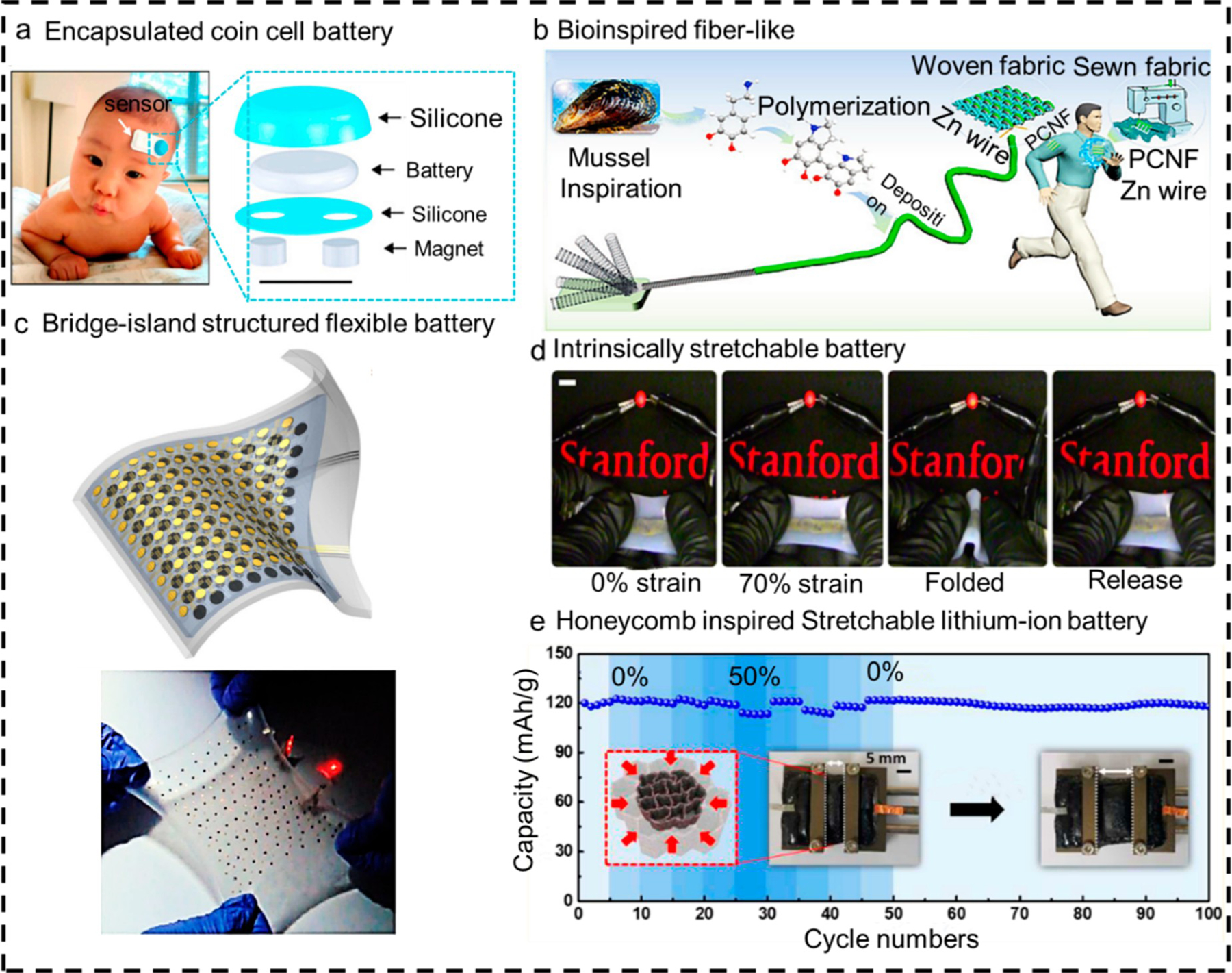
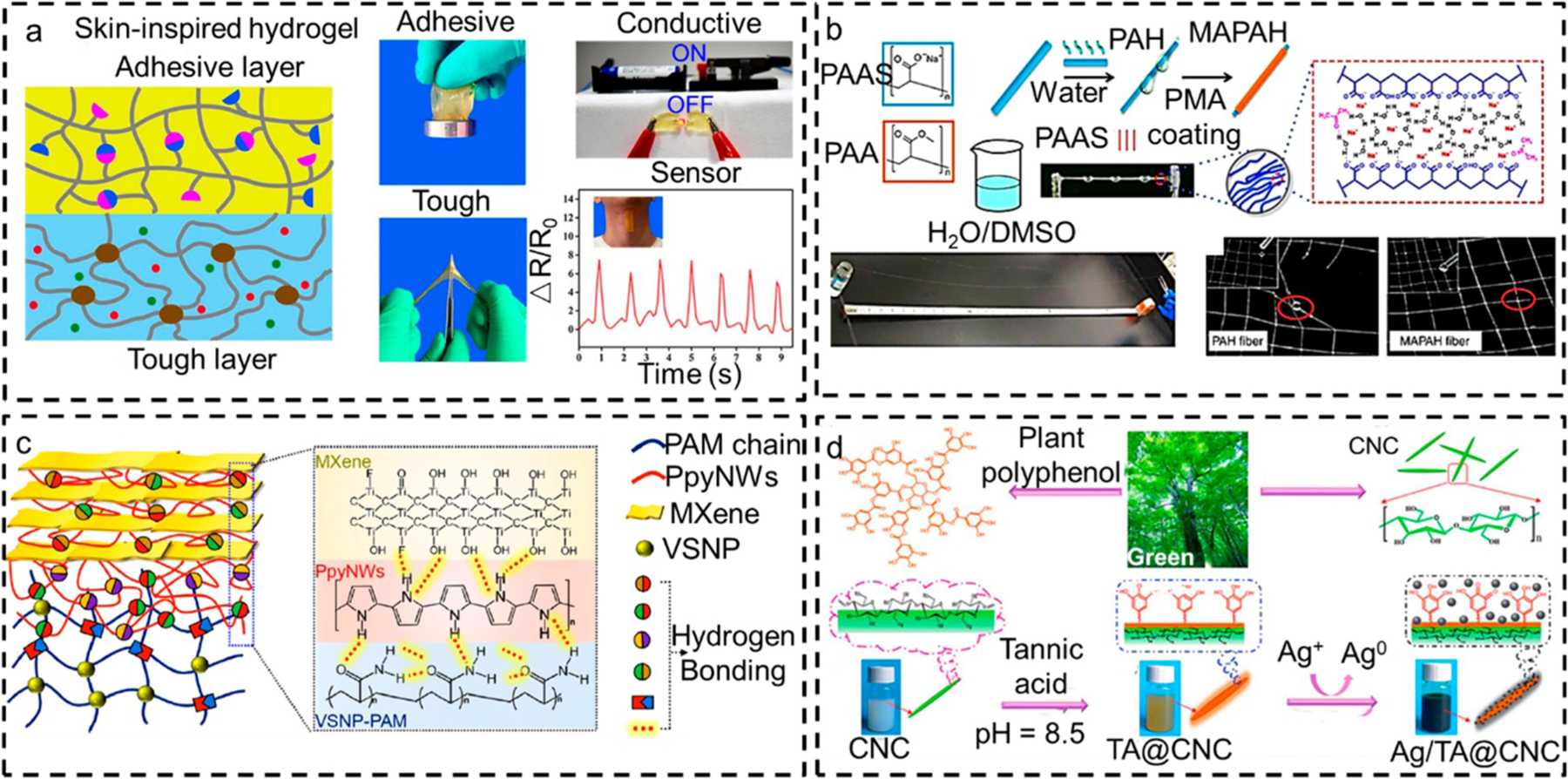
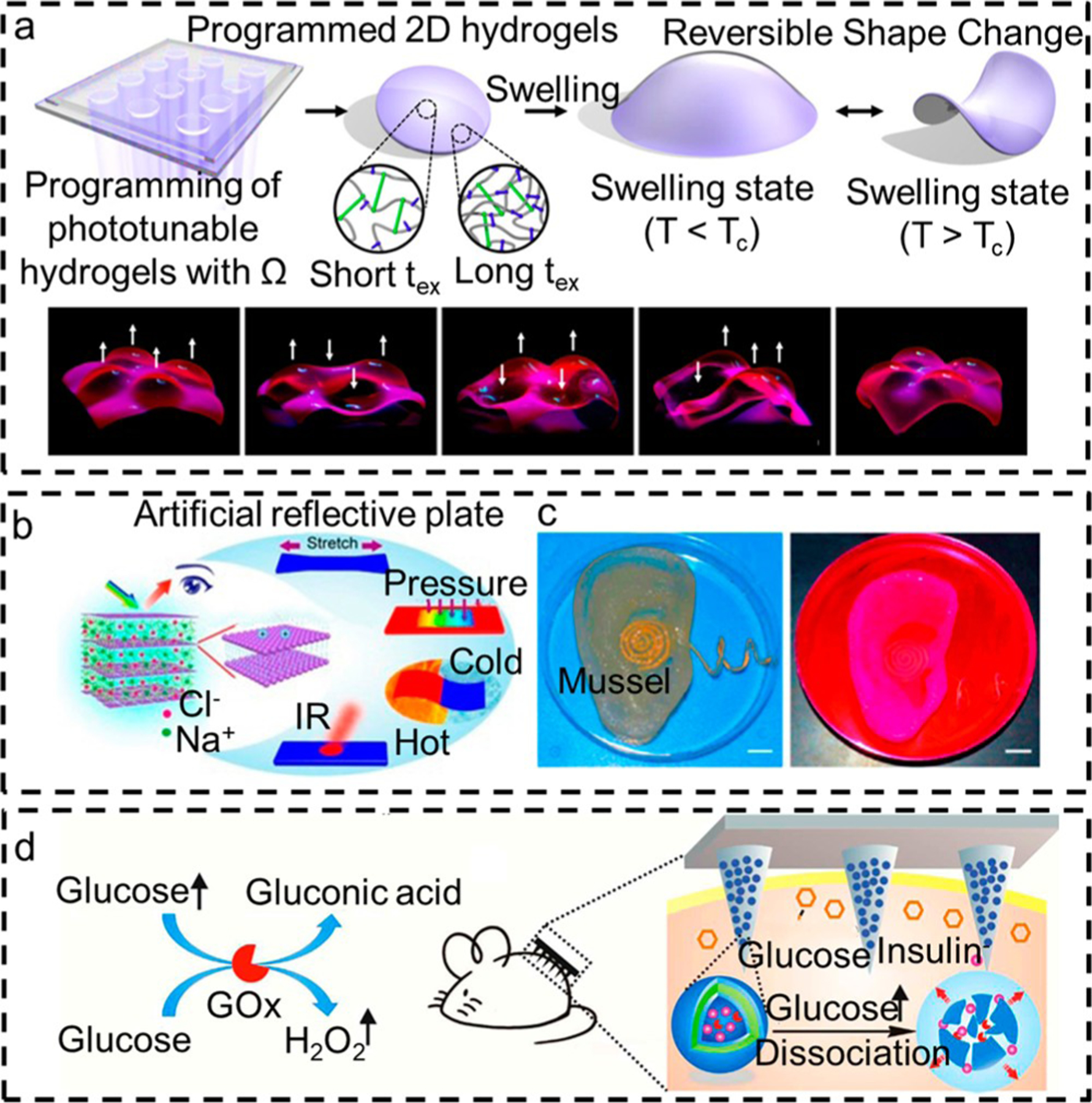
The remarkable ability of biological systems to sense and adapt to complex environmental conditions has inspired new materials and novel designs for next-generation wearable devices. Hydrogels are being intensively investigated for their versatile functions in wearable devices due to their superior softness, biocompatibility, and rapid stimulus response. This review focuses on recent strategies for developing bioinspired hydrogel wearable devices that can accommodate mechanical strain and integrate seamlessly with biological systems. We will provide an overview of different types of bioinspired hydrogels tailored for wearable devices. Next, we will discuss the recent progress of bioinspired hydrogel wearable devices such as electronic skin and smart contact lenses. Also, we will comprehensively summarize biosignal readout methods for hydrogel wearable devices as well as advances in powering and wireless data transmission technologies. Finally, current challenges facing these wearable devices are discussed, and future directions are proposed.
生物系统感知和适应复杂环境条件的非凡能力为下一代可穿戴设备的新型材料和新颖设计提供了灵感。水凝胶由于其优异的柔软性、生物相容性和快速的刺激响应,正在因其多功能性而被深入研究用于可穿戴设备。本综述重点介绍了开发可适应机械应变并与生物系统无缝集成的仿生水凝胶可穿戴设备的最新策略。我们将提供针对可穿戴设备定制的不同类型仿生水凝胶的概述。接下来,我们将讨论仿生水凝胶可穿戴设备(如电子皮肤和智能隐形眼镜)的最新进展。此外,我们还将全面总结水凝胶可穿戴设备的生物信号读出方法以及在供电和无线数据传输技术方面的进展。最后,讨论了这些可穿戴设备面临的当前挑战,并提出了未来的发展方向。