Garg Lalit, Chukwu Emeka, Nasser Nidal, Chakraborty Chinmay, Garg Gaurav
Department of Computer Information System (CIS)Faculty of Information Communication Technology (ICT), University of Malta 2080 Msida Malta.
College of EngineeringAlfaisal University Riyadh 50927 Saudi Arabia.
IEEE Access. 2020 Aug 31;8:159402-159414. doi: 10.1109/ACCESS.2020.3020513. eCollection 2020.
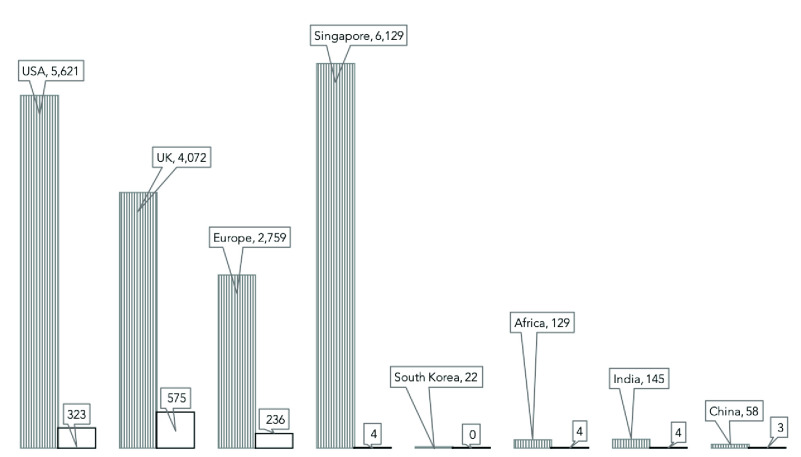
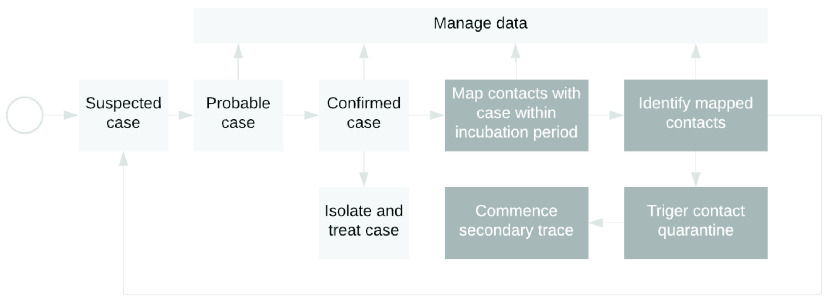
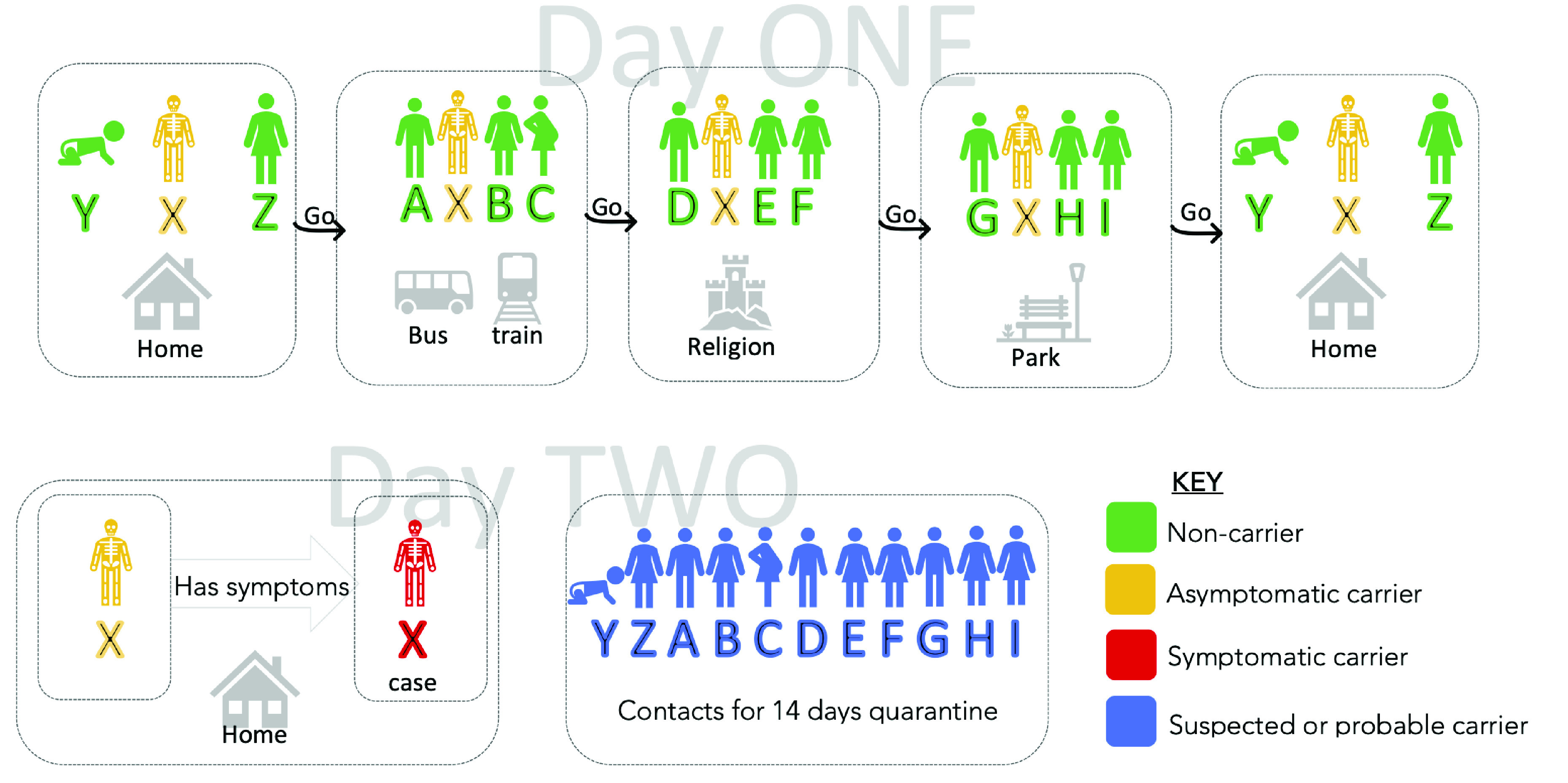
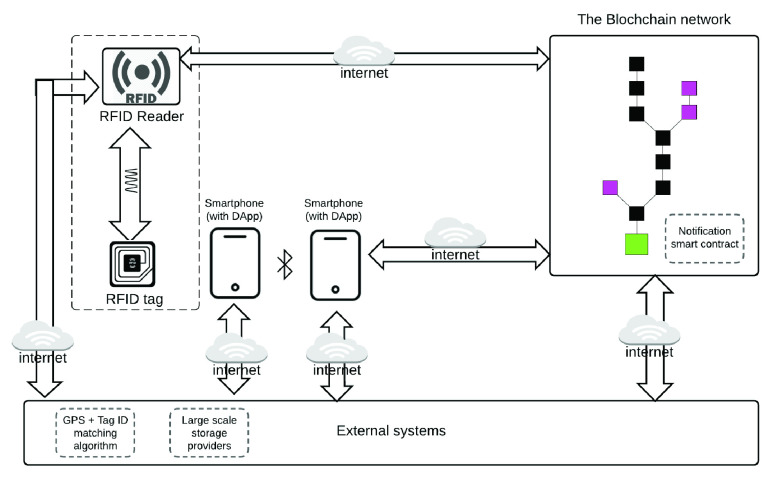
Automated digital contact tracing is effective and efficient, and one of the non-pharmaceutical complementary approaches to mitigate and manage epidemics like Coronavirus disease 2019 (COVID-19). Despite the advantages of digital contact tracing, it is not widely used in the western world, including the US and Europe, due to strict privacy regulations and patient rights. We categorized the current approaches for contact tracing, namely: mobile service-provider-application, mobile network operators' call detail, citizen-application, and IoT-based. Current measures for infection control and tracing do not include animals and moving objects like cars despite evidence that these moving objects can be infection carriers. In this article, we designed and presented a novel privacy anonymous IoT model. We presented an RFID proof-of-concept for this model. Our model leverages blockchain's trust-oriented decentralization for on-chain data logging and retrieval. Our model solution will allow moving objects to receive or send notifications when they are close to a flagged, probable, or confirmed diseased case, or flagged place or object. We implemented and presented three prototype blockchain smart contracts for our model. We then simulated contract deployments and execution of functions. We presented the cost differentials. Our simulation results show less than one-second deployment and call time for smart contracts, though, in real life, it can be up to 25 seconds on Ethereum public blockchain. Our simulation results also show that it costs an average of $1.95 to deploy our prototype smart contracts, and an average of $0.34 to call our functions. Our model will make it easy to identify clusters of infection contacts and help deliver a notification for mass isolation while preserving individual privacy. Furthermore, it can be used to understand better human connectivity, model similar other infection spread network, and develop public policies to control the spread of COVID-19 while preparing for future epidemics.
自动化数字接触者追踪是有效且高效的,是减轻和管理像2019冠状病毒病(COVID-19)这样的流行病的非药物补充方法之一。尽管数字接触者追踪有诸多优点,但由于严格的隐私法规和患者权利,它在西方世界,包括美国和欧洲,并未得到广泛应用。我们对当前的接触者追踪方法进行了分类,即:移动服务提供商应用程序、移动网络运营商的通话记录、公民应用程序和基于物联网的方法。目前的感染控制和追踪措施并未包括动物和像汽车这样的移动物体,尽管有证据表明这些移动物体可能是感染源。在本文中,我们设计并提出了一种新颖的隐私匿名物联网模型。我们展示了该模型的一个射频识别概念验证。我们的模型利用区块链面向信任的去中心化进行链上数据记录和检索。我们的模型解决方案将允许移动物体在接近被标记为有疑似或确诊病例的地点、物体或人时接收或发送通知。我们为我们的模型实现并展示了三个区块链智能合约原型。然后我们模拟了合约部署和函数执行。我们展示了成本差异。我们的模拟结果显示智能合约的部署和调用时间不到一秒,不过在现实生活中,在以太坊公共区块链上可能长达25秒。我们的模拟结果还表明,部署我们的原型智能合约平均成本为1.95美元,调用我们的函数平均成本为0.34美元。我们的模型将便于识别感染接触者群体,并有助于在保护个人隐私的同时为大规模隔离发出通知。此外,它可用于更好地理解人际联系,模拟类似的其他感染传播网络,并制定公共政策以控制COVID-19的传播,同时为未来的流行病做好准备。