Kollamparambil Umakrishnan, Oyenubi Adeola, Nwosu Chijioke
University of the Witwatersrand, Johannesburg, South Africa.
University of the Free State, Bloemfontein, Human Sciences Research Council, Cape Town, South Africa.
BMC Public Health. 2021 Nov 17;21(1):2113. doi: 10.1186/s12889-021-12196-4.
Vaccine hesitancy is emerging as a significant challenge in many parts of the world in the fight against the COVID19 pandemic. The continued infection amongst the unvaccinated can lead to a heightened risk of further virus mutation, exposing even those vaccinated to new virus strains. Therefore, there are social benefits in minimising vaccine hesitancy. The objective of this study is to assess the level of COVID19 vaccine hesitancy in South Africa, identify the socio-economic patterns in vaccine hesitancy and highlight insights from the national survey that can inform the development of a COVID-19 vaccination acceptance communication campaign.
The study uses the nationally representative National Income Dynamics Study - Coronavirus Rapid Mobile Survey (NIDS-CRAM) survey. The analysis combines univariate and bivariate statistics, as well as multivariate regression models like binomial/ordinal and multinomial logit.
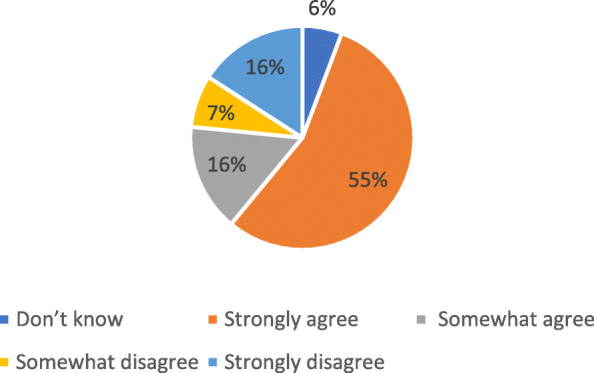
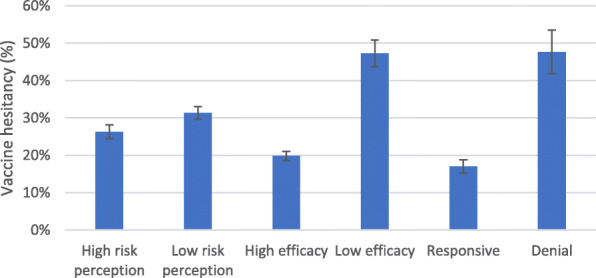
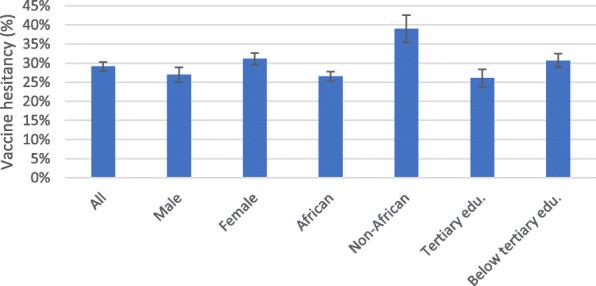
The study finds that vaccine acceptance is lower than that of non-pharmaceutical intervention like face-mask use. Only 55% fully accept the vaccine, while a further 16% are moderately accepting of vaccines. Together, vaccine acceptance is estimated at 70.8%, and vaccine hesitancy against COVID19 is estimated at 29.2% amongst the adult South African population. The study has identified the perceived risk of infection with the mediating role of efficacy as a key predictor of vaccine intention. Higher awareness of COVID19 related information and higher household income are correlated with lower vaccine hesitancy. The non-black African population group has significantly high vaccine hesitancy compared to black Africans.
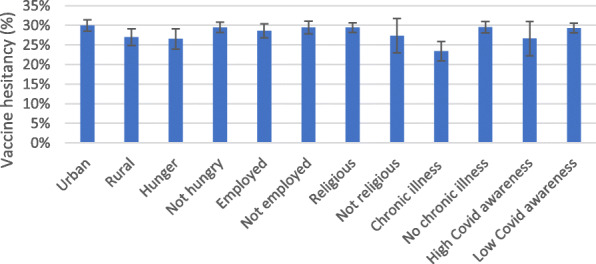
There are other significant differences across socio-economic and demographic variables in vaccine hesitancy. From a communication perspective, it is imperative to continue risk messaging, hand in hand with clearer information on the efficacy of the vaccines.
在抗击新冠疫情的斗争中,疫苗犹豫情绪在世界许多地区正成为一项重大挑战。未接种疫苗人群中持续的感染会导致病毒进一步变异的风险增加,使即使已接种疫苗的人也面临感染新毒株的风险。因此,尽量减少疫苗犹豫情绪具有社会效益。本研究的目的是评估南非新冠疫苗犹豫情绪的程度,确定疫苗犹豫情绪中的社会经济模式,并突出全国性调查中的见解,以为新冠疫苗接种接受度宣传活动的开展提供参考。
本研究使用具有全国代表性的国民收入动态研究 - 冠状病毒快速移动调查(NIDS-CRAM)。分析结合了单变量和双变量统计,以及二项式/有序和多项逻辑回归等多变量回归模型。
研究发现,疫苗接受度低于戴口罩等非药物干预措施的接受度。只有55%的人完全接受疫苗,另有16%的人对疫苗持中等接受态度。总体而言,南非成年人群中疫苗接受度估计为70.8%,对新冠疫苗的犹豫率估计为29.2%。该研究已确定,将感知感染风险与疫苗效力的中介作用作为疫苗接种意愿的关键预测因素。对新冠相关信息的更高认知度和更高的家庭收入与更低的疫苗犹豫情绪相关。与非洲黑人相比,非非洲黑人人群的疫苗犹豫情绪明显更高。
在疫苗犹豫情绪方面,社会经济和人口统计学变量之间还存在其他显著差异。从宣传角度来看,必须继续传递风险信息,同时更清晰地说明疫苗的效力。