Faculdade de Medicina, Universidade de São Paulo, São Paulo, Brasil.
Universidade Federal de Santa Catarina, Florianópolis, Brasil.
Cad Saude Publica. 2023 Aug 7;39(8):e00041423. doi: 10.1590/0102-311XPT041423. eCollection 2023.
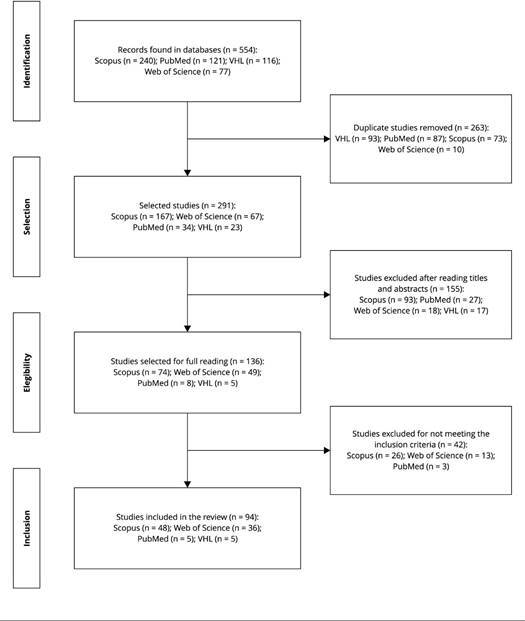
Vaccination has played an important role in the containment of COVID-19 pandemic advances. However, SARS-CoV-2 vaccine hesitancy has caused a global concern. This scoping review aims to map the scientific literature on COVID-19 vaccine hesitancy in Latin America and Africa from a Global Health perspective, observing the particularities of the Global South and using parameters validated by the World Health Organization (WHO). The review reporting observes the recommendations of the PRISMA for Scoping Reviews (PRISMA-ScR) model. Search was conducted in PubMed, Scopus, Web of Science, and Virtual Health Library (VHL) databases, selecting studies published from January 1, 2020 to January 22, 2022. Selected studies indicate that COVID-19 vaccine hesitancy involves factors such as political scenario, spread of misinformation, regional differences in each territory regarding Internet access, lack of access to information, history of vaccination resistance, lack of information about the disease and the vaccine, concern about adverse events, and vaccine efficacy and safety. Regarding the use of conceptual and methodology references from the WHO for vaccine hesitancy, few studies (6/94) use research instruments based on these references. Then, the replication in Global South of conceptual and methodological parameters developed by experts from the Global North contexts has been criticized from the perspective of Global Health because of it may not consider political and sociocultural particularities, the different nuances of vaccine hesitancy, and issues of access to vaccines.
疫苗接种在控制 COVID-19 疫情方面发挥了重要作用。然而,SARS-CoV-2 疫苗犹豫已引起全球关注。本范围综述旨在从全球健康角度绘制拉丁美洲和非洲 COVID-19 疫苗犹豫的科学文献,观察南方共同市场的特殊性,并使用世界卫生组织(WHO)验证的参数。综述报告观察了 PRISMA 用于范围综述(PRISMA-ScR)模型的建议。在 PubMed、Scopus、Web of Science 和虚拟健康图书馆(VHL)数据库中进行了搜索,选择了 2020 年 1 月 1 日至 2022 年 1 月 22 日期间发表的研究。选定的研究表明,COVID-19 疫苗犹豫涉及政治局势、错误信息传播、每个地区互联网接入方面的区域差异、缺乏信息获取、疫苗接种抵抗史、对疾病和疫苗的信息缺乏、对不良事件的担忧以及疫苗的有效性和安全性等因素。关于使用来自 WHO 的疫苗犹豫的概念和方法参考,很少有研究(6/94)使用基于这些参考的研究工具。然后,从全球健康的角度来看,来自全球北方背景的专家开发的概念和方法参数在全球南方的复制受到了批评,因为它可能不考虑政治和社会文化的特殊性、疫苗犹豫的不同细微差别以及疫苗获取问题。