Weinstein Netta, Nguyen Thuy-Vy, Hansen Heather
School of Psychology and Clinical Language Science, University of Reading, Reading, United Kingdom.
Department of Psychology, Durham University, Durham, United Kingdom.
Front Psychol. 2021 Nov 1;12:714518. doi: 10.3389/fpsyg.2021.714518. eCollection 2021.
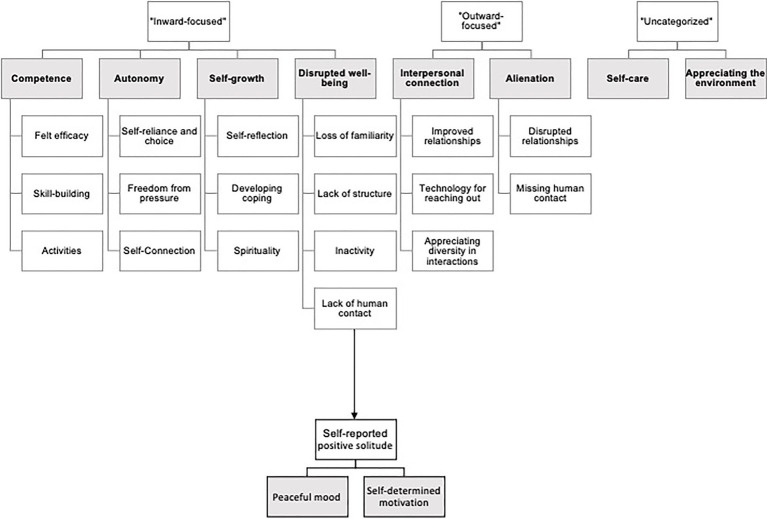
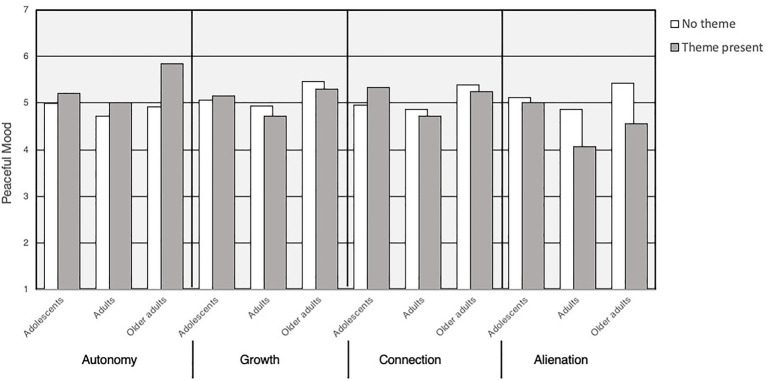
Solitude - the state of being alone and not physically with another - can be rewarding. The present research explored the potential benefits of solitude from a pragmatist approach: a ground-up, top-down perspective that is receptive to new knowledge but informed by theory. Participant recruitment was stratified by age and gender, and the sample involved 2,035 individuals including adolescents (13-16 years), adults (35-55 years), or older adults (65+ years). Data were analyzed with a mixed-methods approach. Coded themes from brief narratives about solitude were extracted, and their frequencies (i.e., ) were compared across the lifespan. Themes were then correlated with two indicators of well-being in solitude: self-determined motivation for solitude and peaceful mood. Several prominent themes emerged when talking about time spent in solitude. With the exception of feeling competent in solitude, which was described frequently but consistently unrelated to self-reported well-being regardless of age, benefits of solitude tended to shift over the lifespan. Some qualities, such as a sense of autonomy (self-connection and reliance; absence of pressure), were salient and consequential for everyone, but increasingly so from adolescence to older adulthood. Older adults also reported feeling most peaceful in solitude and described their social connection and alienation less frequently, suggesting they see solitude and social time as more distinct states. Findings are discussed in light of existing work on solitude across the lifespan, and theoretical frameworks that spoke well to the data (e.g., self-determination theory).
独处——独自一人且没有他人在身边的状态——可能是有益的。本研究从实用主义的角度探讨了独处的潜在益处:这是一种自下而上、自上而下的视角,既接受新知识,又以理论为依据。参与者的招募按年龄和性别进行分层,样本包括2035名个体,其中有青少年(13 - 16岁)、成年人(35 - 55岁)或老年人(65岁及以上)。数据采用混合方法进行分析。从关于独处的简短叙述中提取编码主题,并比较其在整个生命周期中的出现频率。然后将这些主题与独处时幸福感的两个指标相关联:独处的自主动机和平静情绪。在谈论独处时光时出现了几个突出的主题。除了在独处时感到有能力这一点,尽管经常被提及,但无论年龄如何,它与自我报告的幸福感始终无关外,独处的益处往往会在整个生命周期中发生变化。一些特质,比如自主感(自我联系和依赖;没有压力),对每个人来说都很显著且很重要,但从青少年到老年成年人,这种重要性越来越明显。老年人还报告说在独处时感觉最平静,并且较少描述他们的社会联系和疏离感,这表明他们将独处和社交时间视为更不同的状态。研究结果结合了关于整个生命周期中独处的现有研究以及与数据相符的理论框架(例如自我决定理论)进行了讨论。