Flajšman Marko, Slapnik Miha, Murovec Jana
Department of Agronomy, Biotechnical Faculty, University of Ljubljana, Ljubljana, Slovenia.
Front Plant Sci. 2021 Nov 1;12:718092. doi: 10.3389/fpls.2021.718092. eCollection 2021.
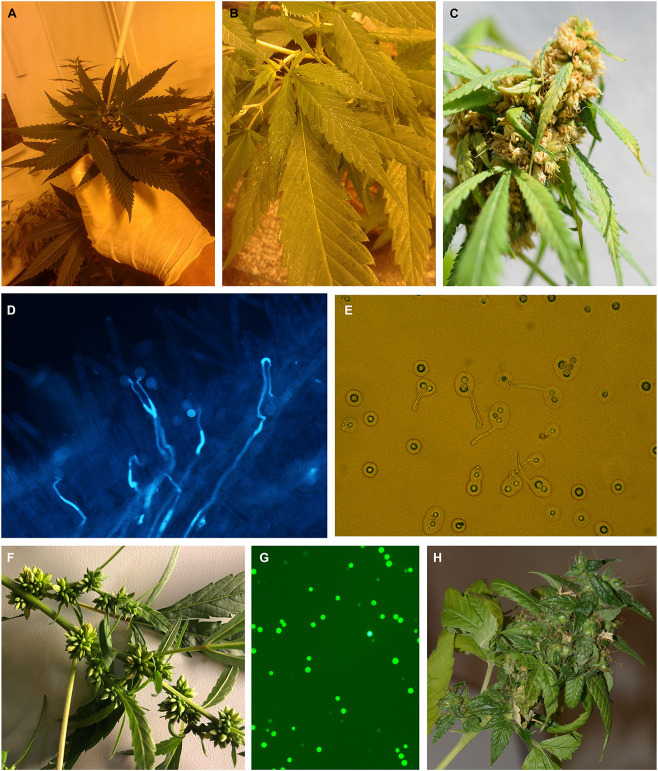
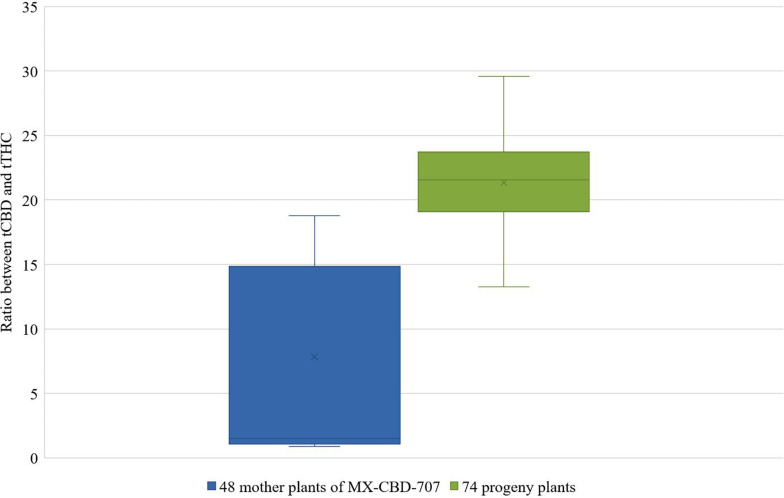
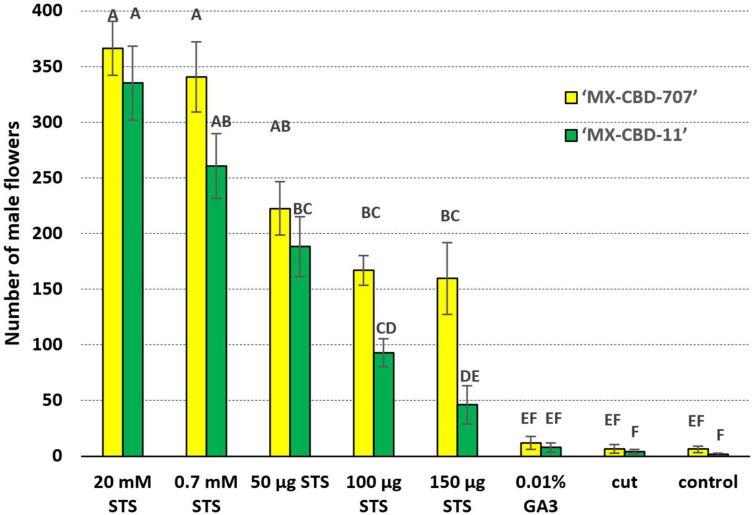
The use of the cannabis plant as a source of therapeutic compounds is gaining great importance since restrictions on its growth and use are gradually reduced throughout the world. Intensification of medical (drug type) cannabis production stimulated breeding activities aimed at developing new, improved cultivars with precisely defined, and stable cannabinoid profiles. The effects of several exogenous substances, known to be involved in sex expressions, such as silver thiosulfate (STS), gibberellic acid (GA), and colloidal silver, were analyzed in this study. Various concentrations were tested within 23 different treatments on two high cannabidiol (CBD) breeding populations. Our results showed that spraying whole plants with STS once is more efficient than the application of STS on shoot tips while spraying plants with 0.01% GA and intensive cutting is ineffective in stimulating the production of male flowers. Additionally, spraying whole plants with colloidal silver was also shown to be effective in the induction of male flowers on female plants, since it produced up to 379 male flowers per plant. The viability and fertility of the induced male flowers were confirmed by fluorescein diacetate (FDA) staining of pollen grains, and germination tests of pollen, counting the number of seeds developed after hybridization, and evaluating germination rates of developed seeds. Finally, one established protocol was implemented for crossing selected female plants. The cannabinoid profile of the progeny was compared with the profile of the parental population and an improvement in the biochemical profile of the breeding population was confirmed. The progeny had a higher and more uniform total CBD (tCBD) to total tetrahydrocannabinol (tTHC) ratio (up to 29.6; average 21.33 ± 0.39) compared with the original population (up to 18.8; average 7.83 ± 1.03). This is the first comprehensive report on the induction of fertile male flowers on female plants from dioecious medical cannabis ( L.).
随着全球对大麻植物种植和使用的限制逐渐放宽,将其用作治疗性化合物来源的重要性日益凸显。医用(毒品类)大麻生产的集约化刺激了育种活动,旨在培育具有精确界定且稳定大麻素谱的新型改良品种。本研究分析了几种已知参与性别表达的外源物质的作用,如硫代硫酸银(STS)、赤霉素(GA)和胶体银。在两个高大麻二酚(CBD)育种群体上进行了23种不同处理,测试了各种浓度。我们的结果表明,对整株植物喷施一次STS比在茎尖施用STS更有效,而喷施0.01%的GA和重度修剪在刺激雄花产生方面无效。此外,对整株植物喷施胶体银也被证明可有效诱导雌株产生雄花,因为每株植物最多可产生379朵雄花。通过花粉粒的荧光素二乙酸酯(FDA)染色、花粉发芽试验、统计杂交后发育种子的数量以及评估发育种子的发芽率,证实了诱导雄花的活力和育性。最后,实施了一个既定方案来对选定的雌株进行杂交。将后代的大麻素谱与亲本群体的谱进行比较,证实了育种群体生化谱的改善。与原始群体(最高18.8;平均7.83±1.03)相比,后代具有更高且更均匀的总CBD(tCBD)与总四氢大麻酚(tTHC)比率(最高29.6;平均21.33±0.39)。这是关于雌雄异株医用大麻(L.)雌株上诱导可育雄花的首份综合报告。