Wang Na, Zhou Faying, Chen Caiyu, Luo Hao, Guo Jingwen, Wang Wei, Yang Jian, Li Liangpeng
Department of Cardiology, Daping Hospital, The Third Military Medical University, Chongqing, China.
Chongqing Key Laboratory of Hypertension Research, Chongqing Institute of Cardiology, Chongqing, China.
Front Cell Dev Biol. 2021 Nov 1;9:673993. doi: 10.3389/fcell.2021.673993. eCollection 2021.
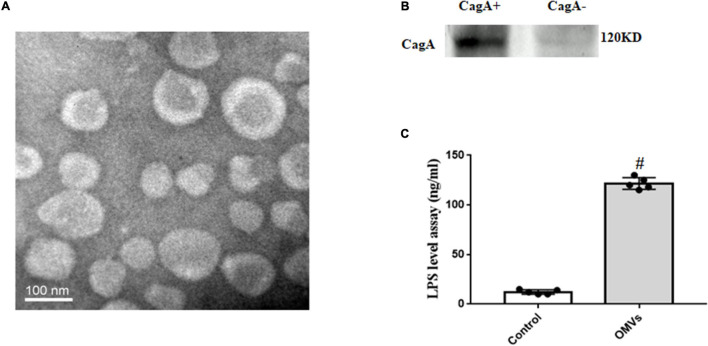
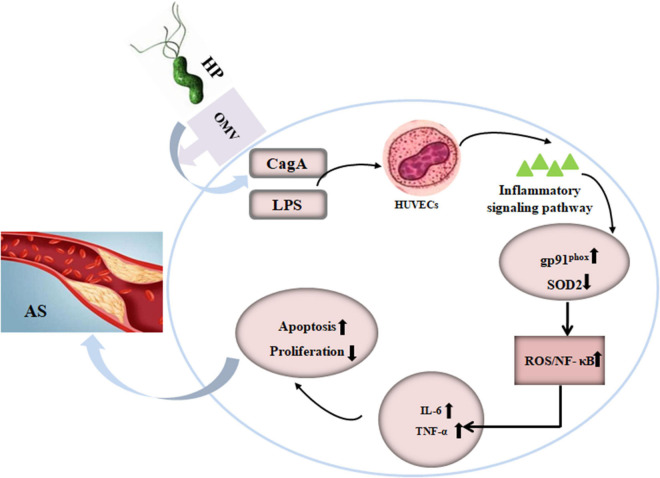
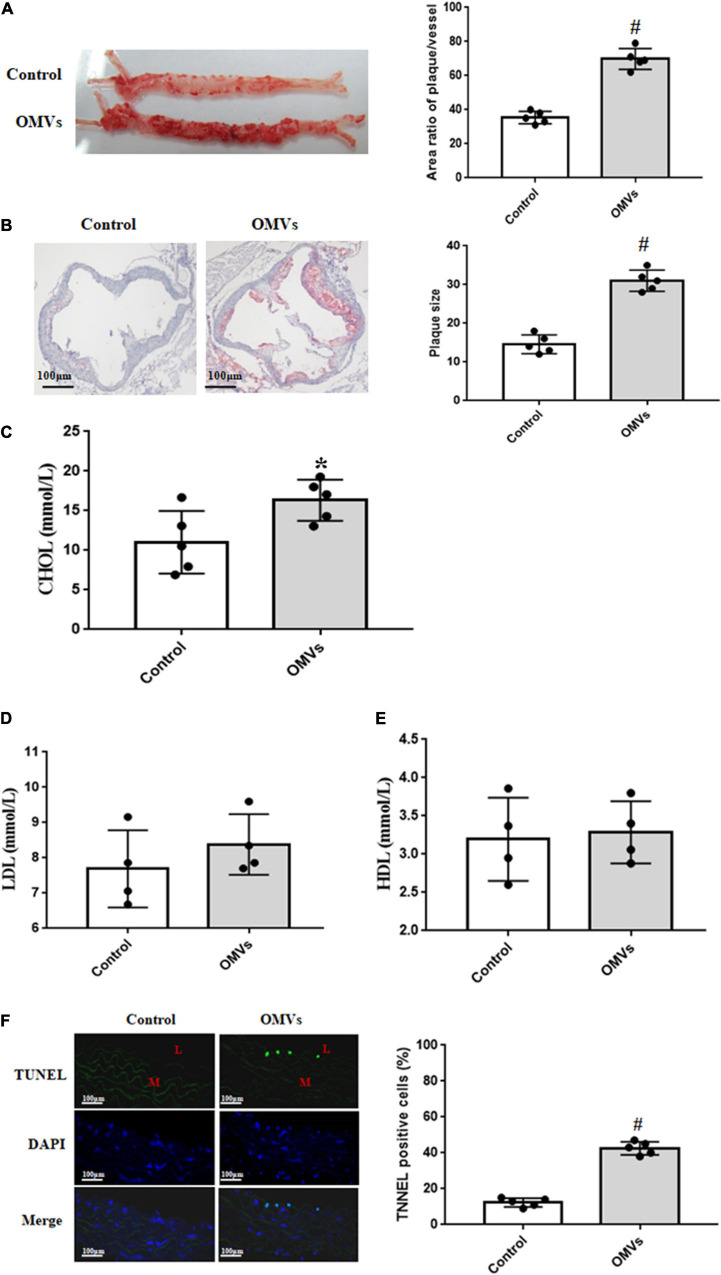
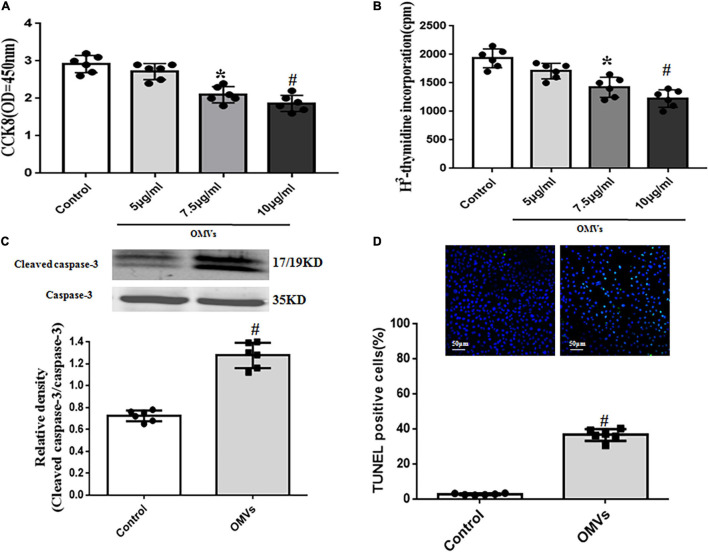
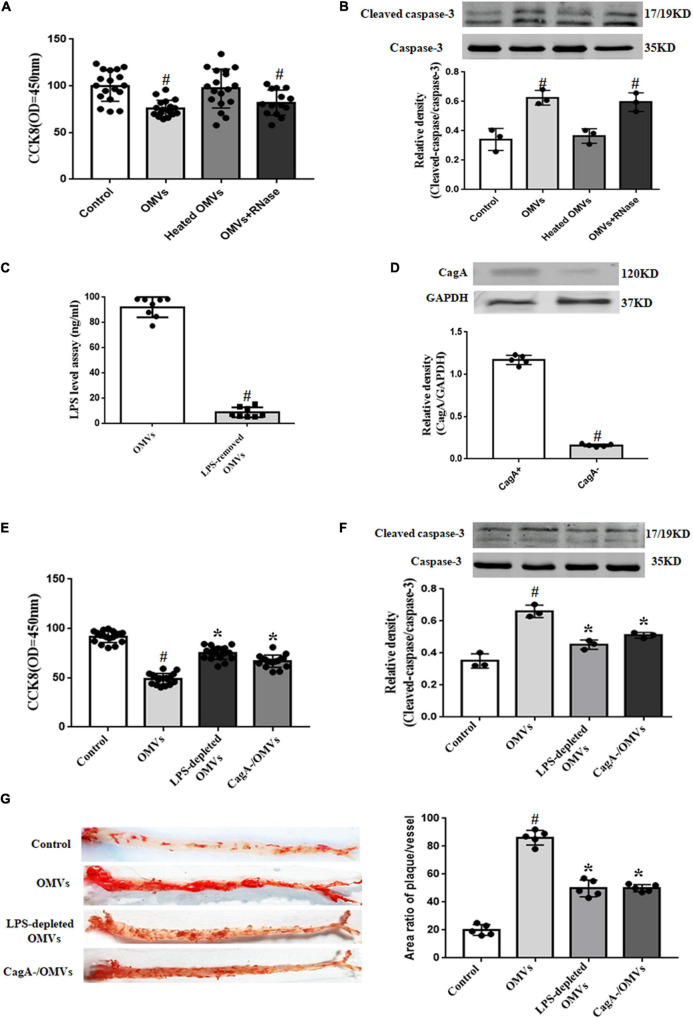
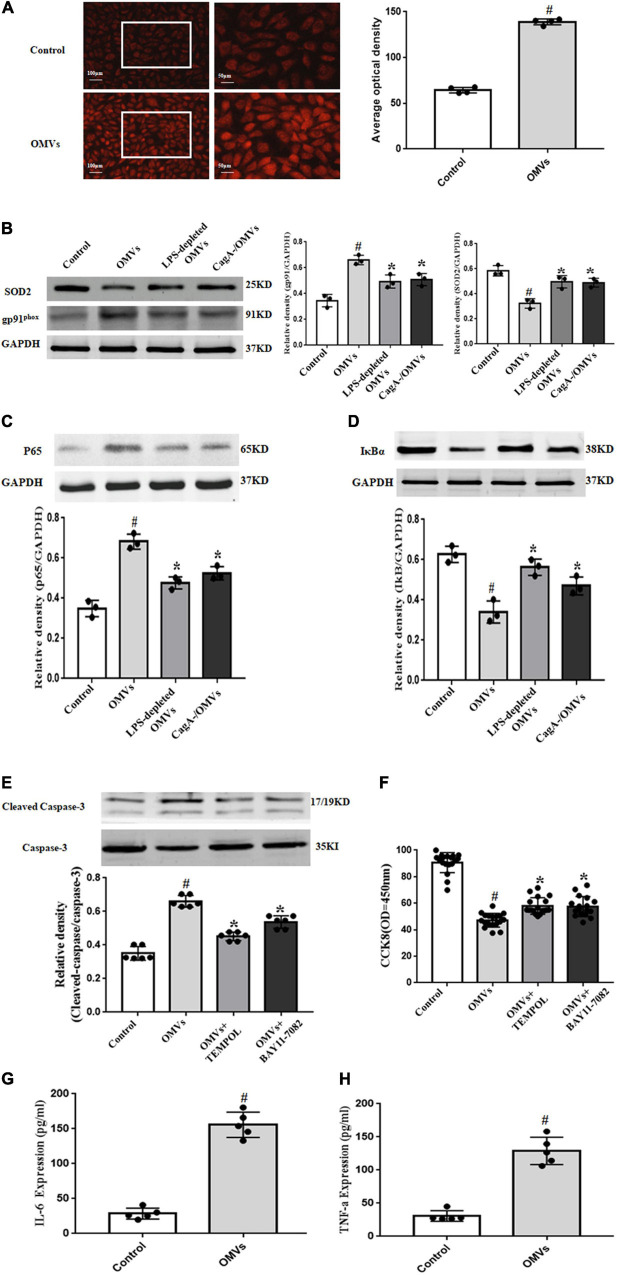
Infection is thought to be involved in the pathogenesis of atherosclerosis. Studies have shown the association between () and coronary artery disease. It is interesting to find DNA and cytotoxin-associated gene A (CagA) protein in atherosclerotic plaque. Outer membrane vesicles (OMVs), secreted by , exert effects in the distant organ or tissue. However, whether or not OMVs from are involved in the pathogenesis of atherosclerosis remains unknown. Our present study found that treatment with OMVs from CagA-positive accelerated atherosclerosis plaque formation in ApoE mice. -derived OMVs inhibited proliferation and promoted apoptosis of human umbilical vein endothelial cells (HUVECs), which was also reflected in studies. These effects were normalized to some degree after treatment with lipopolysaccharide (LPS)-depleted CagA-positive OMVs or CagA-negative OMVs. Treatment with -derived OMVs increased reactive oxygen species (ROS) levels and enhanced the activation of nuclear factor-κB (NF-κB) in HUVECs, which were reversed to some degree in the presence of a superoxide dismutase mimetic TEMPOL and a NF-κB inhibitor BAY11-7082. Expressions of interleukin-6 (IL-6) and tumor necrosis factor alpha (TNF-α), two inflammatory factors, were augmented after treatment with OMVs from These suggest that -derived OMVs accelerate atherosclerosis plaque formation via endothelium injury. CagA and LPS from -OMVs, at least in part, participate in these processes, which may be involved with the activation of ROS/NF-κB signaling pathway. These may provide a novel strategy to reduce the incidence and development of atherosclerosis.
感染被认为与动脉粥样硬化的发病机制有关。研究表明()与冠状动脉疾病之间存在关联。在动脉粥样硬化斑块中发现(某种细菌的)DNA和细胞毒素相关基因A(CagA)蛋白很有意思。(某种细菌)分泌的外膜囊泡(OMVs)在远处的器官或组织中发挥作用。然而,来自(该细菌)的OMVs是否参与动脉粥样硬化的发病机制仍不清楚。我们目前的研究发现,用来自CagA阳性(该细菌)的OMVs处理可加速ApoE小鼠动脉粥样硬化斑块的形成。(该细菌)来源的OMVs抑制人脐静脉内皮细胞(HUVECs)的增殖并促进其凋亡,这在(相关)研究中也有体现。用去除脂多糖(LPS)的CagA阳性OMVs或CagA阴性OMVs处理后,这些作用在一定程度上恢复正常。用(该细菌)来源的OMVs处理可增加HUVECs中的活性氧(ROS)水平并增强核因子κB(NF-κB)的激活,在存在超氧化物歧化酶模拟物TEMPOL和NF-κB抑制剂BAY11-7082的情况下,这些作用在一定程度上得到逆转。用(该细菌)的OMVs处理后,两种炎症因子白细胞介素-6(IL-6)和肿瘤坏死因子α(TNF-α)的表达增加。这些表明(该细菌)来源的OMVs通过内皮损伤加速动脉粥样硬化斑块的形成。来自(该细菌)OMVs的CagA和LPS至少部分参与了这些过程,这可能与ROS/NF-κB信号通路的激活有关。这些可能为降低动脉粥样硬化的发生率和发展提供一种新策略。