Indiana University School of Medicine, Department of Radiology and Imaging Sciences, Evansville, IN, 47715, USA.
Washington University in St. Louis, Department of Mechanical Engineering and Materials Science, St. Louis, MO, 63130, USA.
Nat Commun. 2021 Nov 18;12(1):6681. doi: 10.1038/s41467-021-26971-9.
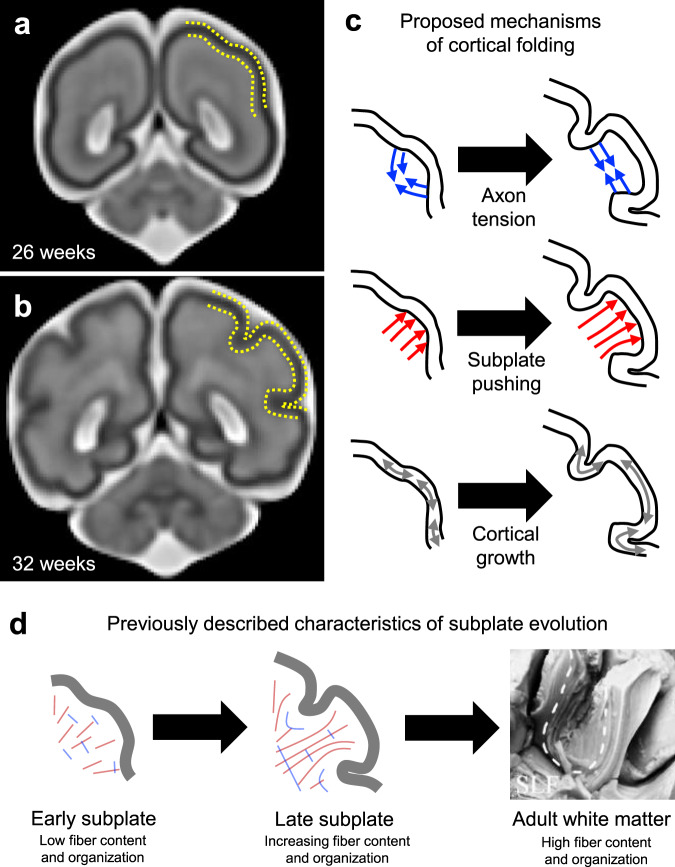
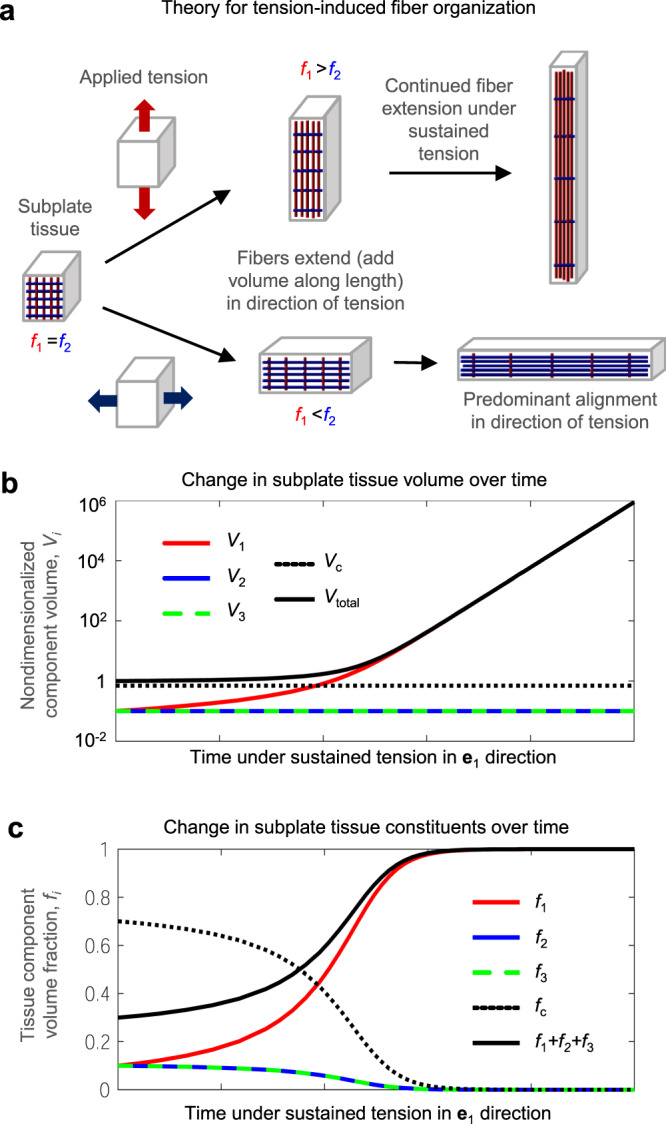
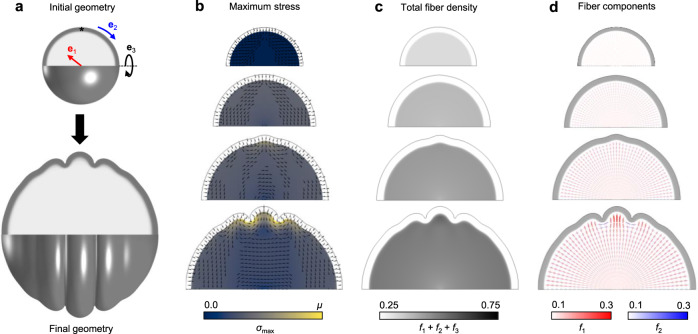
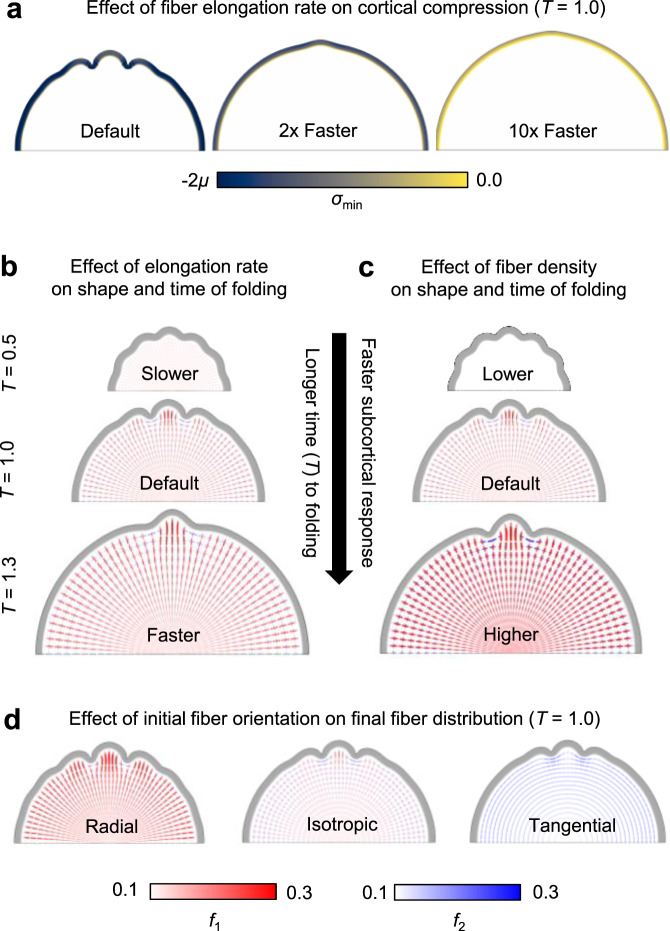
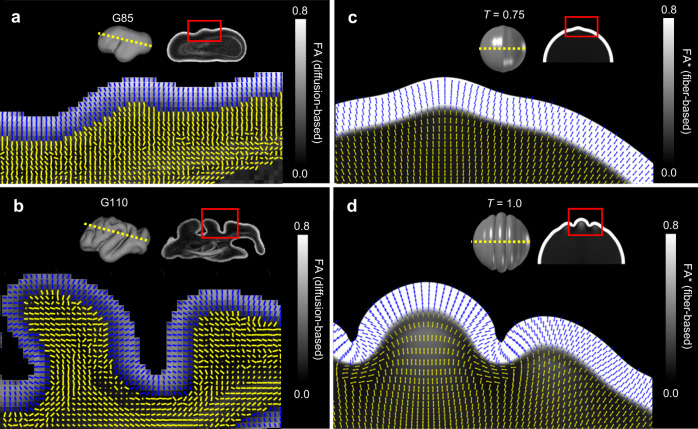
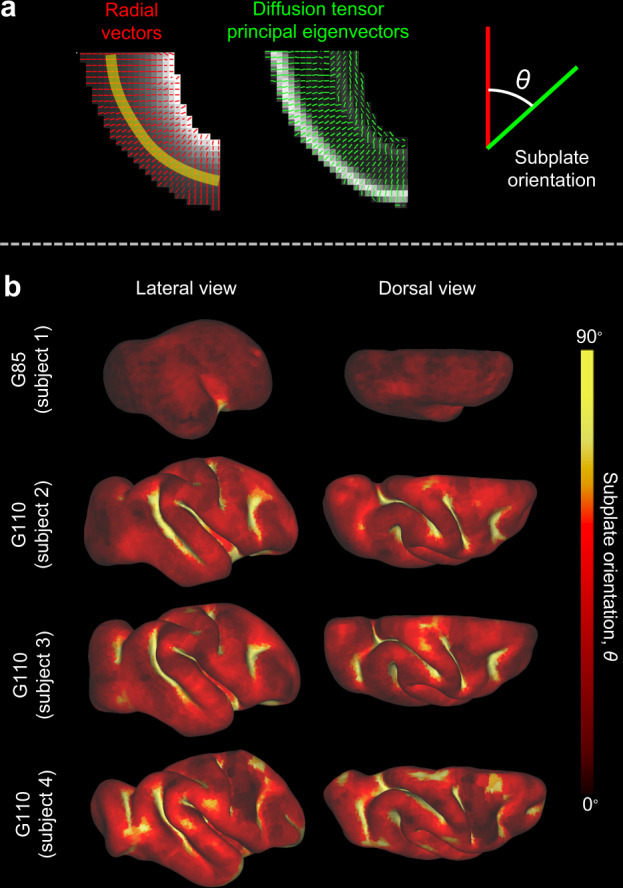
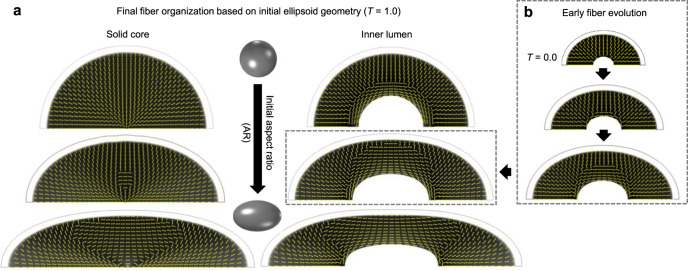
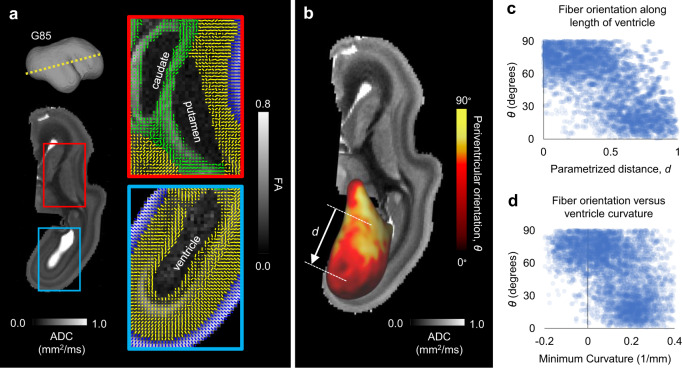
The past decade has experienced renewed interest in the physical processes that fold the developing cerebral cortex. Biomechanical models and experiments suggest that growth of the cortex, outpacing growth of underlying subcortical tissue (prospective white matter), is sufficient to induce folding. However, current models do not explain the well-established links between white matter organization and fold morphology, nor do they consider subcortical remodeling that occurs during the period of folding. Here we propose a framework by which cortical folding may induce subcortical fiber growth and organization. Simulations incorporating stress-induced fiber elongation indicate that subcortical stresses resulting from folding are sufficient to induce stereotyped fiber organization beneath gyri and sulci. Model predictions are supported by high-resolution ex vivo diffusion tensor imaging of the developing rhesus macaque brain. Together, results provide support for the theory of cortical growth-induced folding and indicate that mechanical feedback plays a significant role in brain connectivity.
过去十年中,人们对发育中的大脑皮层的物理折叠过程重新产生了兴趣。生物力学模型和实验表明,皮层的生长速度超过了下皮层组织(潜在的白质)的生长速度,足以引起折叠。然而,目前的模型既不能解释已经确立的白质组织和褶皱形态之间的联系,也不能考虑折叠过程中发生的下皮层重塑。在这里,我们提出了一个框架,通过这个框架,皮层折叠可以诱导下皮层纤维的生长和组织。将应力诱导纤维伸长纳入其中的模拟表明,折叠产生的下皮层应力足以诱导脑回和脑沟下纤维的刻板组织。模型预测得到了发育中的恒河猴大脑的高分辨率离体扩散张量成像的支持。总之,研究结果为皮层生长诱导折叠的理论提供了支持,并表明机械反馈在脑连接中起着重要作用。