Hashida Tomoaki, Hata Nanami, Higashi Akiko, Oka Yoshito, Otani Shunsuke, Watanabe Eizo
Department of Emergency and Critical Care Medicine, Eastern Chiba Medical Center, Togane, Japan.
Department of General Medical Science, Graduate School of Medicine, Chiba University, Chiba, Japan.
Front Med (Lausanne). 2021 Nov 2;8:777421. doi: 10.3389/fmed.2021.777421. eCollection 2021.
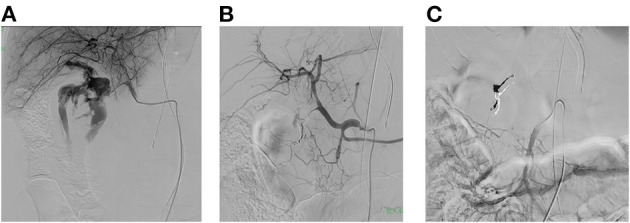
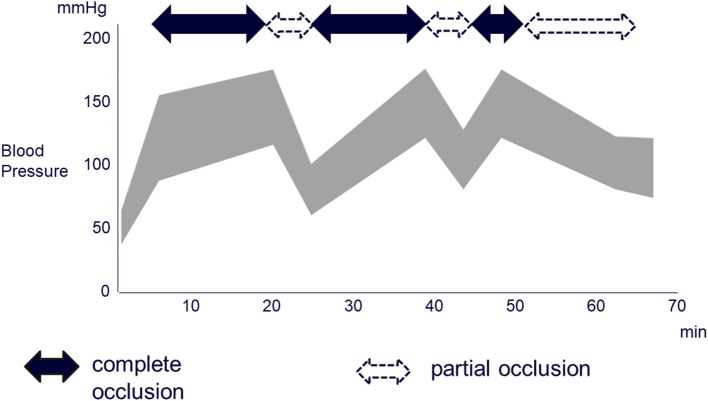
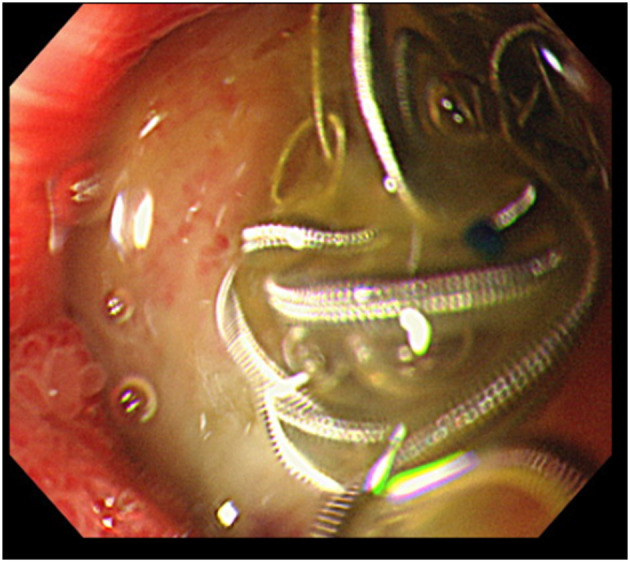
Resuscitative endovascular balloon occlusion of the aorta (REBOA) is performed to treat hemorrhagic shock, whose cause is located below the diaphragm. However, its use in patients with gastrointestinal hemorrhage is relatively rare. The 45-year-old man with a history of dilated cardiomyopathy had experienced epigastric discomfort and had an episode of presyncope. On his presentation, the patient's blood pressure was 82/64 mmHg, heart rate 140/min, and consciousness level GCS E4V5M6. Hemodynamics stabilized rapidly with a transfusion that was administered on an emergency basis, and a blood sample only showed mild anemia (Hb, 11.5 g/dL). The patient was admitted to investigating the presyncope episode, and the planned endoscopy was scheduled the following day. The patient had an episode of presyncope soon and was found in hemorrhagic shock resulting from a duodenal ulcer rapidly deteriorated to cardiac arrest. Although a spontaneous heartbeat was restored with cardiopulmonary resuscitation, the patient's hemodynamics were unstable despite the emergency blood transfusion administered by pumping. Consequently, a REBOA device was placed, resuscitation was continued, and hemostasis was achieved by vascular embolization for the gastroduodenal artery. The patient was subsequently discharged without complications. However, there is no established evidence regarding the REBOA use in upper gastrointestinal hemorrhage, and the investigations that have been reported have been limited. Further, one recent research suggests that appropriate patient selection and early use may improve survival in these life-threatening cases. As was seen in the present case, REBOA can effectively treat upper gastrointestinal hemorrhage by temporarily stabilizing hemodynamics and enabling a hemostatic procedure to be quickly performed during that time. This report also demonstrated the hemodynamics during the combination of intermittent and partial REBOA to avoid the complications of ischemic or reperfusion injury of the intestines or lower extremities.
主动脉内复苏性球囊阻断术(REBOA)用于治疗出血性休克,其病因位于膈肌以下。然而,其在胃肠道出血患者中的应用相对较少。一名45岁有扩张型心肌病病史的男性,曾经历上腹部不适并发生过一次晕厥前发作。就诊时,患者血压为82/64 mmHg,心率140次/分钟,意识水平为GCS E4V5M6。紧急输血后血流动力学迅速稳定,血液样本仅显示轻度贫血(血红蛋白,11.5 g/dL)。患者入院以调查晕厥前发作情况,计划次日进行内镜检查。患者很快又发作了一次晕厥前发作,被发现因十二指肠溃疡导致出血性休克并迅速恶化为心脏骤停。尽管通过心肺复苏恢复了自主心跳,但尽管通过泵注进行了紧急输血,患者的血流动力学仍不稳定。因此,放置了REBOA装置,继续进行复苏,并通过对胃十二指肠动脉进行血管栓塞实现了止血。患者随后出院,无并发症。然而,关于REBOA在上消化道出血中的应用尚无确凿证据,且已报道的研究有限。此外,最近的一项研究表明,适当的患者选择和早期使用可能会提高这些危及生命病例的生存率。如本病例所示,REBOA可通过暂时稳定血流动力学并在此期间迅速进行止血程序,有效治疗上消化道出血。本报告还展示了间歇性和部分性REBOA联合使用期间的血流动力学情况,以避免肠道或下肢缺血或再灌注损伤的并发症。