He Xiangming, Gu Jinping, Zou Dehong, Yang Hongjian, Zhang Yongfang, Ding Yuqing, Teng Lisong
The First Affiliated Hospital, Zhejiang University School of Medicine (FAHZU), Hangzhou, China.
Chinese Academy of Sciences, Institute of Basic Medicine and Cancer (IBMC), The Cancer Hospital of the University of Chinese Academy of Sciences (Zhejiang Cancer Hospital), Hangzhou, China.
Front Mol Biosci. 2021 Nov 2;8:708052. doi: 10.3389/fmolb.2021.708052. eCollection 2021.
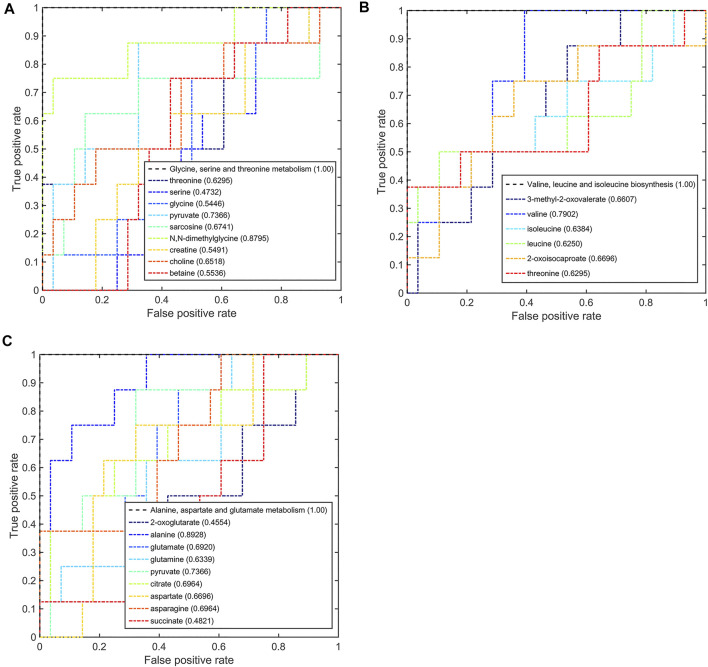
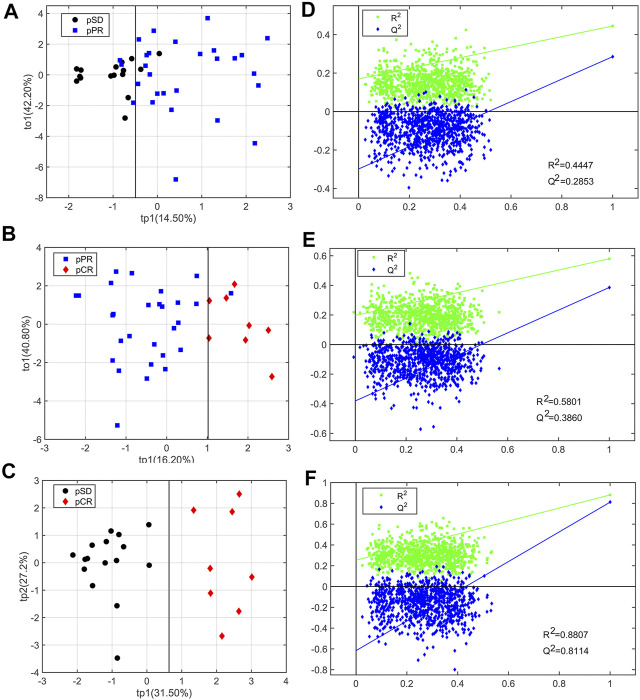
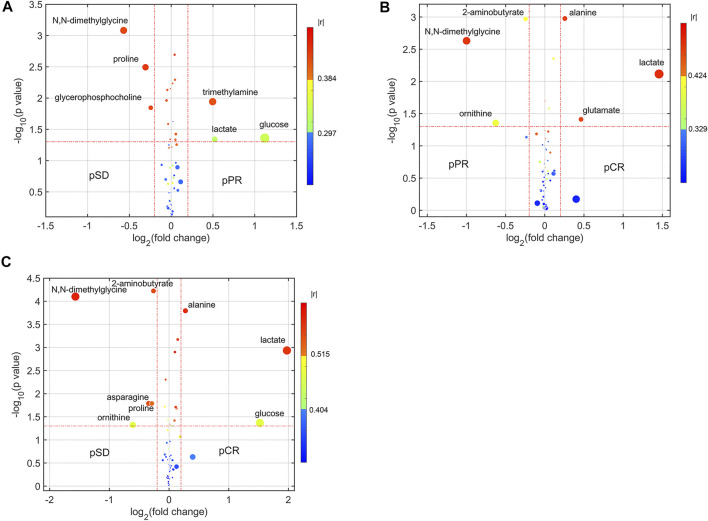
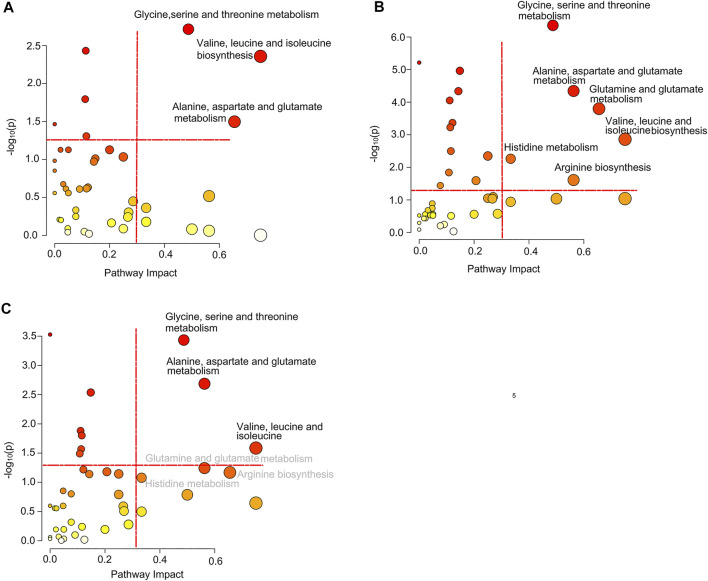
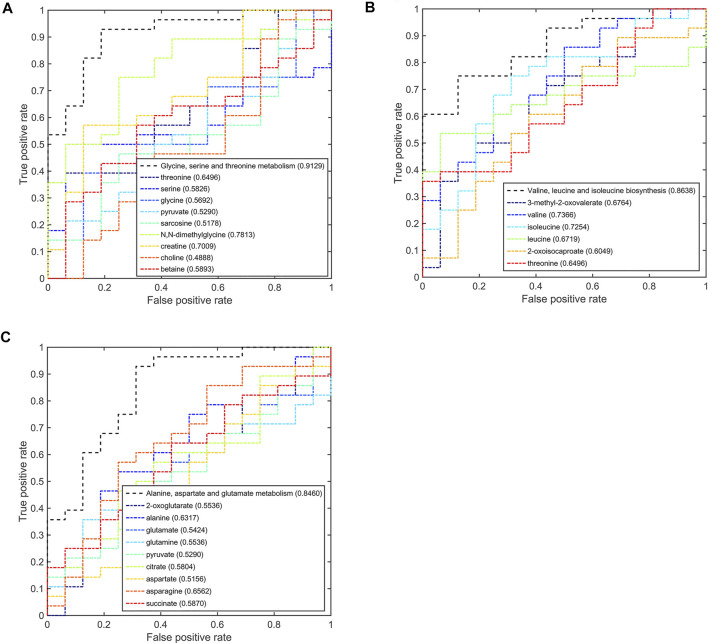
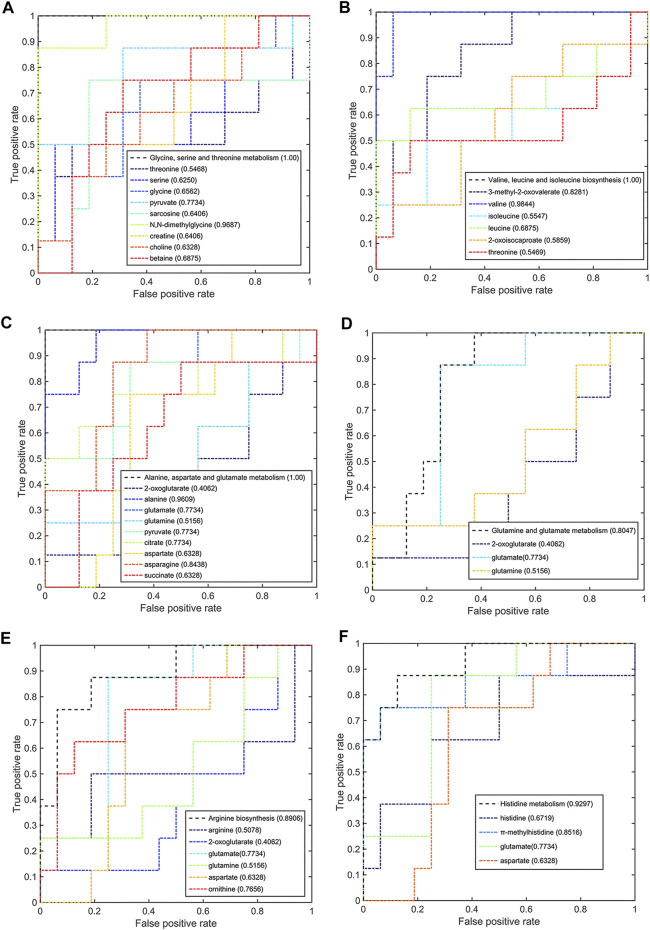
Triple-negative breast cancer (TNBC) is the most fatal type of breast cancer (BC). Due to the lack of relevant targeted drug therapy, in addition to surgery, chemotherapy is still the most common treatment option for TNBC. TNBC is heterogeneous, and different patients have an unusual sensitivity to chemotherapy. Only part of the patients will benefit from chemotherapy, so neoadjuvant chemotherapy (NAC) is controversial in the treatment of TNBC. Here, we performed an NMR spectroscopy-based metabolomics study to analyze the relationship between the patients' metabolic phenotypes and chemotherapy sensitivity in the serum samples. Metabolic phenotypes from patients with pathological partial response, pathological complete response, and pathological stable disease (pPR, pCR, and pSD) could be distinguished. Furthermore, we conducted metabolic pathway analysis based on identified significant metabolites and revealed significantly disturbed metabolic pathways closely associated with three groups of TNBC patients. We evaluated the discriminative ability of metabolites related to significantly disturbed metabolic pathways by using the multi-receiver-operating characteristic (ROC) curve analysis. Three significantly disturbed metabolic pathways of glycine, serine, and threonine metabolism, valine, leucine, and isoleucine biosynthesis, and alanine, aspartate, and glutamate metabolism could be used as potential predictive models to distinguish three types of TNBC patients. These results indicate that a metabolic phenotype could be used to predict whether a patient is suitable for NAC. Metabolomics research could provide data in support of metabolic phenotypes for personalized treatment of TNBC.
三阴性乳腺癌(TNBC)是最致命的乳腺癌类型。由于缺乏相关的靶向药物治疗,除手术外,化疗仍是TNBC最常见的治疗选择。TNBC具有异质性,不同患者对化疗的敏感性不同寻常。只有部分患者会从化疗中获益,因此新辅助化疗(NAC)在TNBC治疗中存在争议。在此,我们进行了一项基于核磁共振波谱的代谢组学研究,以分析血清样本中患者代谢表型与化疗敏感性之间的关系。病理部分缓解、病理完全缓解和病理疾病稳定(pPR、pCR和pSD)患者的代谢表型可以区分。此外,我们基于鉴定出的显著代谢物进行了代谢途径分析,并揭示了与三组TNBC患者密切相关的显著紊乱的代谢途径。我们通过多接收器操作特征(ROC)曲线分析评估了与显著紊乱的代谢途径相关的代谢物的判别能力。甘氨酸、丝氨酸和苏氨酸代谢、缬氨酸、亮氨酸和异亮氨酸生物合成以及丙氨酸、天冬氨酸和谷氨酸代谢这三条显著紊乱的代谢途径可作为区分三种类型TNBC患者的潜在预测模型。这些结果表明,代谢表型可用于预测患者是否适合NAC。代谢组学研究可为TNBC个性化治疗的代谢表型提供数据支持。