Gu Jinping, Huang Caihua, Hu Xiaomin, Xia Jinmei, Shao Wei, Lin Donghai
College of Chemistry and Chemical Engineering, Key Laboratory for Chemical Biology of Fujian Province, High-field NMR Center, Xiamen University, Xiamen, China.
College of Pharmaceutical Sciences, Key Laboratory for Green Pharmaceutical Technologies and Related Equipment of Ministry of Education, Zhejiang University of Technology, Hangzhou, China.
Cancer Sci. 2020 Sep;111(9):3195-3209. doi: 10.1111/cas.14443. Epub 2020 Jun 4.
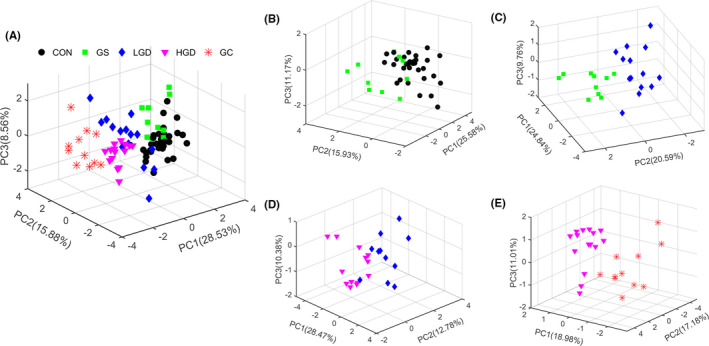
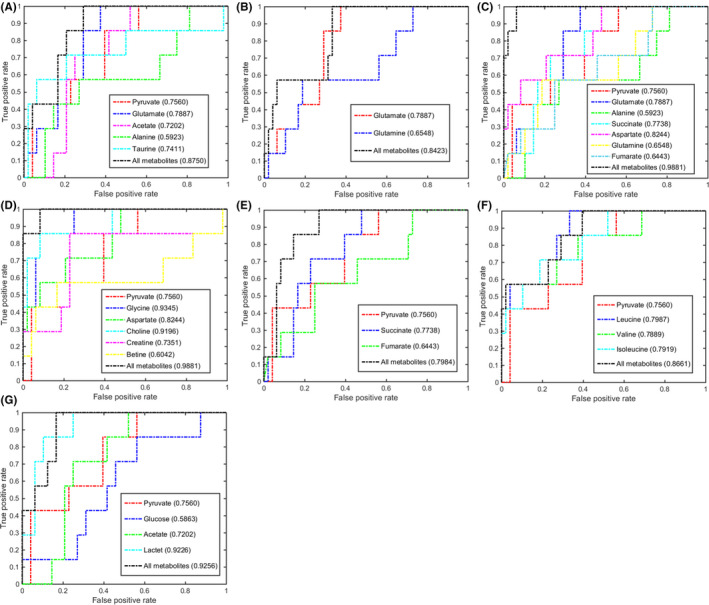
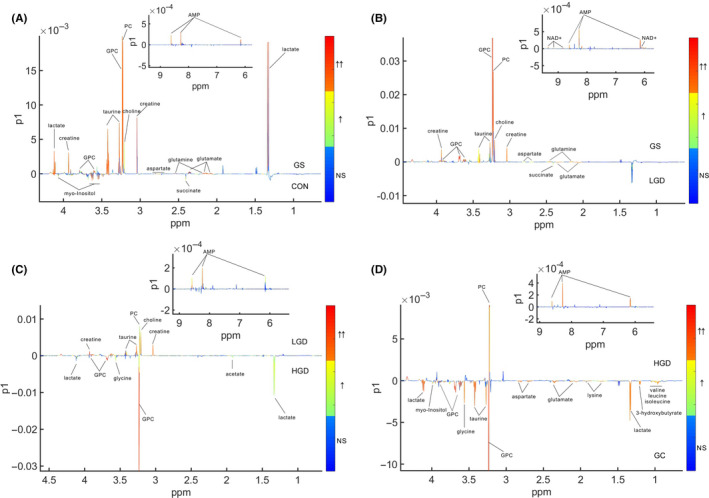
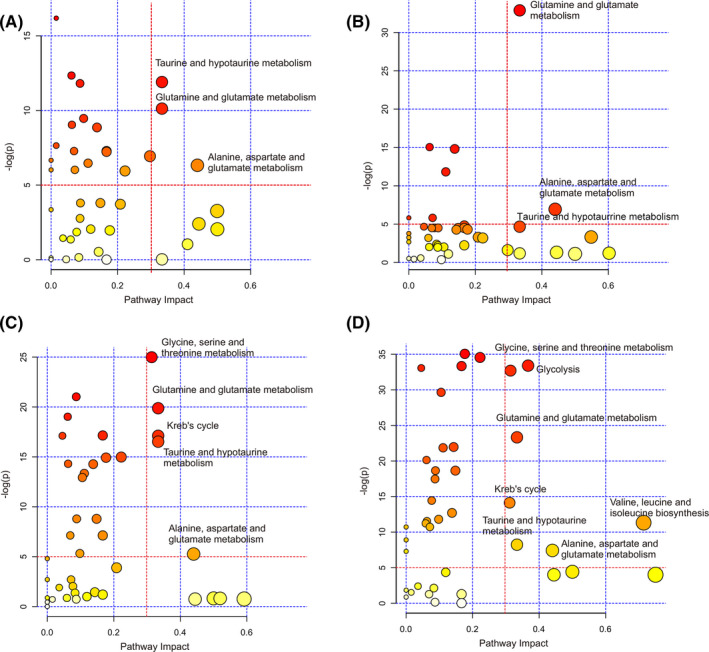
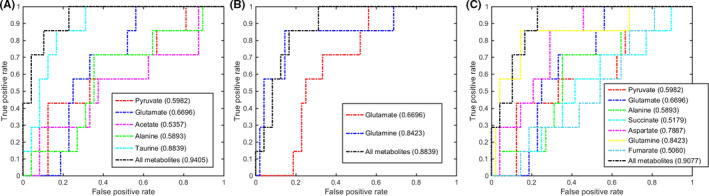
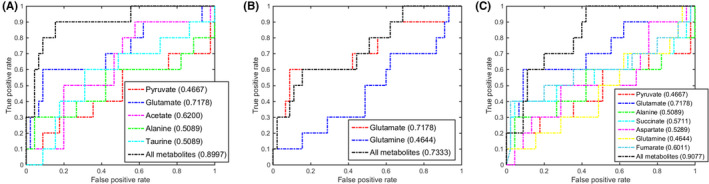
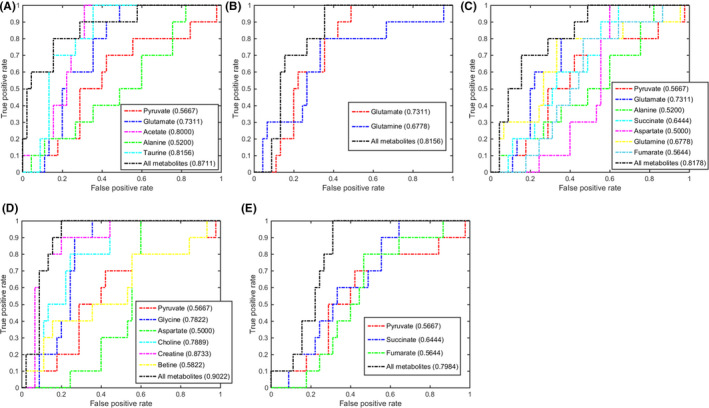
Gastric cancer (GC) is one of the deadliest cancers worldwide, and the progression of gastric carcinogenesis (GCG) covers multiple complicated pathological stages. Molecular mechanisms of GCG are still unclear. Here, we undertook NMR-based metabolomic analysis of aqueous metabolites extracted from gastric tissues in an established rat model of GCG. We showed that the metabolic profiles were clearly distinguished among 5 histologically classified groups: control, gastritis, low-grade gastric dysplasia, high-grade gastric dysplasia (HGD), and GC. Furthermore, we carried out metabolic pathway analysis based on identified significant metabolites and revealed significantly disturbed metabolic pathways closely associated with the 4 pathological stages, including oxidation stress, choline phosphorylation, amino acid metabolism, Krebs cycle, and glycolysis. Three metabolic pathways were continually disturbed during the progression of GCG, including taurine and hypotaurine metabolism, glutamine and glutamate metabolism, alanine, aspartate, and glutamate metabolism. Both the Krebs cycle and glycine, serine, and threonine metabolism were profoundly impaired in both the HGD and GC stages, potentially due to abnormal energy supply for tumor cell proliferation and growth. Furthermore, valine, leucine, and isoleucine biosynthesis and glycolysis were significantly disturbed in the GC stage for higher energy requirement of the rapid growth of tumor cells. Additionally, we identified potential gastric tissue biomarkers for metabolically discriminating the 4 pathological stages, which also showed good discriminant capabilities for their serum counterparts. This work sheds light on the molecular mechanisms of GCG and is of benefit to the exploration of potential biomarkers for clinically diagnosing and monitoring the progression of GCG.
胃癌(GC)是全球最致命的癌症之一,胃癌发生(GCG)的进展涵盖多个复杂的病理阶段。GCG的分子机制仍不清楚。在此,我们对从已建立的GCG大鼠模型的胃组织中提取的水溶性代谢物进行了基于核磁共振的代谢组学分析。我们发现,在5个组织学分类组中代谢谱有明显差异:对照组、胃炎组、低度胃发育异常组、高度胃发育异常(HGD)组和GC组。此外,我们基于鉴定出的显著代谢物进行了代谢途径分析,揭示了与4个病理阶段密切相关的显著紊乱的代谢途径,包括氧化应激、胆碱磷酸化、氨基酸代谢、三羧酸循环和糖酵解。在GCG进展过程中有3条代谢途径持续受到干扰,包括牛磺酸和亚牛磺酸代谢、谷氨酰胺和谷氨酸代谢、丙氨酸、天冬氨酸和谷氨酸代谢。三羧酸循环以及甘氨酸、丝氨酸和苏氨酸代谢在HGD和GC阶段均受到严重损害,这可能是由于肿瘤细胞增殖和生长的能量供应异常所致。此外,在GC阶段,缬氨酸、亮氨酸和异亮氨酸的生物合成以及糖酵解受到显著干扰,因为肿瘤细胞快速生长需要更高的能量。此外,我们鉴定出了用于代谢区分4个病理阶段的潜在胃组织生物标志物,它们对血清对应物也具有良好的区分能力。这项工作揭示了GCG的分子机制,有助于探索用于临床诊断和监测GCG进展的潜在生物标志物。