Department of Psychology, University of Campania L. Vanvitelli, Caserta, Italy.
Department of Psychology, University of Stockholm, Stockholm, Sweden.
J Sleep Res. 2022 Jun;31(3):e13519. doi: 10.1111/jsr.13519. Epub 2021 Nov 19.
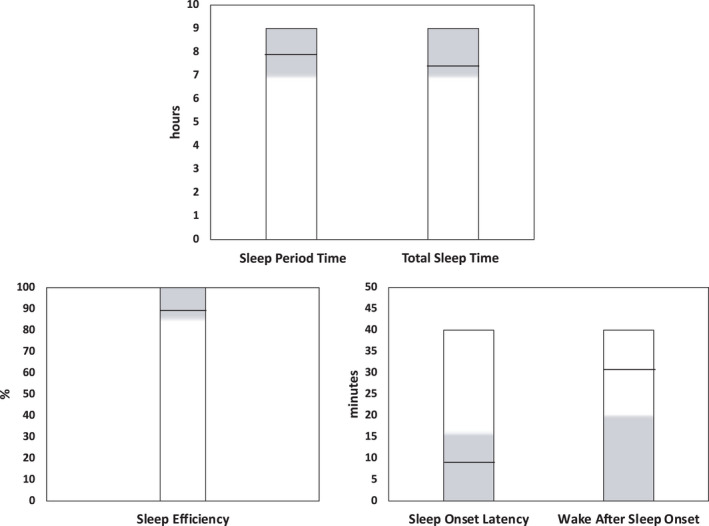
Studies on sleep during the Covid-19 pandemic have mostly been conducted during the first wave of contagion (spring 2020). To follow up on two Italian studies addressing subjective sleep features during the second wave (autumn 2020), here we assess sleep during the third wave (spring 2021) in a sample of healthy adults from Campania (Southern Italy). Actigraphic data (on 2 nights) and the Pittsburgh Sleep Quality Index were collected from 82 participants (40 F, mean age: 32.5 ± 11.5 years) from 11 March to 18 April 2021, when Campania was classified as a "red zone", i.e. it was subjected to strict restrictions, only slightly looser than those characterizing the first national lockdown (spring 2020). Although objective sleep duration and architecture appeared in the normal range, the presence of disrupted sleep was indexed by a relevant degree of sleep fragmentation (number of awakenings ≥ 1 min: 12.7 ± 6.12; number of awakenings ≥ 5 min: 3.04 ± 1.52), paralleled by poor subjective sleep quality (Pittsburgh Sleep Quality Index global score: 5.77 ± 2.58). These data suggest that the relevant subjective sleep impairments reported during the first wave could have relied on subtle sleep disruptions that were undetected by the few objective sleep studies from the same period. Taken together with sleep data on previous phases of the pandemic, our findings show that the detrimental effects on sleep determined by the initial pandemic outbreak have not abated across the subsequent waves of contagion, and highlight the need for interventions addressing sleep health in global emergencies.
关于新冠疫情期间睡眠的研究大多是在第一波疫情(2020 年春季)期间进行的。为了跟进两项针对第二波疫情(2020 年秋季)期间主观睡眠特征的意大利研究,我们在此评估了意大利坎帕尼亚地区(意大利南部)健康成年人在第三波疫情(2021 年春季)期间的睡眠情况。从 2021 年 3 月 11 日至 4 月 18 日,我们共收集了 82 名参与者(40 名女性,平均年龄:32.5±11.5 岁)的两段夜间活动记录仪数据(每夜)和匹兹堡睡眠质量指数,当时坎帕尼亚被归类为“红色区域”,即实施了严格的限制措施,与 2020 年春季首次全国封锁相比,限制措施仅略有放宽。尽管客观睡眠时间和结构处于正常范围内,但睡眠中断的存在反映在明显的睡眠碎片化程度上(≥1 分钟的觉醒次数:12.7±6.12;≥5 分钟的觉醒次数:3.04±1.52),同时主观睡眠质量较差(匹兹堡睡眠质量指数总分:5.77±2.58)。这些数据表明,第一波疫情期间报告的相关主观睡眠障碍可能依赖于细微的睡眠中断,而同期少数客观睡眠研究并未检测到这些中断。结合大流行前几个阶段的睡眠数据,我们的研究结果表明,由最初的大流行爆发对睡眠造成的有害影响在随后的疫情浪潮中并未减弱,并强调需要采取干预措施来解决全球紧急情况下的睡眠健康问题。