Reproductive Physiology Laboratory, Animal Physiology Division, ICAR-National Institute of Animal Nutrition and Physiology, Adugodi, Bengaluru, 560030, India.
Department of Animal Reproduction, Indian Veterinary Research Institute, Izatnagar, Bareilly, 243122, India.
Sci Rep. 2021 Nov 19;11(1):22563. doi: 10.1038/s41598-021-01928-6.
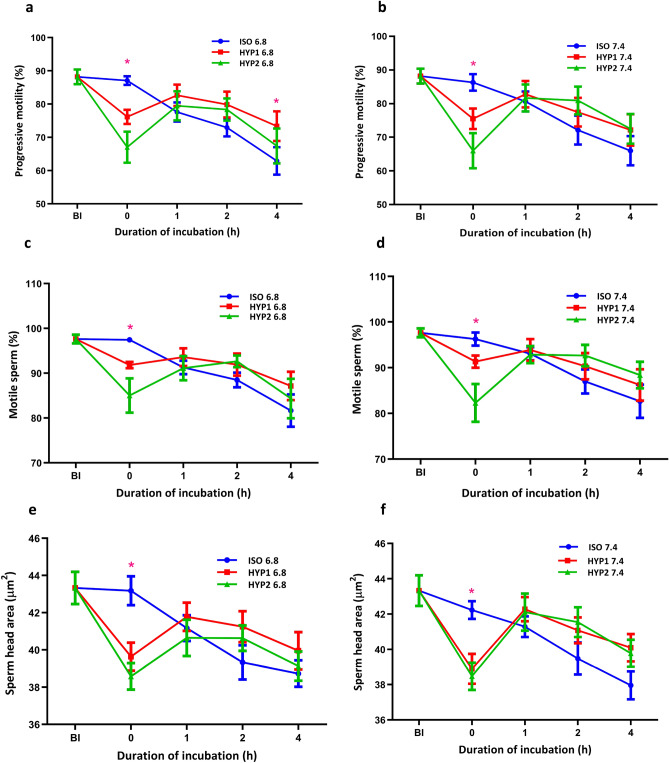
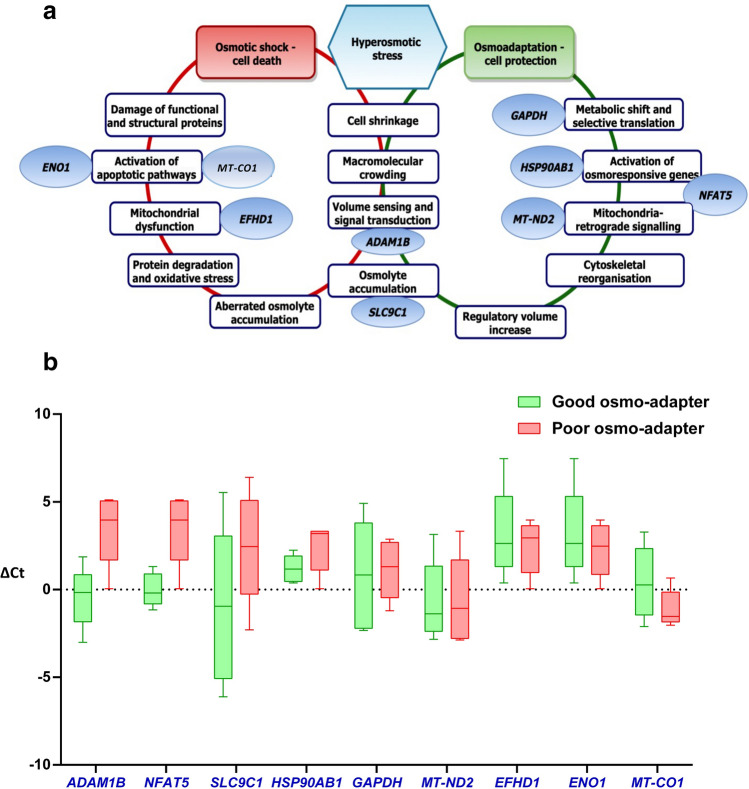
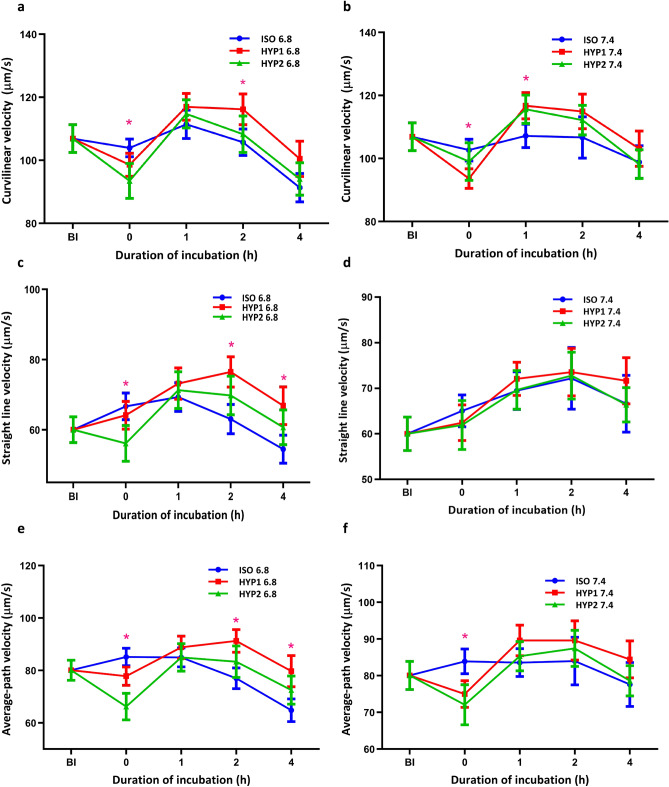
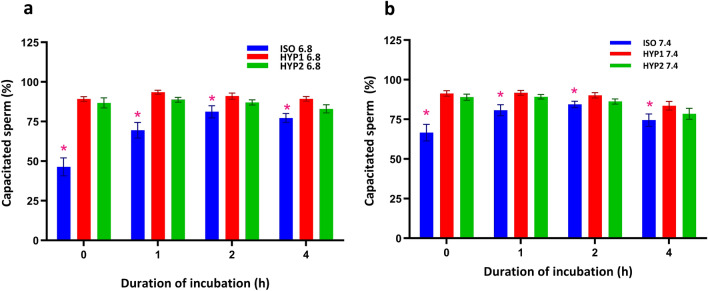
The adaptive ability of sperm in the female reproductive tract micromilieu signifies the successful fertilization process. The study aimed to analyze the preparedness of sperm to the prevailing osmotic and pH stressors in the female reproductive tract. Fresh bovine sperm were incubated in 290 (isosmotic-control), 355 (hyperosmotic-uterus and oviduct), and 420 (hyperosmotic-control) mOsm/kg and each with pH of 6.8 (uterus) and 7.4 (oviduct). During incubation, the changes in sperm functional attributes were studied. Sperm kinematics and head area decreased significantly (p < 0.05) immediately upon exposure to hyperosmotic stress at both pH. Proportion of sperm capacitated (%) in 355 mOsm/kg at 1 and 2 h of incubation were significantly (p < 0.05) higher than those in 290 mOsm media. The magnitude and duration of recovery of sperm progressive motility in 355 mOsm with pH 7.4 was correlated with the ejaculate rejection rate (R = 0.7). Using this information, the bulls were divided into good (n = 5) and poor (n = 5) osmo-adapters. The osmo-responsive genes such as NFAT5, HSP90AB1, SLC9C1, ADAM1B and GAPDH were upregulated (p < 0.05) in the sperm of good osmo-adapters. The study suggests that sperm are prepared for the osmotic and pH challenges in the female reproductive tract and the osmoadaptive ability is associated with ejaculate quality in bulls.
精子在雌性生殖道微环境中的适应能力标志着受精过程的成功。本研究旨在分析精子对雌性生殖道中普遍存在的渗透和 pH 应激的准备情况。新鲜的牛精子在 290(等渗对照)、355(高渗子宫和输卵管)和 420(高渗对照)mOsm/kg 下孵育,每个 pH 值分别为 6.8(子宫)和 7.4(输卵管)。在孵育过程中,研究了精子功能属性的变化。精子运动学和头部面积在立即暴露于高渗应激时,在两种 pH 值下均显著下降(p<0.05)。在 1 和 2 小时孵育时,在 355 mOsm/kg 中 capacitated(%)的精子比例明显高于 290 mOsm 培养基中的精子比例(p<0.05)。在 pH 7.4 下,355 mOsm 中精子渐进性运动的恢复幅度和持续时间与精液排斥率呈正相关(R=0.7)。根据这些信息,将公牛分为良好(n=5)和不良(n=5)渗透适应者。在良好渗透适应者的精子中,NFAT5、HSP90AB1、SLC9C1、ADAM1B 和 GAPDH 等渗透反应性基因上调(p<0.05)。研究表明,精子对雌性生殖道中的渗透和 pH 挑战有准备,渗透适应能力与公牛的精液质量有关。