Donders Institute for Brain, Cognition and Behavior, Radboud University, Nijmegen, NL, USA; Department of Psychology, University of Chicago, Chicago, IL, USA.
Radboud University Library, Radboud University, Nijmegen, NL, USA.
Dev Cogn Neurosci. 2021 Dec;52:101036. doi: 10.1016/j.dcn.2021.101036. Epub 2021 Nov 12.
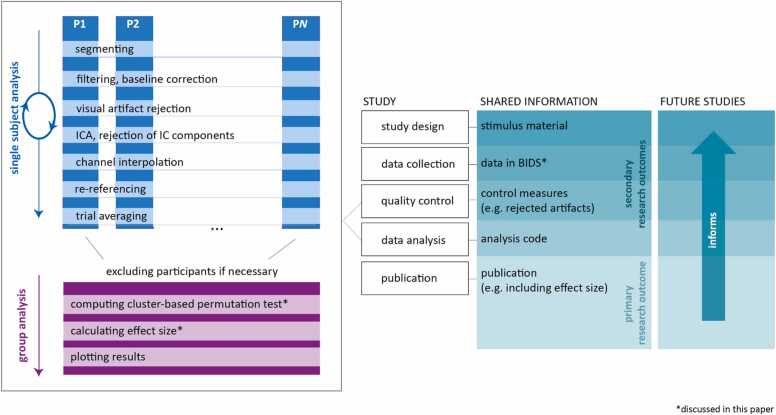
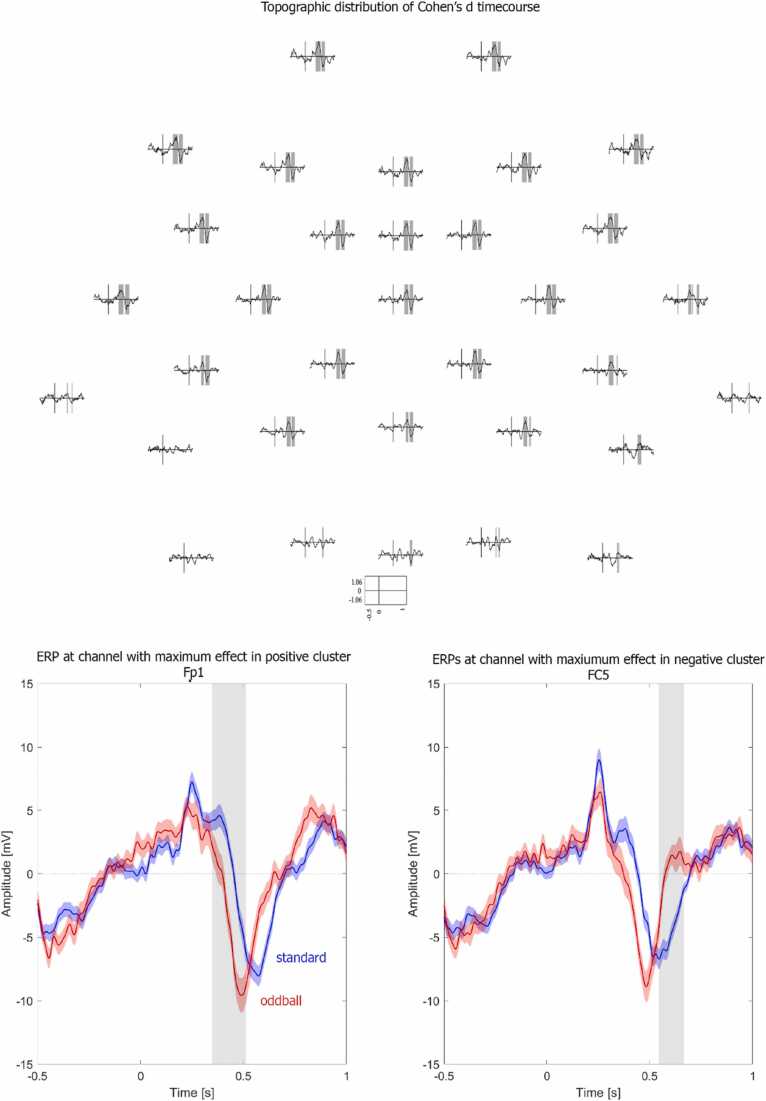
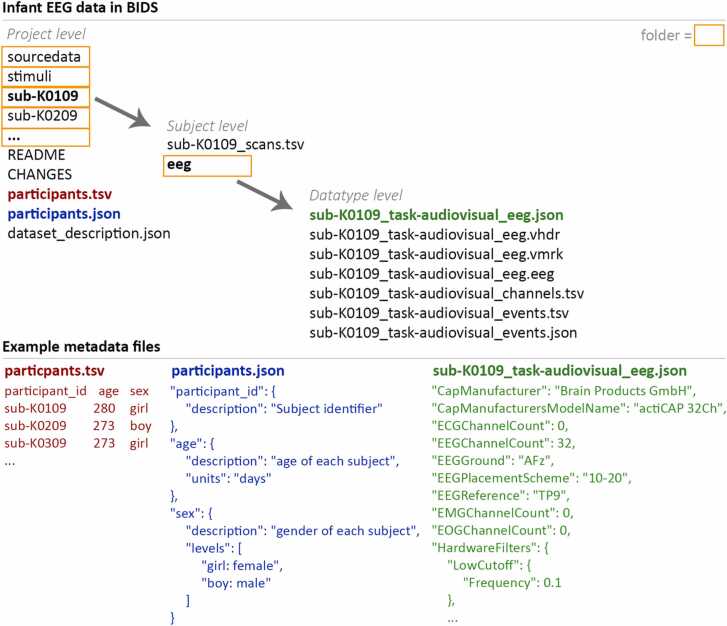
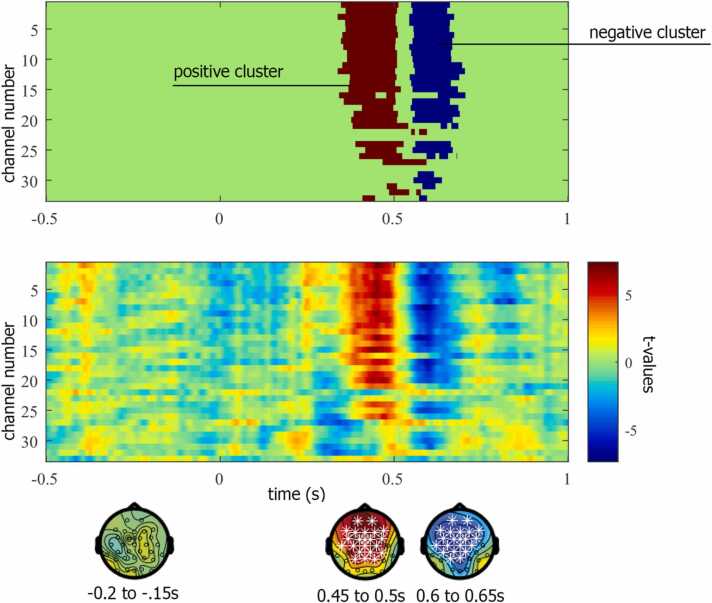
Developmental research using electroencephalography (EEG) offers valuable insights in brain processes early in life, but at the same time, applying this sensitive technique to young children who are often non-compliant and have short attention spans comes with practical limitations. It is thus of particular importance to optimally use the limited resources to advance our understanding of development through reproducible and replicable research practices. Here, we describe methodological approaches that help maximize the reproducibility of developmental EEG research. We discuss how to transform EEG data into the standardized Brain Imaging Data Structure (BIDS) which organizes data according to the FAIR data sharing principles. We provide a tutorial on how to use cluster-based permutation testing to analyze developmental EEG data. This versatile test statistic solves the multiple comparison problem omnipresent in EEG analysis and thereby substantially decreases the risk of reporting false discoveries. Finally, we describe how to quantify effect sizes, in particular of cluster-based permutation results. Reporting effect sizes conveys a finding's impact and robustness which in turn informs future research. To demonstrate these methodological approaches to data organization, analysis and report, we use a publicly accessible infant EEG dataset and provide a complete copy of the analysis code.
发展研究使用脑电图 (EEG) 提供了有价值的见解在生命早期的大脑过程中,但同时,将这种敏感的技术应用于经常不遵守规定和注意力持续时间短的幼儿具有实际的局限性。因此,通过可重复和可复制的研究实践,优化利用有限的资源来推进我们对发展的理解尤为重要。在这里,我们描述了有助于最大限度地提高发展性 EEG 研究可重复性的方法。我们讨论了如何将 EEG 数据转换为标准化的脑成像数据结构 (BIDS),该结构根据 FAIR 数据共享原则组织数据。我们提供了一个关于如何使用基于聚类的置换检验来分析发展性 EEG 数据的教程。这种多功能的检验统计量解决了 EEG 分析中普遍存在的多重比较问题,从而大大降低了报告虚假发现的风险。最后,我们描述了如何量化效应量,特别是基于聚类的置换结果的效应量。报告效应量传达了发现的影响和稳健性,从而为未来的研究提供信息。为了展示这些数据组织、分析和报告的方法,我们使用了一个公开的婴儿 EEG 数据集,并提供了完整的分析代码副本。