Zhang Chunfeng, Hu Chenyu, Su Kunqi, Wang Kun, Du Xiaojuan, Xing Baocai, Liu Xiaofeng
Department of Medical Genetics, School of Basic Medical Sciences, Peking University Health Science Center, Beijing 100191, China.
Hepatopancreatobiliary Surgery Department I, Key Laboratory of Carcinogenesis and Translational Research (Ministry of Education/Beijing), Peking University Cancer Hospital & Institute, Beijing 100142, China.
J Oncol. 2021 Nov 10;2021:4405491. doi: 10.1155/2021/4405491. eCollection 2021.
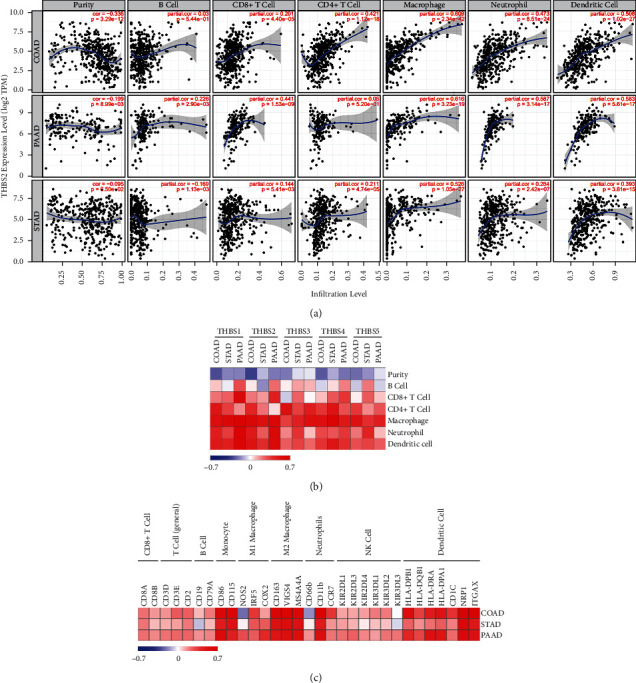
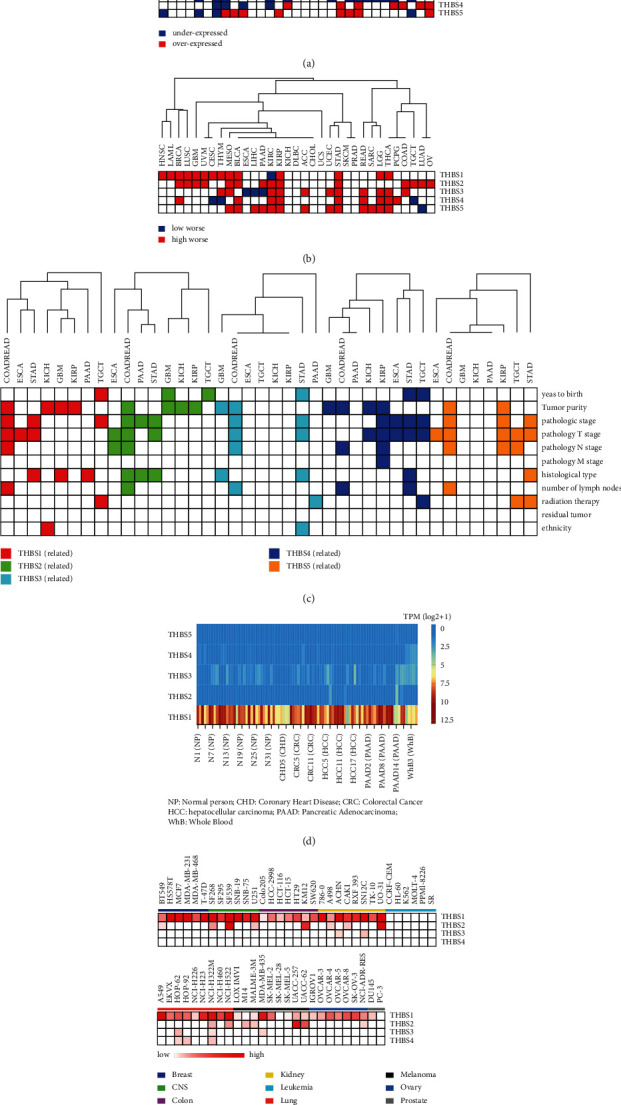
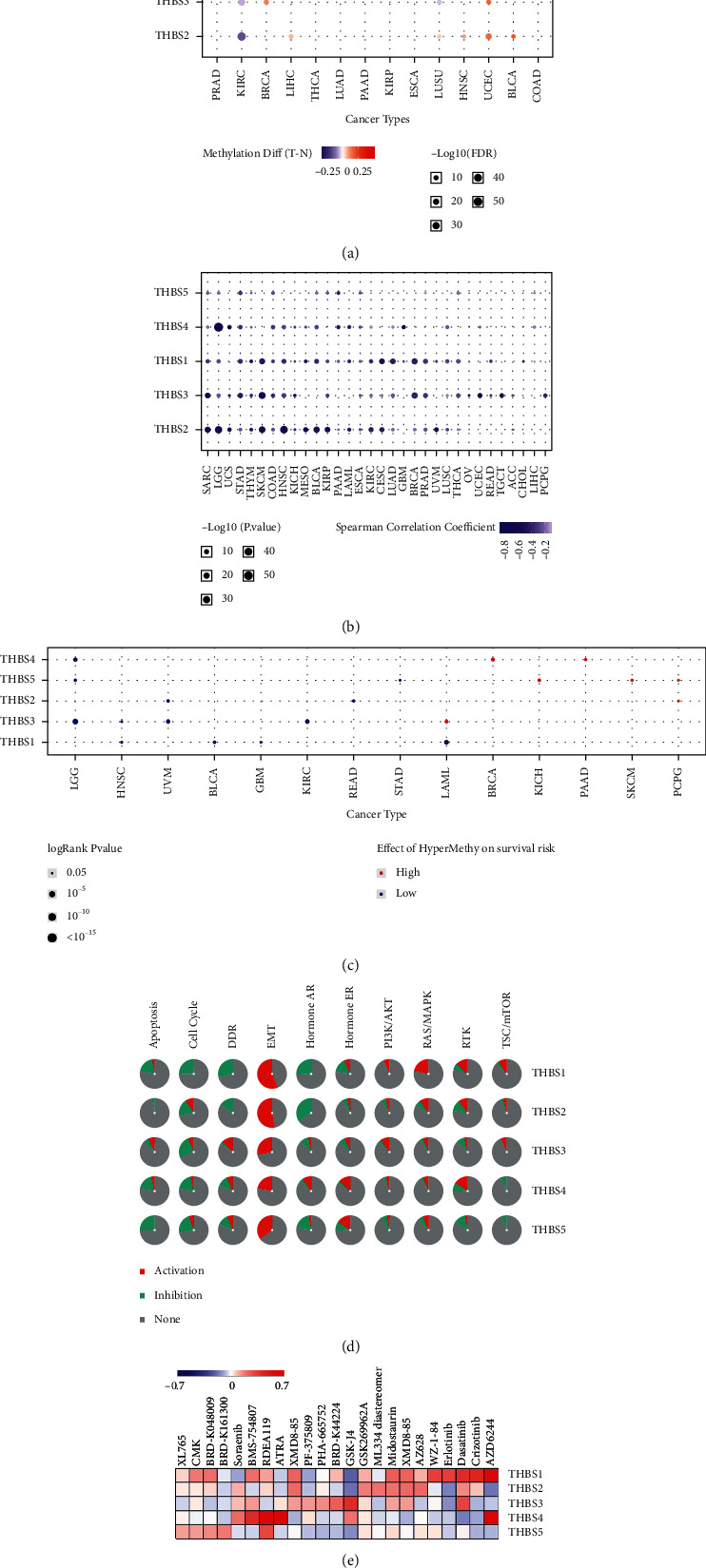
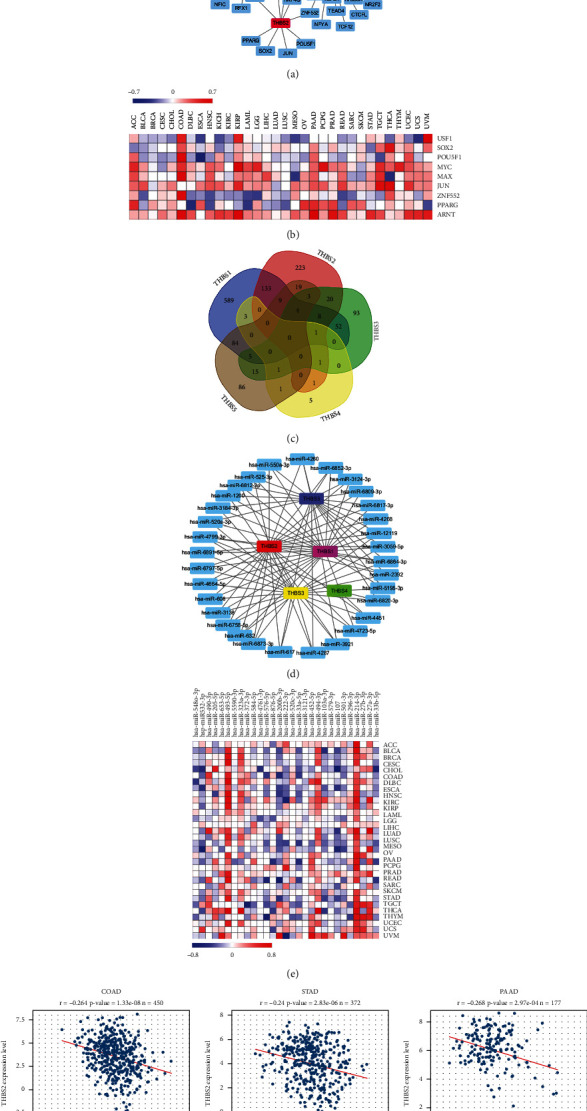
Recent cancer studies have found that the thrombospondin (THBS) family, including THBS1, THBS2, THBS3, THBS4, and THBS5, play vital roles in the development and progression of human cancers. However, their relationships with tumor stage, prognosis, and tumor immunity in pan-cancer have not been systematically reported. In the present study, we employed versatile public databases to assess the expression and mutations of different THBSs in pan-cancer and performed functional experiments to analyze the roles of THBS2 in gastrointestinal cancer metastasis. Our findings indicate that THBS genes are frequently mutated in various cancers and the dysregulation of THBS family members is associated with the progression of some cancers such as gastric cancer, colon cancer, and lung cancer. Further analyses indicate that THBS genes are associated with cancer hallmarks such as cell cycle and epithelial-mesenchymal transition (EMT). Importantly, thrombospondins, especially THBS1 and THBS2, are correlated with the immune cell infiltration level in gastrointestinal cancers. Our experiments further verified that THBS2 participates in tumor metastasis by enhancing EMT. Therefore, the overall analyses reveal that THBSs might offer us potential chances for tumor diagnosis and therapy.
近期的癌症研究发现,包括血小板反应蛋白1(THBS1)、血小板反应蛋白2(THBS2)、血小板反应蛋白3(THBS3)、血小板反应蛋白4(THBS4)和血小板反应蛋白5(THBS5)在内的血小板反应蛋白(THBS)家族在人类癌症的发生和发展过程中发挥着至关重要的作用。然而,它们在泛癌中与肿瘤分期、预后及肿瘤免疫的关系尚未有系统报道。在本研究中,我们利用多种公共数据库评估不同THBS在泛癌中的表达和突变情况,并进行功能实验以分析THBS2在胃肠道癌转移中的作用。我们的研究结果表明,THBS基因在多种癌症中频繁发生突变,且THBS家族成员的失调与某些癌症如胃癌、结肠癌和肺癌的进展相关。进一步分析表明,THBS基因与细胞周期和上皮-间质转化(EMT)等癌症特征相关。重要的是,血小板反应蛋白,尤其是THBS1和THBS2,与胃肠道癌中的免疫细胞浸润水平相关。我们的实验进一步证实,THBS2通过增强EMT参与肿瘤转移。因此,综合分析表明,THBS可能为我们提供肿瘤诊断和治疗的潜在机会。