Wang Juan, Zhang Yi, Ge Fanghong
Department of Oncology, Tongzhou Hospital Affiliated to Nantong University, Nantong, Jiangsu 226300, China.
Department of Oncology, Rich Hospital Affiliated to Nantong University, Nantong, Jiangsu 226010, China.
J Oncol. 2021 Nov 11;2021:6217469. doi: 10.1155/2021/6217469. eCollection 2021.
Globally, the fatal form of lung cancer is non-small-cell lung cancer (NSCLC), and its most common subtype is lung adenocarcinoma (LUAD). In cancer development and progression, miRNAs play key roles primarily in interacting with cancer-related genes. The main focus of this research was to examine the biological roles of miR-186 in LUAD.
We examined tissues of LUAD and lung cancer cell lines. The expressions of miR-186, Dicer1, Ki-67, and PCNA were determined by immunohistochemistry (IHC), real-time quantitative PCR (RT-PCR), and western blot assays. The CCK-8 and transwell assays were used to determine cell proliferation, migration, and invasion. To determine the association between miR-186 and Dicer1, a luciferase assay was used.
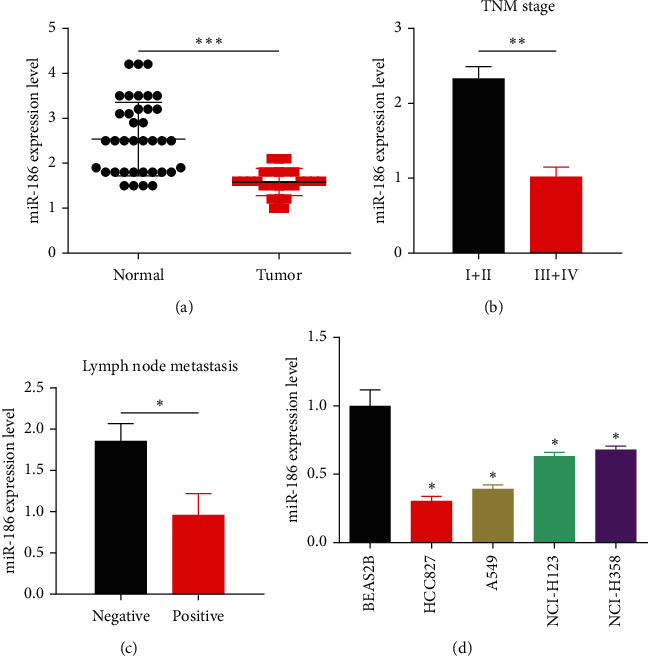
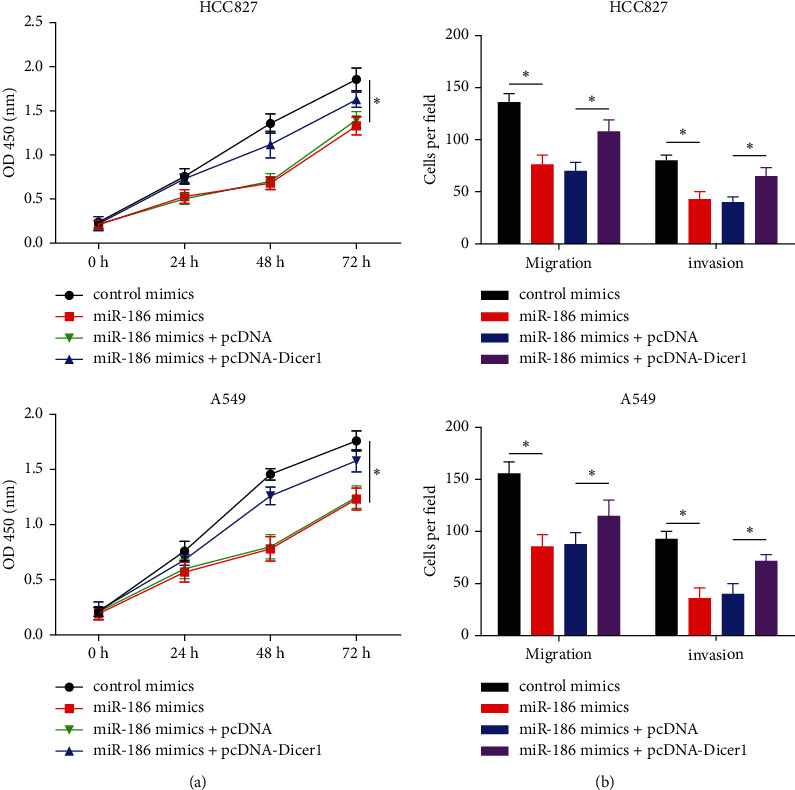
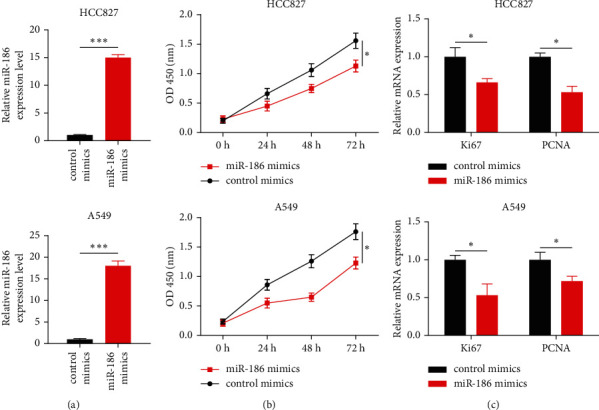
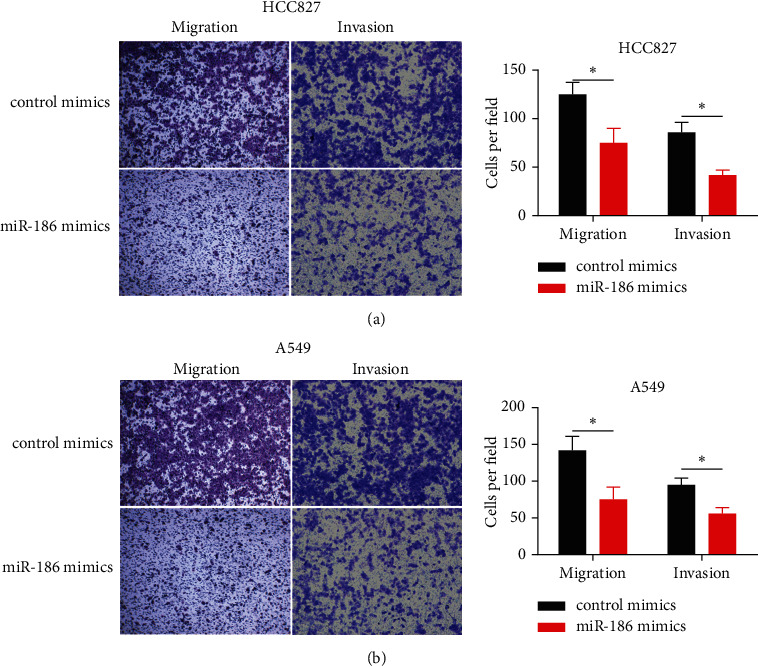
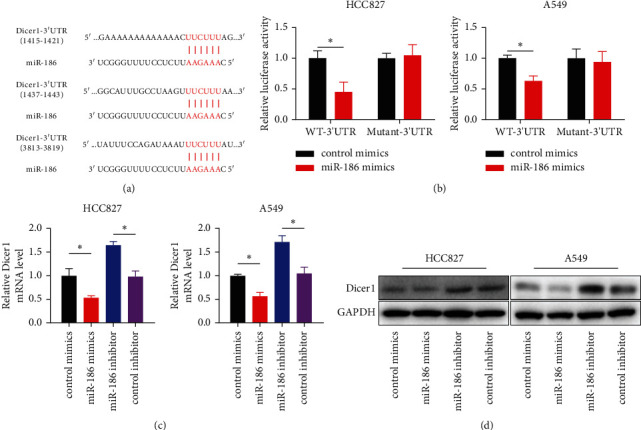
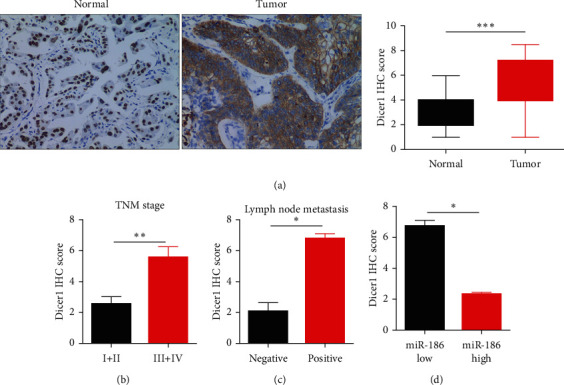
MiR-186 expression was found to be lower in LUAD tissues, and this was correlated to TNM stage and lymph node metastasis in LUAD patients. miR-186 upregulation significantly reduced the proliferation rate and the level of Ki67 and PCNA of LUAD cell lines HCC827 and A549. Transwell assay exhibited that miR-186 upregulation considerably reduced HCC827 and A549 cells' migration and invasion abilities. Furthermore, we also confirmed that Dicer1 was a direct target of miR-186. Importantly, Dicer1 overexpression abolished the suppression of miR-186 mimics on cell proliferation, migration, and invasion of HCC827 and A549 cells.
These results indicated that the miR-186/Dicer1 pathway is critical for regulating LUAD cell proliferation, migration, and invasion.
在全球范围内,肺癌的致死形式是非小细胞肺癌(NSCLC),其最常见的亚型是肺腺癌(LUAD)。在癌症的发生和发展过程中,微小RNA(miRNAs)主要通过与癌症相关基因相互作用发挥关键作用。本研究的主要重点是探讨miR-186在肺腺癌中的生物学作用。
我们检测了肺腺癌组织和肺癌细胞系。通过免疫组织化学(IHC)、实时定量聚合酶链反应(RT-PCR)和蛋白质免疫印迹分析来测定miR-186、Dicer1、Ki-67和增殖细胞核抗原(PCNA)的表达。采用细胞计数试剂盒-8(CCK-8)和Transwell实验来测定细胞增殖、迁移和侵袭能力。为了确定miR-186与Dicer1之间的关联,使用了荧光素酶报告基因检测。
发现miR-186在肺腺癌组织中的表达较低,这与肺腺癌患者的TNM分期和淋巴结转移相关。miR-186的上调显著降低了肺腺癌细胞系HCC827和A549的增殖率以及Ki67和PCNA的水平。Transwell实验表明,miR-186的上调显著降低了HCC827和A549细胞的迁移和侵袭能力。此外,我们还证实Dicer1是miR-186的直接靶点。重要的是,Dicer1的过表达消除了miR-186模拟物对HCC827和A549细胞增殖、迁移和侵袭的抑制作用。
这些结果表明,miR-186/Dicer1通路对调节肺腺癌细胞的增殖、迁移和侵袭至关重要。