Cardiovascular Research Center and Corrigan Minehan Heart Center, Division of Cardiology, Department of Medicine, Massachusetts General Hospital, Boston (R.M., C.J.N., D.W., V.B., S.P., C.S., H.H.S., C.L.L.C., R.L., S.L.B., M.E.L., G.D.L., J.D.R., C.N., J.E.H.).
Martinos Center for Biomedical Imaging, Massachusetts General Hospital, Charlestown (Y.C.C., C.N.).
Arterioscler Thromb Vasc Biol. 2022 Feb;42(2):e61-e73. doi: 10.1161/ATVBAHA.121.316664. Epub 2021 Nov 23.
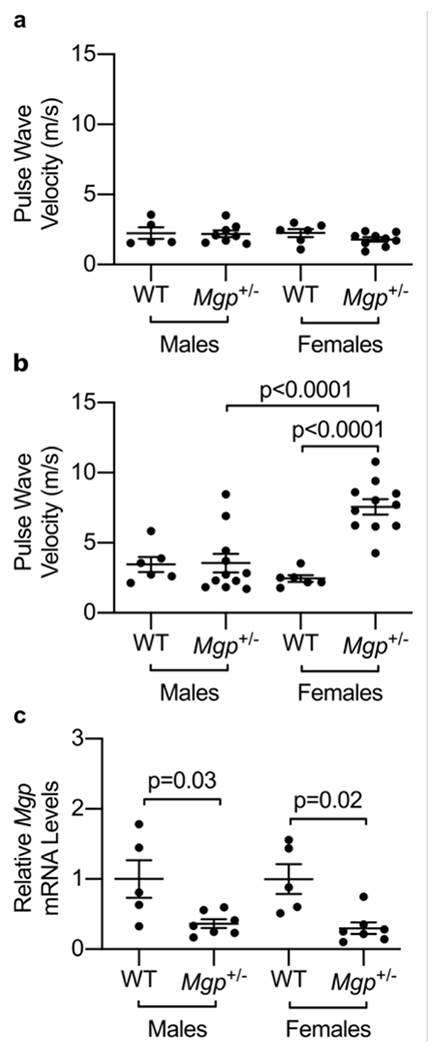
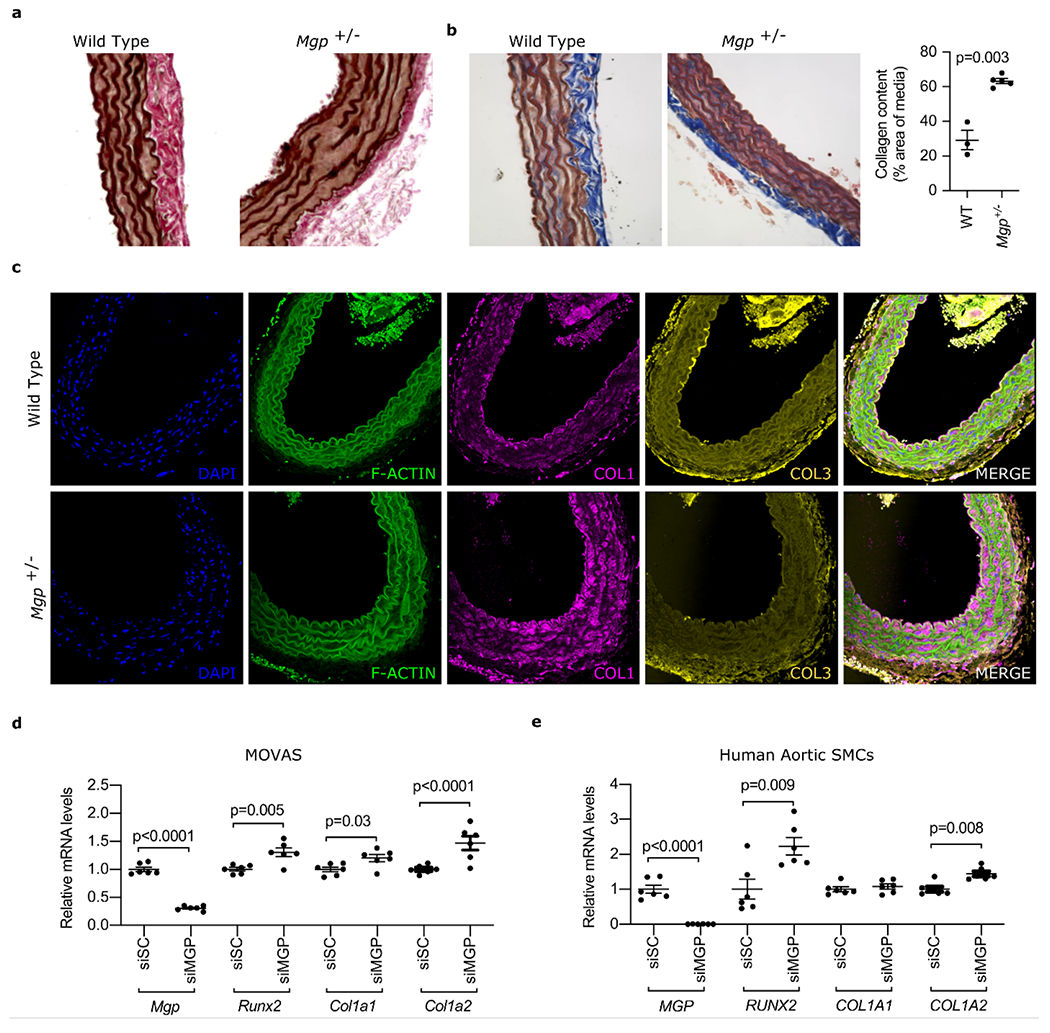
Arterial stiffness is a risk factor for cardiovascular disease, including heart failure with preserved ejection fraction (HFpEF). MGP (matrix Gla protein) is implicated in vascular calcification in animal models, and circulating levels of the uncarboxylated, inactive form of MGP (ucMGP) are associated with cardiovascular disease-related and all-cause mortality in human studies. However, the role of MGP in arterial stiffness is uncertain. Approach and Results: We examined the association of ucMGP levels with vascular calcification, arterial stiffness including carotid-femoral pulse wave velocity (PWV), and incident heart failure in community-dwelling adults from the Framingham Heart Study. To further investigate the link between MGP and arterial stiffness, we compared aortic PWV in age- and sex-matched young (4-month-old) and aged (10-month-old) wild-type and Mgp mice. Among 7066 adults, we observed significant associations between higher levels of ucMGP and measures of arterial stiffness, including higher PWV and pulse pressure. Longitudinal analyses demonstrated an association between higher ucMGP levels and future increases in systolic blood pressure and incident HFpEF. Aortic PWV was increased in older, but not young, female Mgp mice compared with wild-type mice, and this augmentation in PWV was associated with increased aortic elastin fiber fragmentation and collagen accumulation.
This translational study demonstrates an association between ucMGP levels and arterial stiffness and future HFpEF in a large observational study, findings that are substantiated by experimental studies showing that mice with Mgp heterozygosity develop arterial stiffness. Taken together, these complementary study designs suggest a potential role of therapeutically targeting MGP in HFpEF.
动脉僵硬是心血管疾病的一个危险因素,包括射血分数保留的心力衰竭(HFpEF)。MGP(基质 Gla 蛋白)在动物模型中与血管钙化有关,循环中未羧化的、无活性的 MGP(ucMGP)水平与人类心血管疾病相关和全因死亡率相关。然而,MGP 在动脉僵硬中的作用尚不确定。方法和结果:我们研究了 ucMGP 水平与血管钙化、包括颈动脉-股动脉脉搏波速度(PWV)在内的动脉僵硬以及社区居住的弗雷明汉心脏研究中的心力衰竭事件之间的关联。为了进一步研究 MGP 与动脉僵硬之间的联系,我们比较了年龄和性别匹配的年轻(4 个月大)和老年(10 个月大)野生型和 Mgp 小鼠的主动脉 PWV。在 7066 名成年人中,我们观察到 ucMGP 水平与动脉僵硬指标之间存在显著相关性,包括较高的 PWV 和脉压。纵向分析表明,ucMGP 水平较高与未来收缩压升高和 HFpEF 事件之间存在关联。与野生型小鼠相比,老年而非年轻雌性 Mgp 小鼠的主动脉 PWV 增加,而这种 PWV 的增加与主动脉弹性纤维断裂和胶原积累增加有关。结论:这项转化研究在一项大型观察性研究中表明,ucMGP 水平与动脉僵硬和未来 HFpEF 之间存在关联,实验研究结果证实了这一点,表明 Mgp 杂合子的小鼠会发生动脉僵硬。这些互补的研究设计表明,有潜力通过治疗靶向 MGP 来治疗 HFpEF。