Sibeoni Jordan, Manolios Emilie, Costa-Drolon Emmanuel, Meunier Jean-Pierre, Verneuil Laurence, Revah-Levy Anne
Service Universitaire de Psychiatrie de l'Adolescent, Argenteuil Hospital Centre, 69 Rue du Lieutenant Colonel Prud'hon, 95107, Argenteuil Cedex, France.
ECSTRRA Team, UMR-1153, Inserm, Université de Paris, 75010, Paris, France.
Child Adolesc Psychiatry Ment Health. 2021 Nov 22;15(1):68. doi: 10.1186/s13034-021-00417-y.
The COVID-19 pandemic has directly impacted the field of child and adolescent psychiatry, affecting all aspects of the lives of children and their families and increasing their risk of distress and mental health issues, especially among children with preexisting psychiatric disorders. Child and adolescent psychiatrists (CAPs) across the world have had to adapt their practice, due to lockdown and social distancing measures. This study aimed to explore how CAPs experienced their clinical practice in these singular conditions.
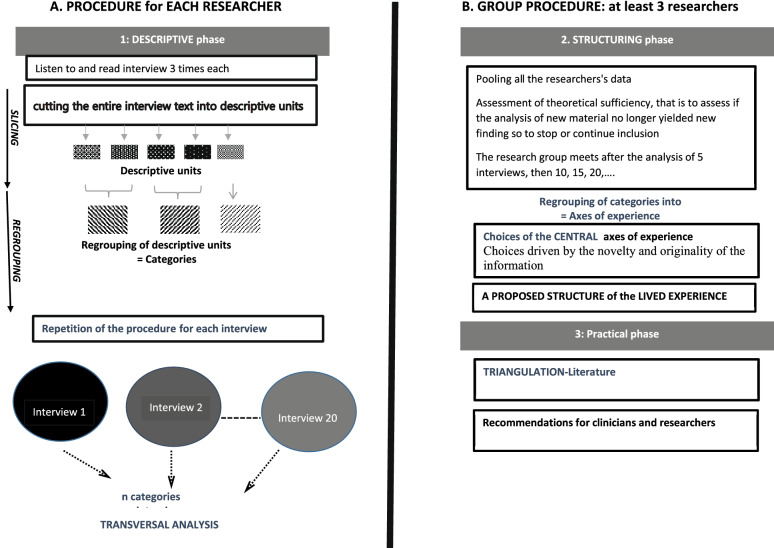
This exploratory international qualitative study used the Inductive Process to analyse the Structure of lived Experience (IPSE) approach, which is a five-stage inductive process used to explore the lived experience of participants in depth and to analyze their structure of lived experience. This study took place from March through July 2020 through individual in-depth video interviews. The sample size was determined according to the principles of theoretical sufficiency.
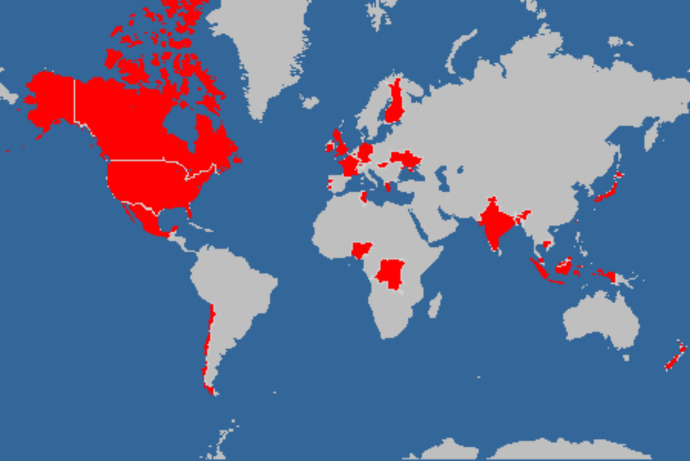
39 CAPs from 26 countries participated (age range 32-70 years; 23 women). Data analysis produced a structure of lived experience comprising three central axes of experience: (1) lost in space, lost in time, describing CAPs' experience of disorganization of their clinical practice in the dimensions of lived time and lived space, (2) the body-of CAPs and patients-underlining their disconcerting experience of both sensory aspects and the non-embodied encounter during clinical practice, and (3) unpleasant emotions, with angst and loneliness the two main feelings coloring their clinical practice experience.
This analysis of the structure of lived experience of CAPs went beyond the sole context of the pandemic and revealed key aspects of what usually organizes CAP clinical practice. It identified two blind spots or conceptual voids within the child and adolescent psychiatry field: first, the intrinsic therapeutic function of a CAP clinical practice and, second, the important diagnostic and therapeutic function of the embodied encounter during CAP consultations. Beyond the context of COVID-19, further research should investigate these aspects to better define what a CAP does in practice and to increase both attractiveness and recruitment in this specialty.
新冠疫情直接影响了儿童和青少年精神病学领域,影响着儿童及其家庭生活的方方面面,并增加了他们出现困扰和心理健康问题的风险,尤其是在患有既往精神疾病的儿童中。由于封锁和社交距离措施,世界各地的儿童和青少年精神科医生(CAPs)不得不调整他们的临床实践。本研究旨在探讨CAPs在这些特殊情况下如何体验他们的临床实践。
这项探索性的国际定性研究采用归纳过程来分析生活体验结构(IPSE)方法,这是一个五阶段的归纳过程,用于深入探索参与者的生活体验并分析他们的生活体验结构。本研究于2020年3月至7月通过个人深度视频访谈进行。样本量根据理论充分性原则确定。
来自26个国家的39名CAPs参与了研究(年龄范围32 - 70岁;23名女性)。数据分析得出了一个生活体验结构,包括三个核心体验轴:(1)迷失在空间,迷失在时间,描述了CAPs在生活时间和生活空间维度上临床实践混乱的体验;(2)CAPs和患者的身体——强调了他们在临床实践中感官方面以及非实体接触的令人不安的体验;(3)不愉快的情绪,焦虑和孤独是影响他们临床实践体验的两种主要情绪。
对CAPs生活体验结构的这一分析超越了疫情的单一背景,揭示了通常组织CAP临床实践的关键方面。它确定了儿童和青少年精神病学领域内的两个盲点或概念空白:第一,CAP临床实践的内在治疗功能;第二,CAP会诊期间实体接触的重要诊断和治疗功能。在新冠疫情背景之外,进一步的研究应该调查这些方面,以更好地界定CAP在实践中的作用,并提高该专业的吸引力和招募人数。