Department of Child and Adolescent Psychiatry, Psychosomatics and Psychotherapy, Charité - Universitätsmedizin Berlin, corporate member of Freie Universität Berlin, Humboldt-Universität zu Berlin, and Berlin Institute of Health, Augustenburger Platz 1, 13353, Berlin, Germany.
Department of Education and Psychology, Clinical Psychology and Psychotherapy, Freie Universität Berlin, Habelschwerdter Allee 45, 14195, Berlin, Germany.
Eur Child Adolesc Psychiatry. 2022 Jul;31(7):1-13. doi: 10.1007/s00787-021-01739-0. Epub 2021 Mar 1.
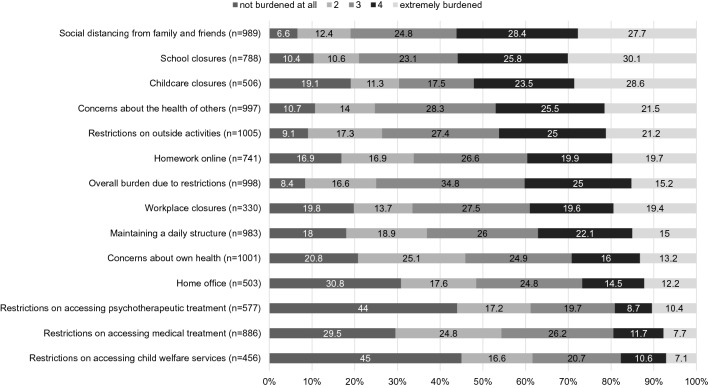
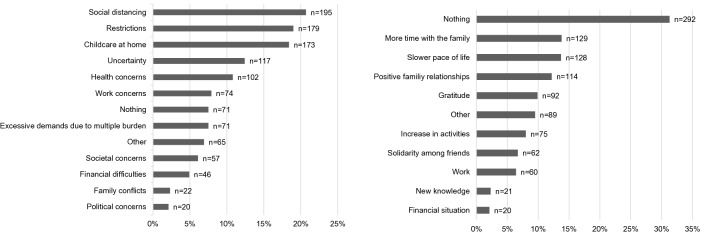
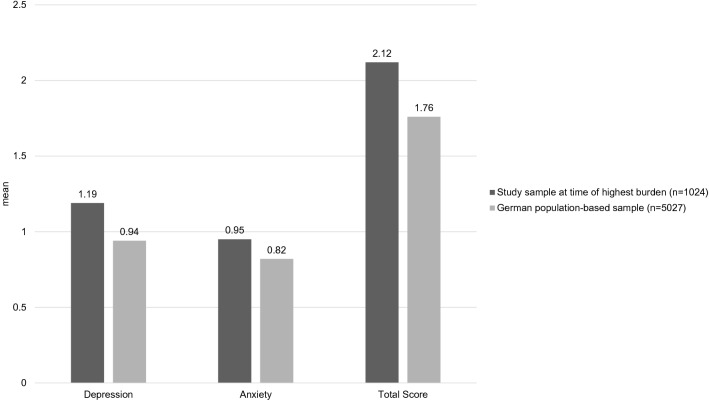
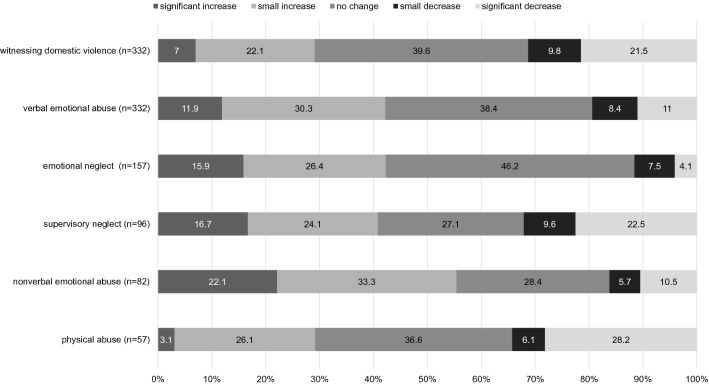
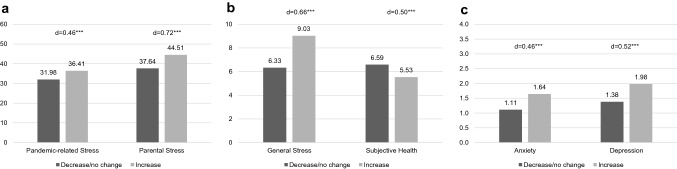
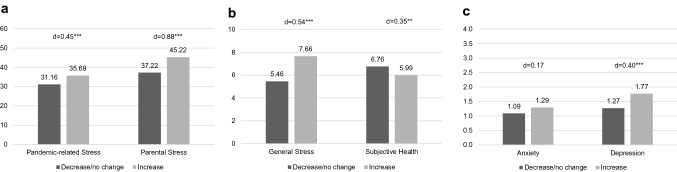
Parenting during the COVID-19 pandemic is highly challenging, with parents having to meet various demands simultaneously. An increase in adverse childhood experiences (ACEs) has been widely predicted, but empirical evidence is still scarce. This study aimed to (1) generate representative data on pandemic-related stress, parental stress, general stress, parental subjective and mental health, and the occurrence of ACEs; (2) identify risk factors for an increase in ACEs, and (3) provide qualitative data on parents' experiences. A representative survey was conducted in Germany in August 2020 with 1024 parents of underage children (M = 41.70, 50.9% female). More than 50% of parents reported being stressed by social distancing and the closure of schools and childcare facilities. Parental stress increased significantly during the pandemic (d = 0.21). Subgroups of parents also reported very high levels of depressive symptoms (12.3%) and anxiety (9.7%). Up to one-third of the sample reported ACEs in the child's lifetime. In this group, 29.1% reported an increase in children witnessing domestic violence during the pandemic, and 42.2% an increase verbal emotional abuse. These families were characterized by higher parental stress, job losses, and younger parent and child age. Positive aspects of the pandemic related primarily to personal or family life (e.g. slower pace of life, increase in family time). While some parents coped well, a particularly negative pattern was observed in a subgroup of families that experienced an increase in ACEs. Parental stress emerged as important target point for interventions addressing the negative sequelae of the pandemic.
在 COVID-19 大流行期间,育儿极具挑战性,父母必须同时满足各种需求。人们广泛预测儿童期逆境经历(ACEs)会增加,但实证证据仍然很少。本研究旨在:(1)生成与大流行相关的压力、父母压力、一般压力、父母主观和心理健康以及 ACEs 发生的代表性数据;(2)确定 ACEs 增加的风险因素;(3)提供有关父母经历的定性数据。2020 年 8 月,在德国进行了一项具有代表性的调查,共有 1024 名未成年子女的父母参与(M = 41.70,女性占 50.9%)。超过 50%的父母报告说,社交距离和学校及儿童保育设施关闭给他们带来了压力。父母的压力在大流行期间显著增加(d = 0.21)。亚组父母报告的抑郁症状(12.3%)和焦虑症状(9.7%)也非常高。样本中有三分之一的人报告称,孩子一生中经历过 ACEs。在这一组中,29.1%的人报告称,孩子在大流行期间目睹家庭暴力的次数增加,42.2%的人报告称,言语情感虐待的次数增加。这些家庭的特点是父母压力更大、失业以及父母和孩子年龄更小。大流行带来的积极方面主要与个人或家庭生活有关(例如,生活节奏放缓,家庭时间增加)。虽然有些父母应对良好,但在一个亚组家庭中观察到了一种特别负面的模式,这些家庭经历了 ACEs 的增加。父母压力是解决大流行带来的负面后果的干预措施的重要目标。