Department of Pharmacy, The First Affiliated Hospital of Nanjing Medical University, Nanjing, China.
Department of Medical Service, The First Affiliated Hospital of Nanjing Medical University, Nanjing, China.
BMC Infect Dis. 2021 Nov 23;21(1):1178. doi: 10.1186/s12879-021-06886-y.
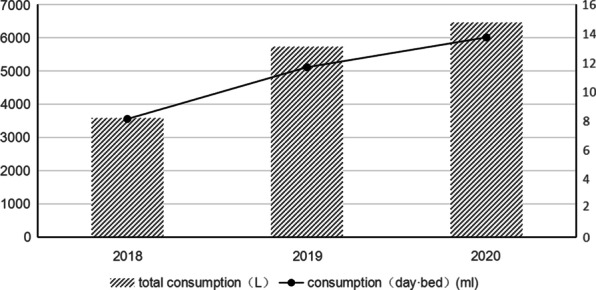
No studies have yet reported the effect of prevention and control measures, which were implemented to combat COVID-19, on the prevention and control of common HAIs. We aimed to examine the effect of the "Normalized Epidemic Prevention and Control Requirements" (implemented in May 2020) by comparison of hospital-acquired infections (HAIs) and community-acquired infections (CAIs) in China during 2018, 2019, and 2020.
Data of inpatients before and after implementation of new requirements were retrospectively analyzed, including infection rate, use of alcohol-based hand cleaner, anatomical sites of infections, pathogen species, infection by multi-drug resistant species, and use of different antibiotics.
The HAI rate was significantly higher in 2020 than in 2018 and 2019 (P < 0.05), and the CAI rate was significantly higher in 2019 and 2020 than in 2018 (P < 0.001). Lower respiratory tract infections were the most common HAI during all years, with no significant changes over time. Lower respiratory tract infections were also the most common CAI, but were significantly more common in 2018 and 2019 than 2020 (P < 0.001). There were no changes in upper respiratory tract infections among HAIs or CAIs. Most HAIs and CAIs were from Gram-negative bacteria, and the percentages of fungal infections were greater in 2019 and 2020 than 2018. MRSA infections were more common in 2020 than in 2018 and 2019 (P < 0.05). The utilization rate and usage days of antibiotics decreased over time (P < 0.001) and the culture rate of microbial specimens before antibiotic usage increased over time (P < 0.001).
The new prevention and control requirements provided important benefits during the COVID-19 pandemic. However, their effects on HAIs were not obvious.
目前尚无研究报告防控 COVID-19 所采取的措施对常见医院获得性感染(HAIs)和社区获得性感染(CAIs)的防控效果。本研究旨在比较 2018 年、2019 年和 2020 年中国的医院获得性感染(HAIs)和社区获得性感染(CAIs),以评估 2020 年 5 月实施的“常态化疫情防控要求”的效果。
回顾性分析新要求实施前后住院患者的感染率、酒精洗手液使用率、感染部位、病原体种类、多重耐药菌感染及不同抗生素使用情况等数据。
2020 年 HAI 发生率显著高于 2018 年和 2019 年(P<0.05),2019 年和 2020 年 CAI 发生率显著高于 2018 年(P<0.001)。所有年份下,下呼吸道感染均为最常见的 HAI,且各年份间无显著变化。下呼吸道感染也是最常见的 CAI,但 2018 年和 2019 年明显多于 2020 年(P<0.001)。HAI 和 CAI 中,上呼吸道感染无变化。大多数 HAI 和 CAI 由革兰氏阴性菌引起,真菌感染百分比在 2019 年和 2020 年高于 2018 年。2020 年 MRSA 感染较 2018 年和 2019 年更为常见(P<0.05)。抗生素的使用率和使用天数随时间呈下降趋势(P<0.001),抗生素使用前微生物标本的培养率随时间呈上升趋势(P<0.001)。
新冠疫情期间,新的防控要求发挥了重要作用。然而,其对 HAI 的防控效果并不明显。