Yu Zhen, Efstathiou Nikolaos E, Correa Victor S M C, Chen Xiaohong, Ishihara Kenji, Iesato Yasuhiro, Narimatsu Toshio, Ntentakis Dimitrios, Chen Yanyun, Vavvas Demetrios G
Retina Service, Angiogenesis Laboratory, Department of Ophthalmology, Massachusetts Eye and Ear, Harvard Medical School, Boston, MA, 02114, USA.
Shenzhen Eye Hospital, Shenzhen Key Ophthalmic Laboratory, Jinan University, 518040, Shenzhen, China.
Cell Death Discov. 2021 Nov 23;7(1):366. doi: 10.1038/s41420-021-00757-w.
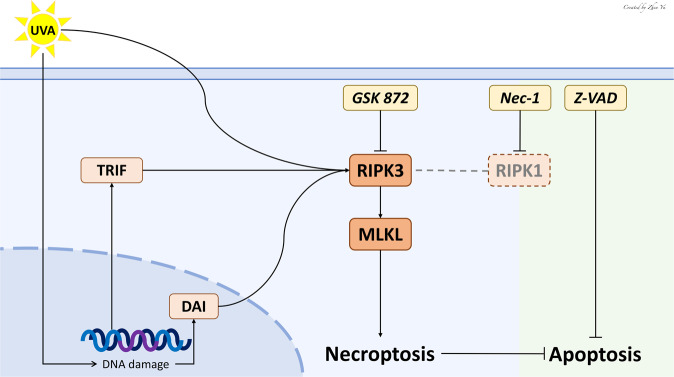
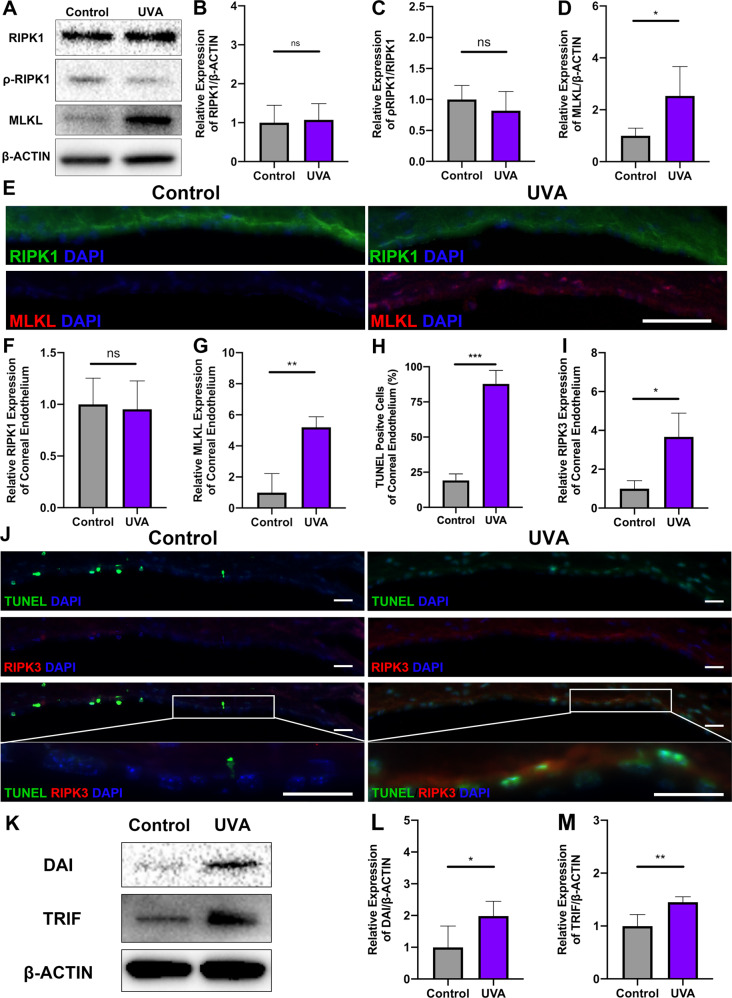
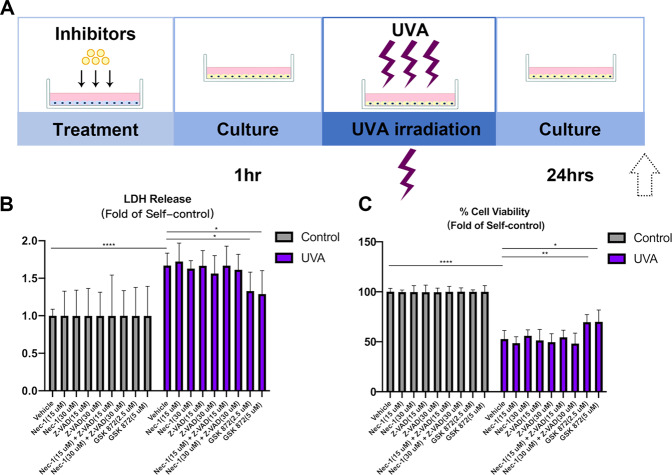
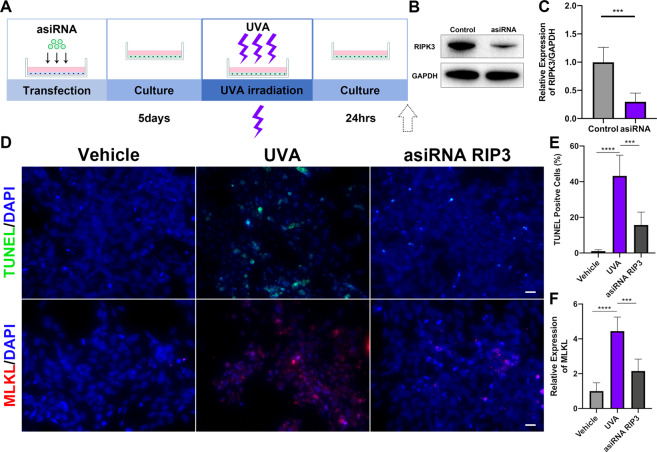
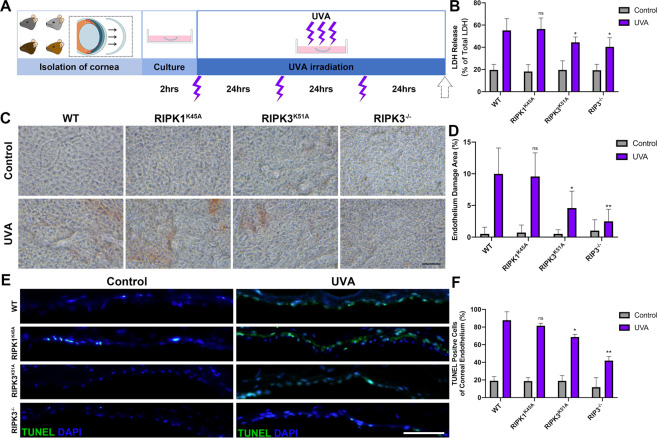
Ultraviolet (UV) is one of the most energetic radiations in the solar spectrum that can result in various tissue injury disorders. Previous studies demonstrated that UVA, which represents 95% of incident photovoltaic radiation, induces corneal endothelial cells (CECs) death. Programmed cell death (PCD) has been implicated in numerous ophthalmologic diseases. Here, we investigated receptor-interacting protein 3 kinase (RIPK3), a key signaling molecule of PCD, in UVA-induced injury using a short-term corneal endothelium (CE) culture model. UVA irradiation activated RIPK3 and mediated necroptosis both in mouse CE and primary human CECs (pHCECs). UVA irradiation was associated with upregulation of key necroptotic molecules (DAI, TRIF, and MLKL) that lie downstream of RIPK3. Moreover, RIPK3 inhibition or silencing in primary corneal endothelial cells suppresses UVA-induced cell death, along with downregulation of MLKL in pHCECs. In addition, genetic inhibition or knockout of RIPK3 in mice (RIPK3 and RIPK3 mice) similarly attenuates cell death and the levels of necroptosis in ex vivo UVA irradiation experiments. In conclusion, these results identify RIPK3, not RIPK1, as a critical regulator of UVA-induced cell death in CE and indicate its potential as a future protective target.
紫外线(UV)是太阳光谱中能量最高的辐射之一,可导致各种组织损伤疾病。先前的研究表明,占入射光辐射95%的UVA可诱导角膜内皮细胞(CECs)死亡。程序性细胞死亡(PCD)与多种眼科疾病有关。在此,我们使用短期角膜内皮(CE)培养模型,研究了PCD的关键信号分子受体相互作用蛋白3激酶(RIPK3)在UVA诱导损伤中的作用。UVA照射激活了小鼠CE和原代人角膜内皮细胞(pHCECs)中的RIPK3并介导坏死性凋亡。UVA照射与RIPK3下游关键坏死性凋亡分子(DAI、TRIF和MLKL)的上调有关。此外,原代角膜内皮细胞中RIPK3的抑制或沉默可抑制UVA诱导的细胞死亡,同时pHCECs中MLKL的表达下调。此外,在小鼠中对RIPK3进行基因抑制或敲除(RIPK3-/-和RIPK3-/-小鼠)在体外UVA照射实验中同样可减轻细胞死亡和坏死性凋亡水平。总之,这些结果确定RIPK3而非RIPK1是UVA诱导CE细胞死亡的关键调节因子,并表明其作为未来保护靶点的潜力。