Rojas-Garcia Paula, Antoñanzas Fernando
Department of Economics and Business, University of La Rioja, Logroño, La Rioja, Spain.
Clinicoecon Outcomes Res. 2021 Nov 15;13:927-936. doi: 10.2147/CEOR.S337621. eCollection 2021.
The rational consumption of antibiotics is a valuable goal for developed countries. Antibiotic resistance (AMR) was the main health threat before the coronavirus-19 (COVID-19) pandemic. To restrict COVID-19 transmission, the Spanish government implemented personal protection measures, including the decree of a lockdown. The objective of this study is to analyze the prescription of antibiotics during the implementation of COVID-19 personal protection measures in primary care in a Spanish region.
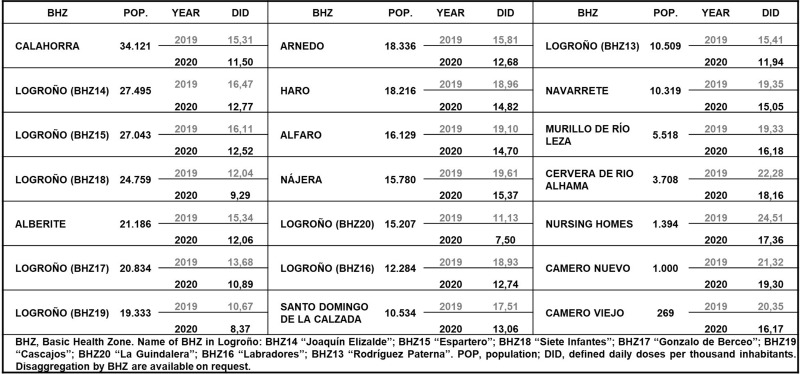
Primary monthly official dispensations of antibacterials for systemic use (J01) were analyzed, disaggregating by clinical (active principle, age and sex of the patient) and socio-economic variables (basic health zone and level of income). Defined daily doses per thousand inhabitants (DID) prescribed in 2020 were compared with the prescription in 2019 using Chi-square test.
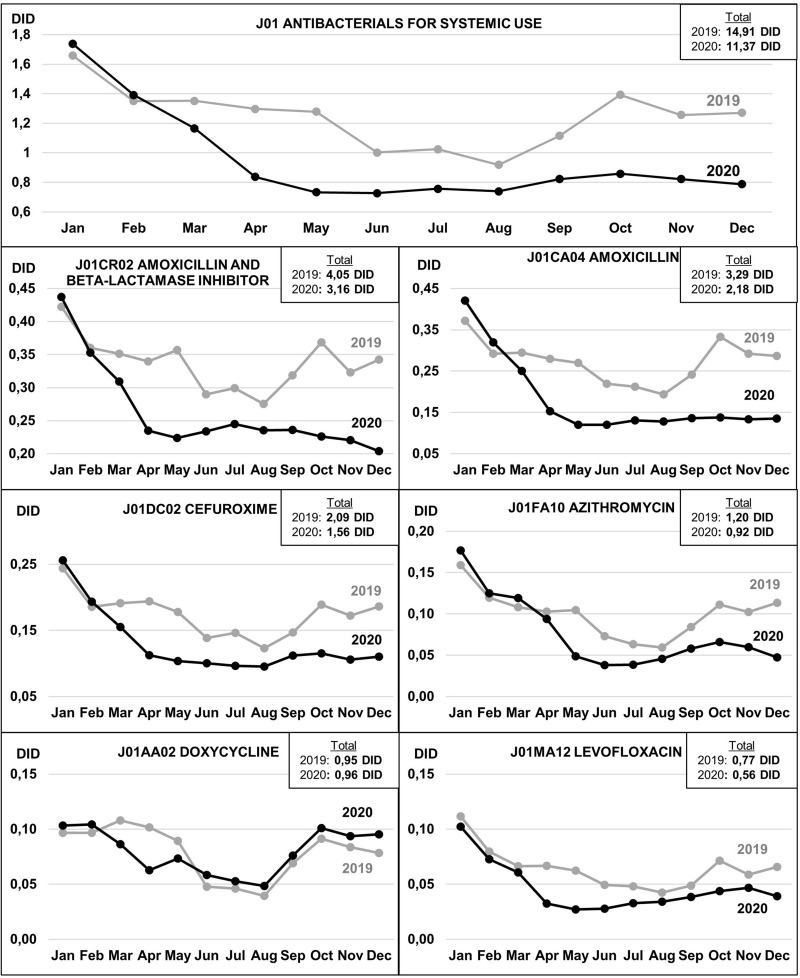
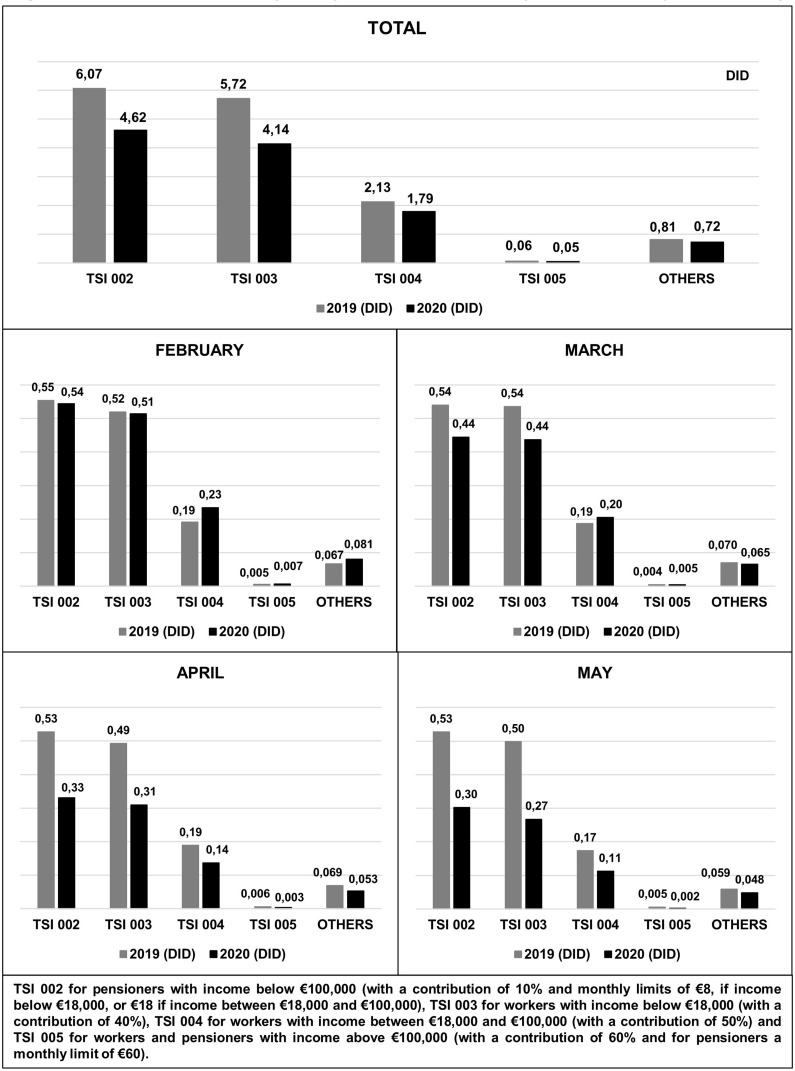
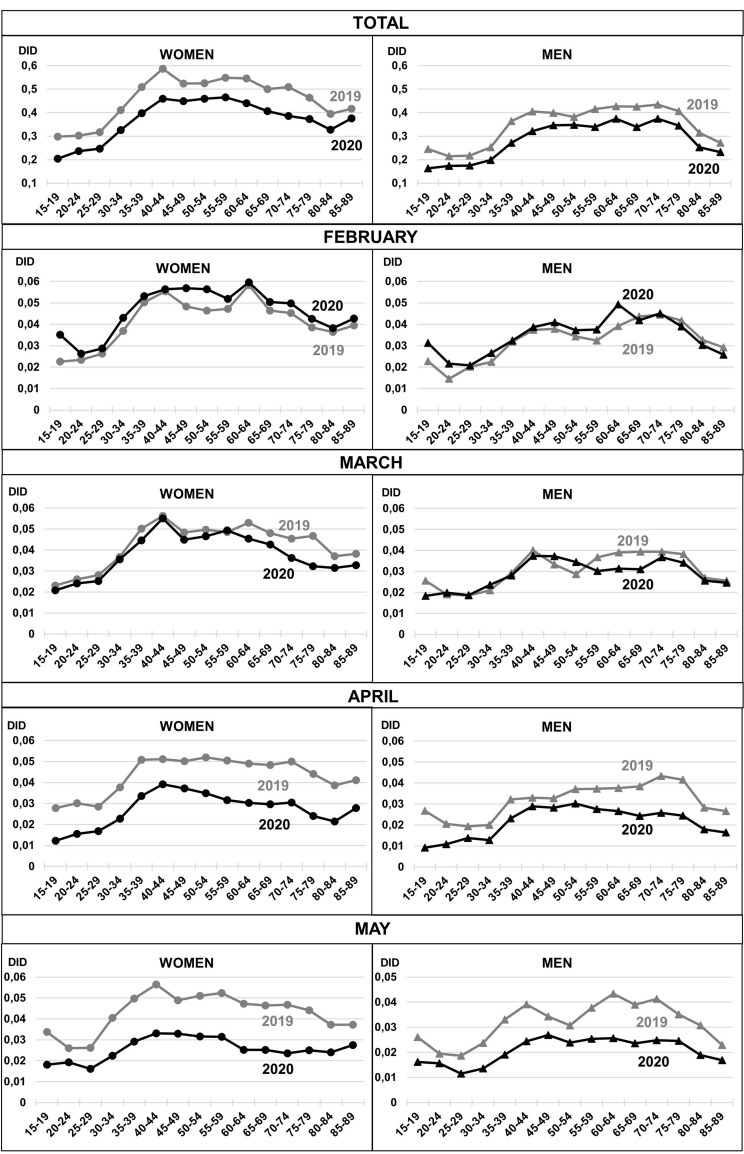
In 2020, the prescription of antibiotics (11.37 DID) was significantly lower (-23.73%) than in 2019 (14.91 DID). The main reduction in the amount prescribed was found in May (-42.64%). However, the prescription was significantly higher (71.34%) in February 2020 than in the same month in 2019 in nursing homes. In March 2020, prescriptions were lower (-13.71%) than in the same month in 2019, except for the middle-income group, in which prescriptions were higher (9.67%), as well as azithromycin (10.11%). In April and May 2020, prescriptions were significantly lower than in 2019 in all age groups and both in women and men.
Personal protection measures against COVID-19 transmission (lockdown, mask, social distance and increased hygiene) coincide in time with the greatest reduction in antibiotic prescription.
抗生素的合理使用是发达国家的一个重要目标。在2019冠状病毒病(COVID-19)大流行之前,抗生素耐药性(AMR)是主要的健康威胁。为了限制COVID-19的传播,西班牙政府实施了个人防护措施,包括发布封锁令。本研究的目的是分析西班牙某地区在COVID-19个人防护措施实施期间基层医疗中抗生素的处方情况。
分析了每月一次的全身用抗菌药物(J01)官方配药情况,按临床(活性成分、患者年龄和性别)和社会经济变量(基本健康区和收入水平)进行分类。使用卡方检验将2020年每千居民规定日剂量(DID)的处方与2019年的处方进行比较。
2020年,抗生素处方(11.37 DID)显著低于2019年(14.91 DID),降幅为23.73%。处方量的主要减少出现在5月(-42.64%)。然而,2020年2月养老院的处方量比2019年同月显著增加(71.34%)。2020年3月,除中等收入组处方量增加(9.67%)以及阿奇霉素处方量增加(10.11%)外,其他处方量均低于2019年同月(-13.71%)。2020年4月和5月,所有年龄组以及男性和女性的处方量均显著低于2019年。
针对COVID-19传播采取的个人防护措施(封锁、戴口罩、保持社交距离和加强卫生)与抗生素处方量的最大降幅在时间上是吻合的。