State Key Laboratory of Biotherapy and Cancer Center, West China Hospital, Sichuan University, Chengdu, 610041, People's Republic of China.
Department of Plastic and Burn Surgery, West China Hospital of Sichuan University, Chengdu, 610041, People's Republic of China.
Int J Nanomedicine. 2021 Nov 17;16:7697-7709. doi: 10.2147/IJN.S331519. eCollection 2021.
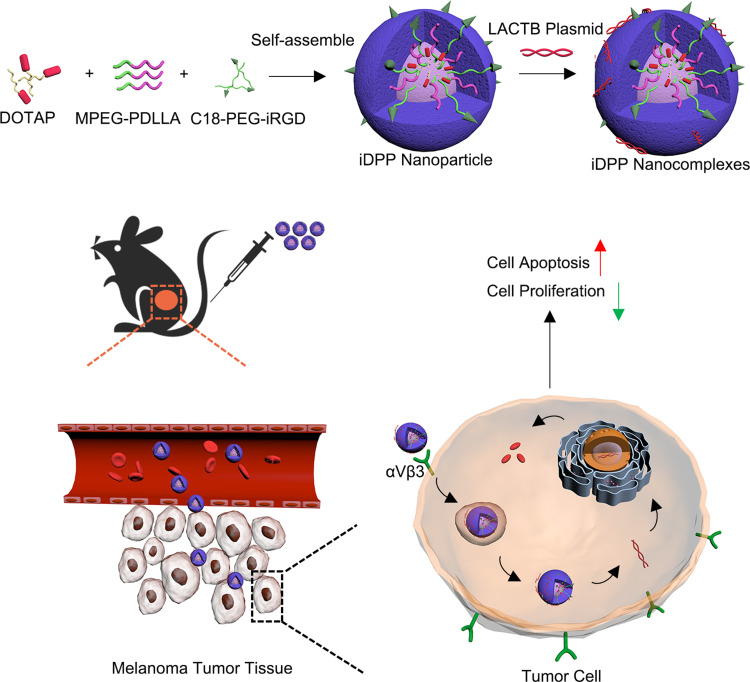
β-lactamase (LACTB) is a tumor suppressor gene in various tumors including melanoma. However, it remains challenging to efficiently deliver the LACTB gene into melanoma. Recently, we designed a nonviral nanocarrier iRGD/DOTAP/MPEG-PDLLA (iDPP) that could deliver gene targetedly to melanoma efficiently without obvious adverse effects.
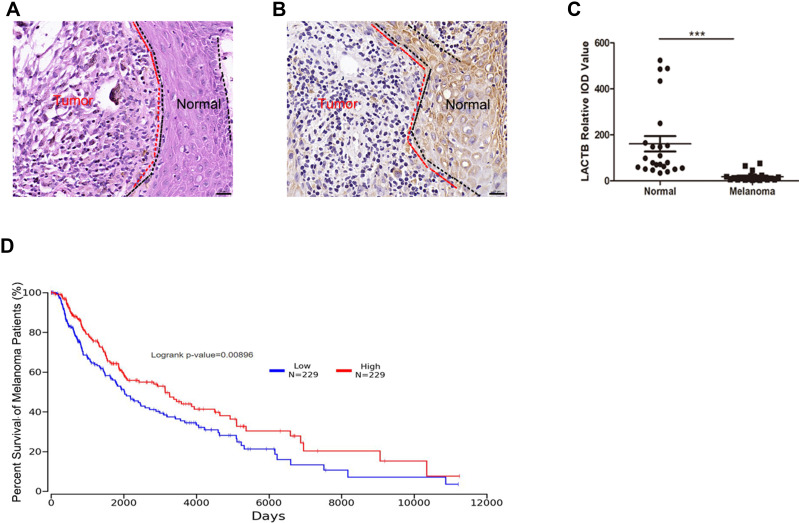
In this study, the tumor-targeted nanoparticle iDPP was prepared to deliver LACTB gene to treat melanoma in vitro and in vivo. First, the expression level of LACTB in 6 clinical specimens of melanoma patients was evaluated. Subsequently, the characteristics of iDPP/ nanocomplexes were studied. Afterwards, the in vitro and in vivo anti-tumor efficacy of the iDPP/ nanocomplexes were explored utilizing the B16-F10 mouse melanoma cell line and the B16-F10 subcutaneous melanoma model.
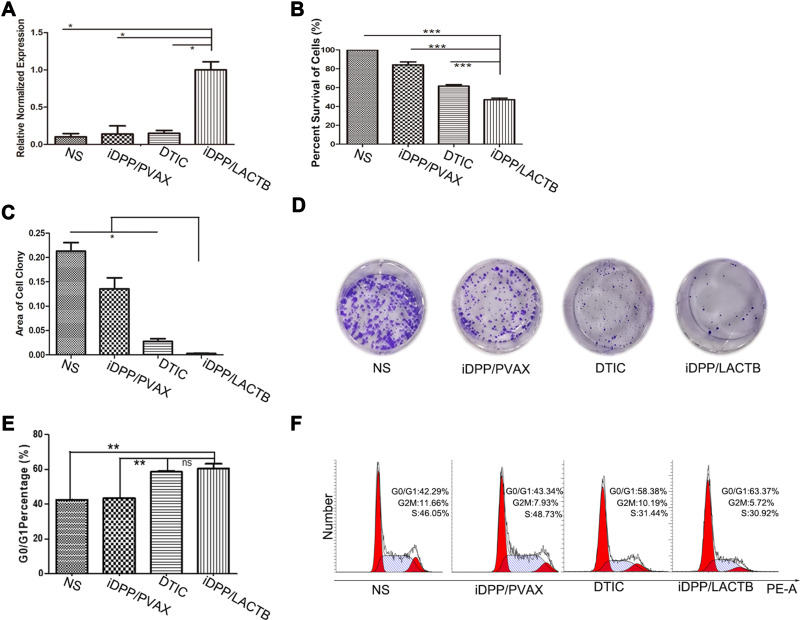
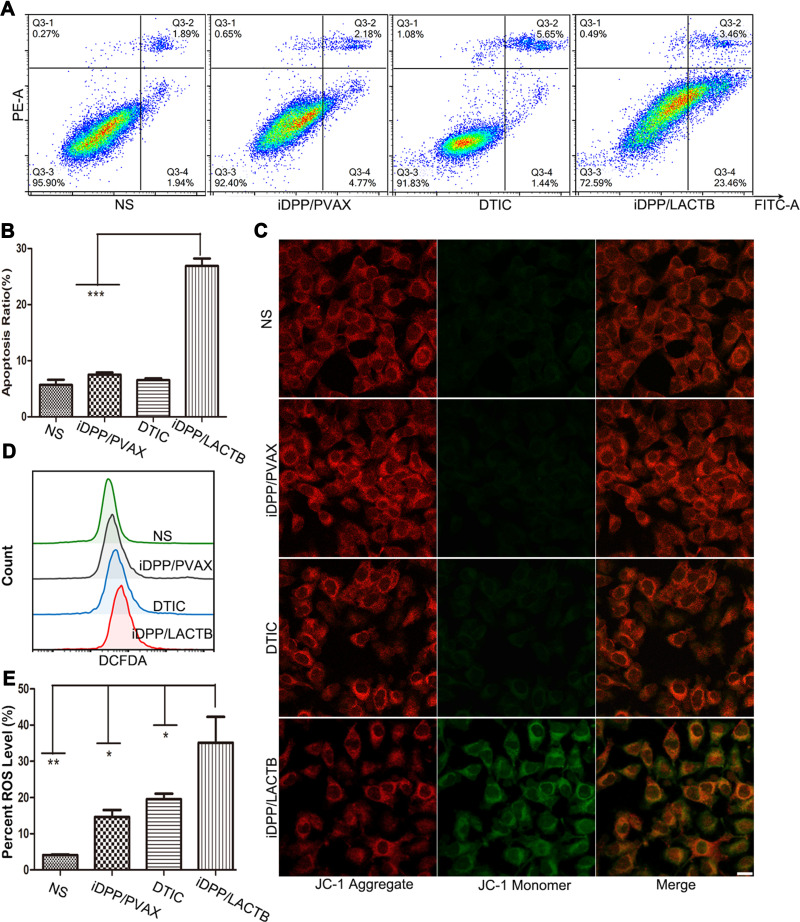
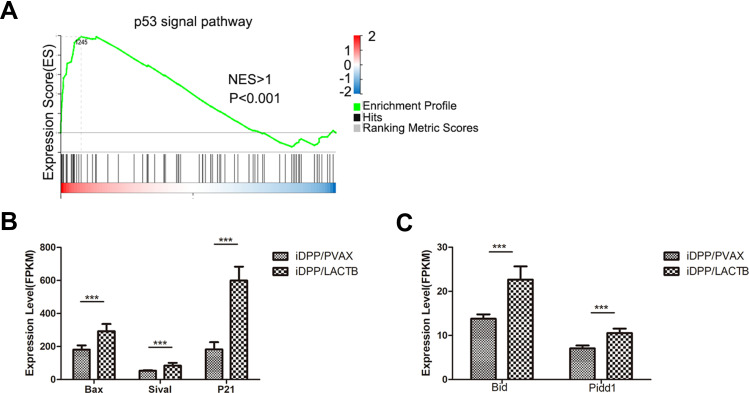
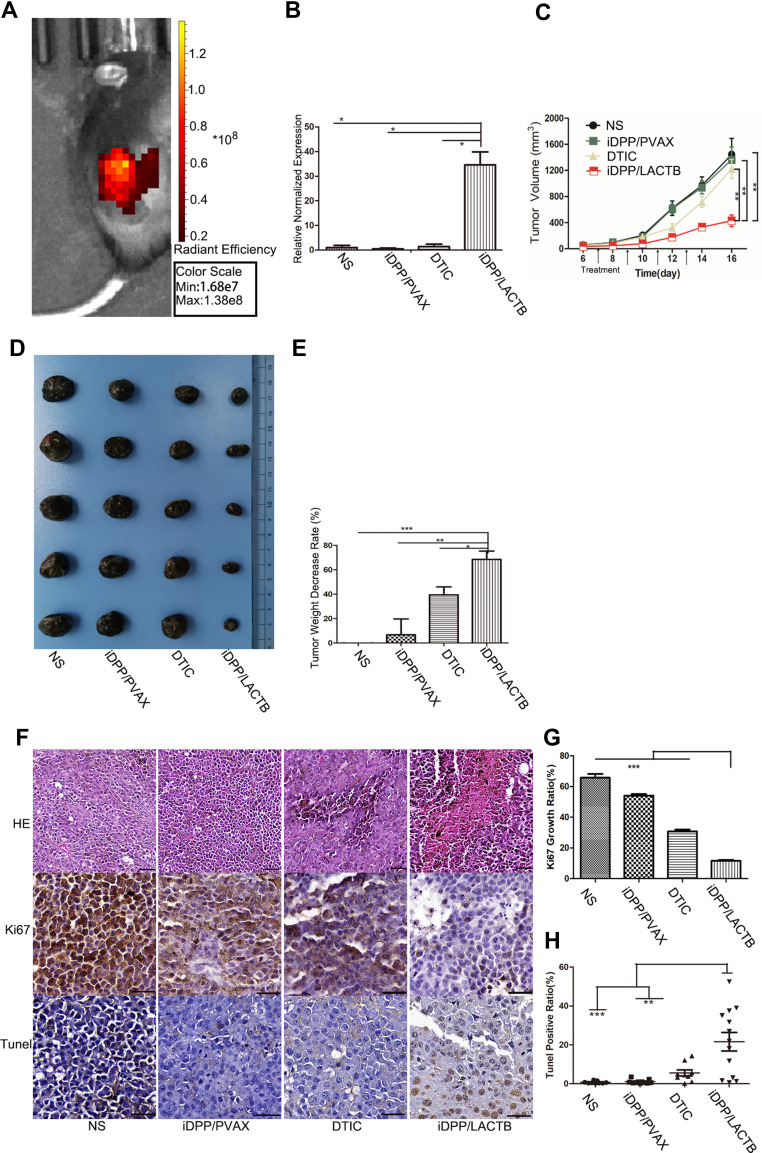
Compared with the normal epithelium, the expression level of LACTB in melanoma tissues was significantly downregulated. In vitro B16-F10 cell tests showed iDPP/ nanocomplexes could increase the mRNA levels of P21, Bid, Bax, Pidd1, and Sival genes and up-regulate the p53 signaling pathway of melanoma cells, thus promoting cell apoptosis and blocking the cell cycle. Injected intravenously, iDPP nanoparticles could deliver DNA to the subcutaneous melanoma targetedly. Based on in vivo mouse xenograft model, iDPP/ nanocomplexes could effectively inhibit tumor proliferation and induce tumor apoptosis, thus significantly inhibiting melanoma growth (tumor inhibition rate is about 68%) in the subcutaneous B16-F10 melanoma model.
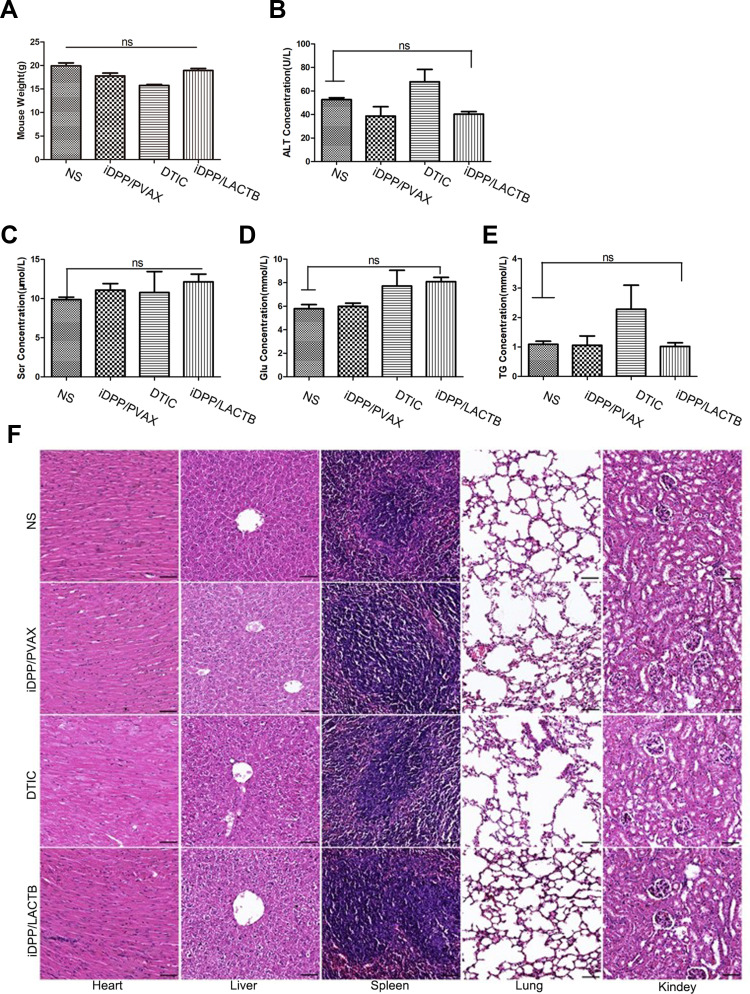
The downregulated LACTB might be a potential target for melanoma therapy. The iDPP/ nanocomplexes could inhibit the growth of the mouse melanoma without obvious side effects, which provide a new option for melanoma gene therapy research.
β-内酰胺酶(LACTB)是多种肿瘤(包括黑色素瘤)中的肿瘤抑制基因。然而,将 LACTB 基因高效递送至黑色素瘤仍然具有挑战性。最近,我们设计了一种非病毒纳米载体 iRGD/DOTAP/MPEG-PDLLA(iDPP),它可以有效地将基因靶向递送至黑色素瘤,而没有明显的不良反应。
在这项研究中,制备了肿瘤靶向纳米颗粒 iDPP,以将 LACTB 基因递送至体外和体内的黑色素瘤。首先,评估了 6 例黑色素瘤患者临床标本中 LACTB 的表达水平。随后,研究了 iDPP/纳米复合物的特性。之后,利用 B16-F10 小鼠黑色素瘤细胞系和 B16-F10 皮下黑色素瘤模型,研究了 iDPP/纳米复合物的体内外抗肿瘤疗效。
与正常上皮相比,黑色素瘤组织中 LACTB 的表达水平显著下调。体外 B16-F10 细胞试验表明,iDPP/纳米复合物可以增加 P21、Bid、Bax、Pidd1 和 Sival 基因的 mRNA 水平,并上调黑色素瘤细胞的 p53 信号通路,从而促进细胞凋亡并阻断细胞周期。静脉注射后,iDPP 纳米颗粒可以将 DNA 靶向递送至皮下黑色素瘤部位。基于体内小鼠异种移植模型,iDPP/纳米复合物可以有效地抑制肿瘤增殖并诱导肿瘤凋亡,从而显著抑制皮下 B16-F10 黑色素瘤模型中的肿瘤生长(肿瘤抑制率约为 68%)。
下调的 LACTB 可能是黑色素瘤治疗的潜在靶点。iDPP/纳米复合物可以在没有明显副作用的情况下抑制小鼠黑色素瘤的生长,为黑色素瘤基因治疗研究提供了新的选择。