Liu Kaizheng, Wiendels Maury, Yuan Hongbo, Ruan Changshun, Kouwer Paul H J
Research Center for Human Tissue and Organs Degeneration, Institute of Biomedicine and Biotechnology, Shenzhen Institutes of Advanced Technology, Chinese Academy of Sciences, Shenzhen, 518055, PR China.
Radboud University, Institute for Molecules and Materials, Heyendaalseweg 135, 6525 AJ, Nijmegen, the Netherlands.
Bioact Mater. 2021 Aug 14;9:316-331. doi: 10.1016/j.bioactmat.2021.08.002. eCollection 2022 Mar.
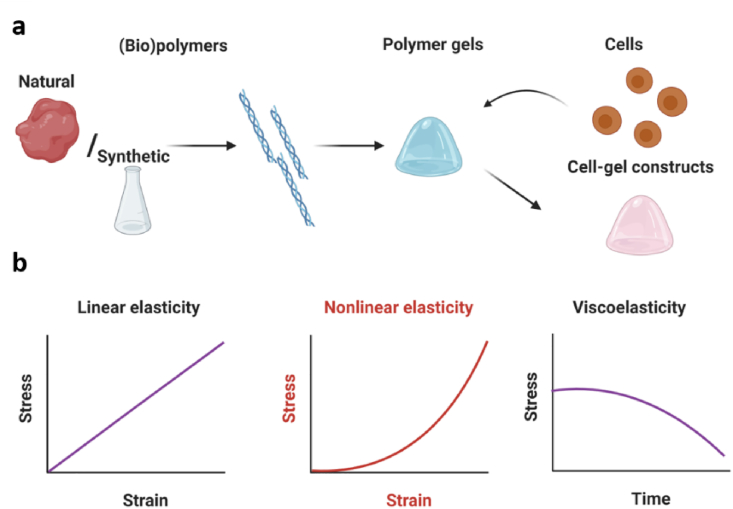
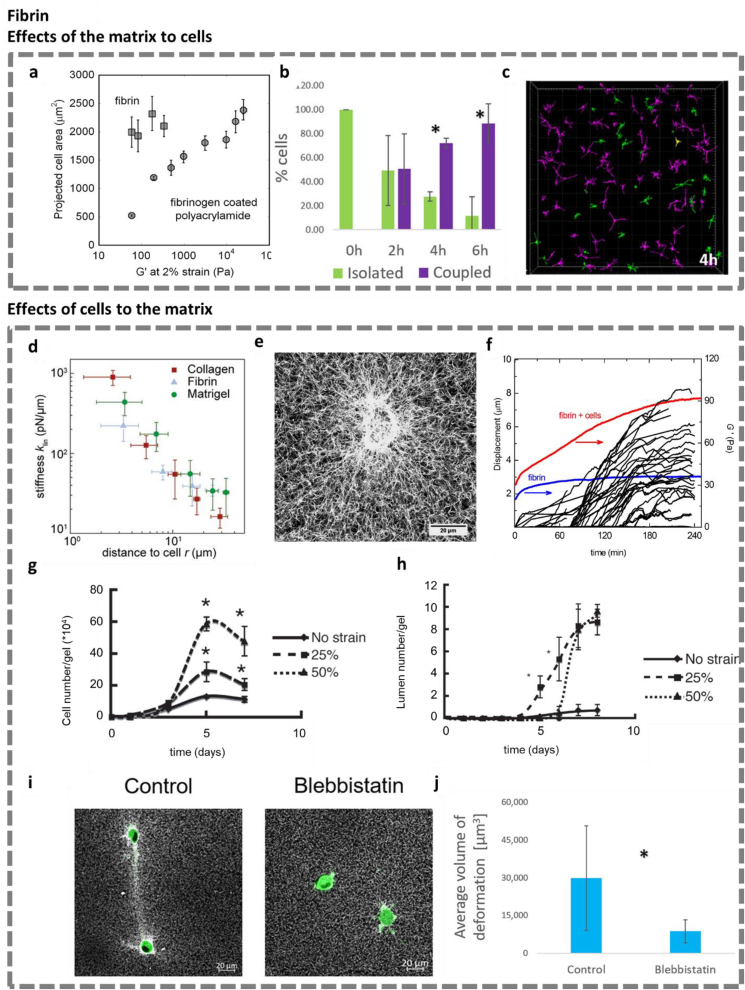
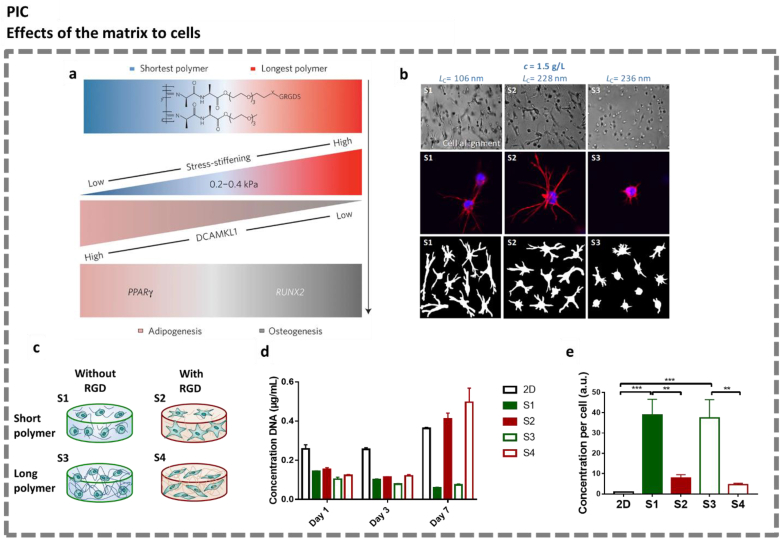
Three-dimensional (3D) matrix models using hydrogels are powerful tools to understand and predict cell behavior. The interactions between the cell and its matrix, however is highly complex: the matrix has a profound effect on basic cell functions but simultaneously, cells are able to actively manipulate the matrix properties. This (mechano)reciprocity between cells and the extracellular matrix (ECM) is central in regulating tissue functions and it is fundamentally important to broadly consider the biomechanical properties of the ECM when designing matrix models. This manuscript discusses two commonly used biopolymer networks, i.e. collagen and fibrin gels, and one synthetic polymer network, polyisocyanide gel (PIC), which all possess the characteristic nonlinear mechanics in the biological stress regime. We start from the structure of the materials, then address the uses, advantages, and limitations of each material, to provide a guideline for tissue engineers and biophysicists in utilizing current materials and also designing new materials for 3D cell culture purposes.
使用水凝胶的三维(3D)基质模型是理解和预测细胞行为的强大工具。然而,细胞与其基质之间的相互作用非常复杂:基质对细胞的基本功能有深远影响,但同时,细胞能够积极地改变基质特性。细胞与细胞外基质(ECM)之间的这种(机械)相互作用是调节组织功能的核心,在设计基质模型时广泛考虑ECM的生物力学特性至关重要。本文讨论了两种常用的生物聚合物网络,即胶原蛋白和纤维蛋白凝胶,以及一种合成聚合物网络,聚异氰化物凝胶(PIC),它们在生物应力范围内都具有非线性力学特性。我们从材料的结构入手,然后阐述每种材料的用途、优点和局限性,为组织工程师和生物物理学家在利用现有材料以及设计用于3D细胞培养的新材料方面提供指导。