de Castro Francisco, Adl Sina M, Allesina Stefano, Bardgett Richard D, Bolger Thomas, Dalzell Johnathan J, Emmerson Mark, Fleming Thomas, Garlaschelli Diego, Grilli Jacopo, Hannula Silja Emilia, de Vries Franciska, Lindo Zoë, Maule Aaron G, Öpik Maarja, Rillig Matthias C, Veresoglou Stavros D, Wall Diana H, Caruso Tancredi
Fisheries & Aquatic Ecosystems Agri-Food & Biosciences Institute Belfast UK.
Department of Soil Science University of Saskatchewan Saskatoon SK Canada.
Ecol Evol. 2021 Nov 3;11(22):16070-16081. doi: 10.1002/ece3.8278. eCollection 2021 Nov.
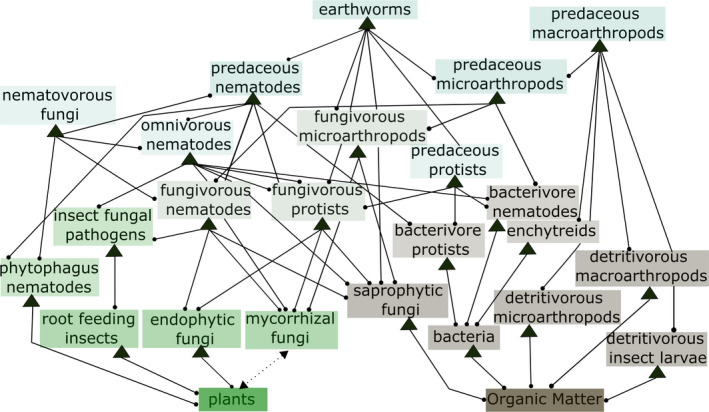
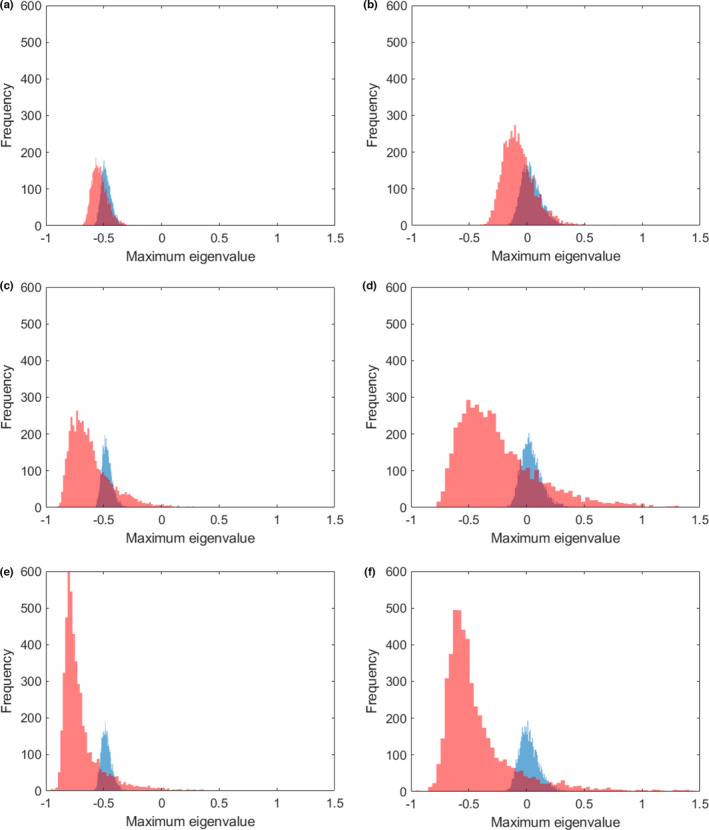
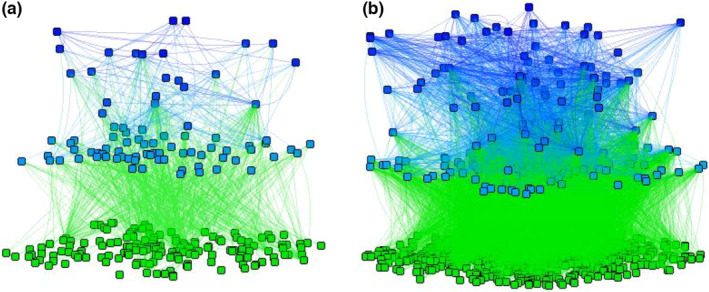
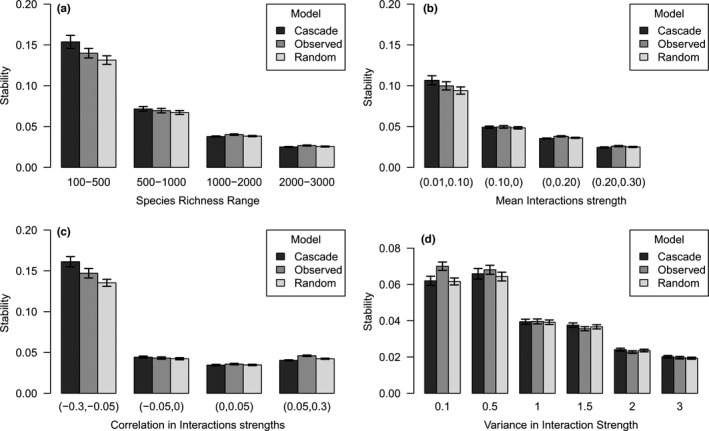
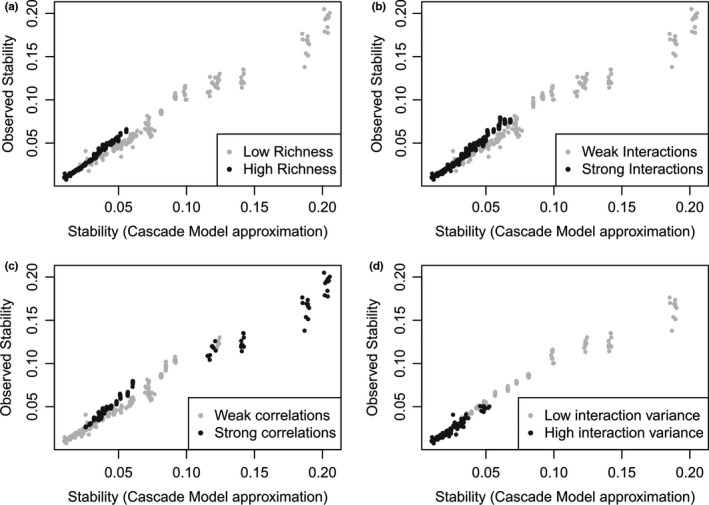
Ecologists have long debated the properties that confer stability to complex, species-rich ecological networks. Species-level soil food webs are large and structured networks of central importance to ecosystem functioning. Here, we conducted an analysis of the stability properties of an up-to-date set of theoretical soil food web models that account both for realistic levels of species richness and the most recent views on the topological structure (who is connected to whom) of these food webs. The stability of the network was best explained by two factors: strong correlations between interaction strengths and the blocked, nonrandom trophic structure of the web. These two factors could stabilize our model food webs even at the high levels of species richness that are typically found in soil, and that would make random systems very unstable. Also, the stability of our soil food webs is well-approximated by the cascade model. This result suggests that stability could emerge from the hierarchical structure of the functional organization of the web. Our study shows that under the assumption of equilibrium and small perturbations, theoretical soil food webs possess a topological structure that allows them to be complex yet more locally stable than their random counterpart. In particular, results strongly support the general hypothesis that the stability of rich and complex soil food webs is mostly driven by correlations in interaction strength and the organization of the soil food web into functional groups. The implication is that in real-world food web, any force disrupting the functional structure and distribution pattern of interaction strengths (i.e., energy fluxes) of the soil food webs will destabilize the dynamics of the system, leading to species extinction and major changes in the relative abundances of species.
长期以来,生态学家一直在争论赋予复杂、物种丰富的生态网络稳定性的特性。物种层面的土壤食物网是对生态系统功能至关重要的大型结构化网络。在此,我们对一组最新的理论土壤食物网模型的稳定性特性进行了分析,这些模型既考虑了现实的物种丰富度水平,也考虑了关于这些食物网拓扑结构(谁与谁相连)的最新观点。网络的稳定性最好由两个因素来解释:相互作用强度之间的强相关性以及食物网的受阻、非随机营养结构。这两个因素甚至可以在土壤中通常发现的高物种丰富度水平下使我们的模型食物网稳定下来,而这种高物种丰富度会使随机系统非常不稳定。此外,我们的土壤食物网的稳定性可以很好地用级联模型来近似。这一结果表明,稳定性可能源于食物网功能组织的层次结构。我们的研究表明,在平衡和小扰动的假设下,理论土壤食物网具有一种拓扑结构,使其比随机对应的食物网更复杂但局部更稳定。特别是,结果有力地支持了一般假设,即丰富复杂的土壤食物网的稳定性主要由相互作用强度的相关性以及土壤食物网组织成功能组所驱动。这意味着在现实世界的食物网中,任何破坏土壤食物网功能结构和相互作用强度(即能量通量)分布模式的力量都会使系统动态不稳定,导致物种灭绝和物种相对丰度的重大变化。