Gonçalves Bortolini Débora, Windson Isidoro Haminiuk Charles, Cristina Pedro Alessandra, de Andrade Arruda Fernandes Isabela, Maria Maciel Giselle
Programa de Pós-Graduação em Engenharia de Alimentos (PPGEAL), Universidade Federal do Paraná (UFPR), CEP (81531-980) Curitiba, Paraná, Brazil.
Laboratório de Biotecnologia, Universidade Tecnológica Federal do Paraná (UTFPR), CEP (81280-340) Curitiba, Paraná, Brazil.
Food Chem X. 2021 Nov 12;12:100160. doi: 10.1016/j.fochx.2021.100160. eCollection 2021 Dec 30.
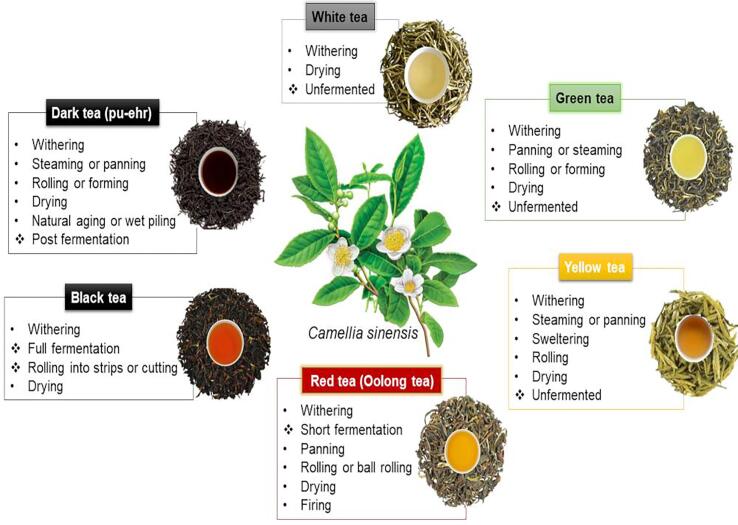
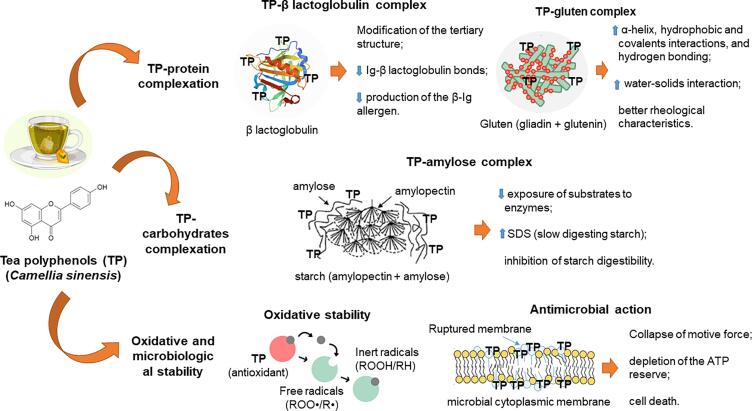
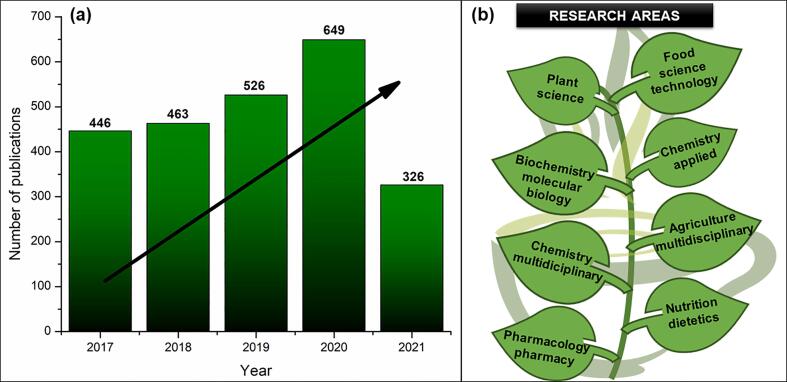
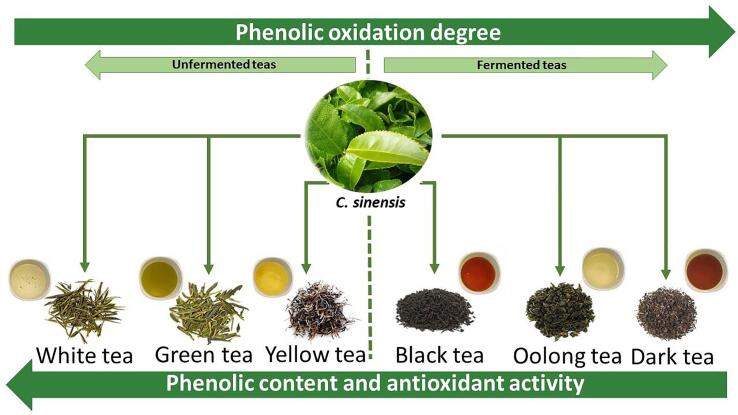
The plant is the source of different teas (white, green, yellow, oolong, black, and pu-ehr) consumed worldwide, which are classified by the oxidation degree of their bioactive compounds. The sensory (taste, aroma, and body of the drink) and functional properties of teas are affected by the amount of methylxanthines (caffeine and theobromine), amino acids (l-theanine) and reducing sugars in their composition. Additionally, flavan-3-ols, mainly characterized by epicatechins, catechins, and their derivatives, represent on average, 60% of the bioactive compounds in teas. These secondary metabolites from teas are widely recognized for their antioxidant, anti-cancer, and anti-inflammatory properties. Thus, extracts and their isolated compounds have been increasingly used by the food industry. However, bioactive compounds are very susceptible to the oxidation caused by processing and degradation under physiological conditions of gastrointestinal digestion. In this context, new approaches/technologies have been developed for the preservation of these compounds. This review presents the main stages involved in production of teas following a description of their main bioactive compounds, biological properties, stability and bioaccessibility. Besides, and updated view of teas in the field of food science and technology was provided by focusing on novel findings and innovations published in scientific literature over the last five years.
这种植物是全球消费的不同茶类(白茶、绿茶、黄茶、乌龙茶、红茶和普洱茶)的来源,这些茶类是根据其生物活性化合物的氧化程度分类的。茶的感官特性(饮品的味道、香气和口感)和功能特性受其成分中甲基黄嘌呤(咖啡因和可可碱)、氨基酸(L-茶氨酸)和还原糖含量的影响。此外,主要以表儿茶素、儿茶素及其衍生物为特征的黄烷-3-醇平均占茶中生物活性化合物的60%。茶中的这些次生代谢产物因其抗氧化、抗癌和抗炎特性而被广泛认可。因此,提取物及其分离出的化合物越来越多地被食品工业所使用。然而,生物活性化合物在加工过程中极易被氧化,并且在胃肠道消化的生理条件下会降解。在此背景下,已开发出新的方法/技术来保存这些化合物。本综述在描述茶的主要生物活性化合物、生物学特性、稳定性和生物可及性之后,介绍了茶生产过程中的主要阶段。此外,通过关注过去五年科学文献中发表的新发现和创新成果,提供了食品科学与技术领域中茶的最新观点。