Faculty of Physics, Astronomy and Informatics, Nicolaus Copernicus University in Torun, ul. Grudziadzka 5, 87-100 Torun, Poland.
J Phys Chem B. 2021 Dec 9;125(48):13111-13121. doi: 10.1021/acs.jpcb.1c07292. Epub 2021 Nov 26.
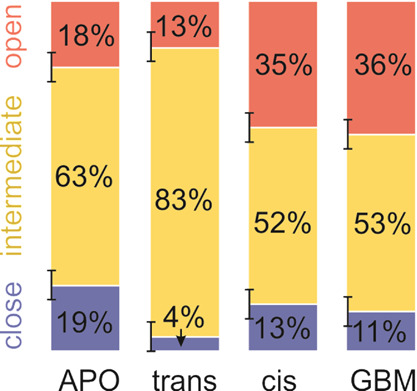
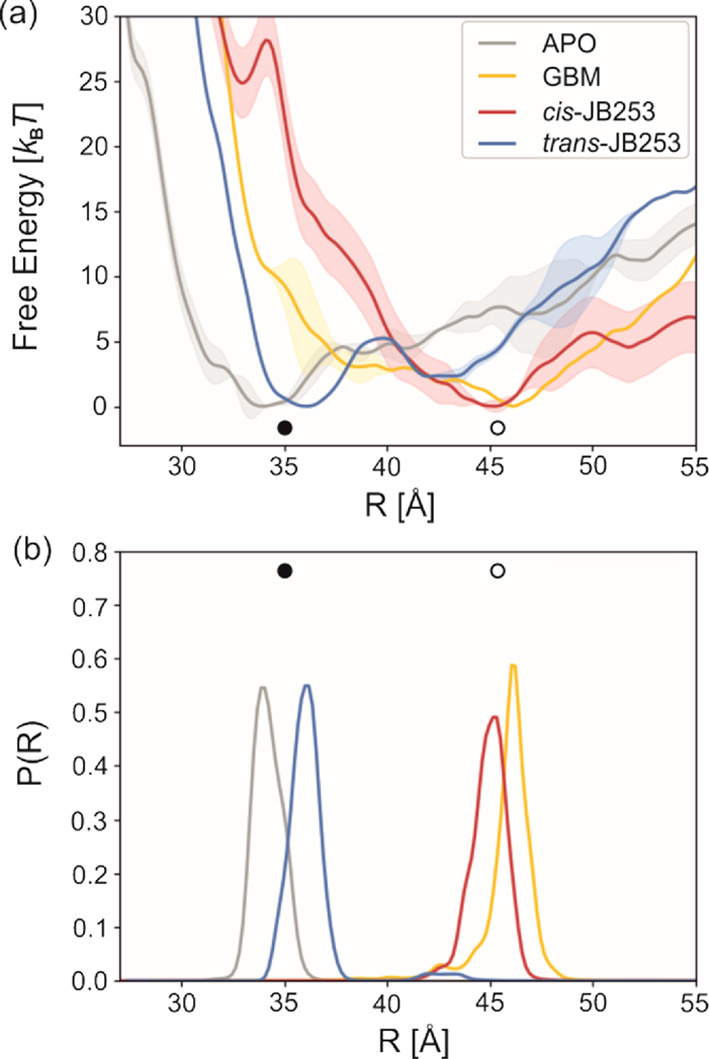
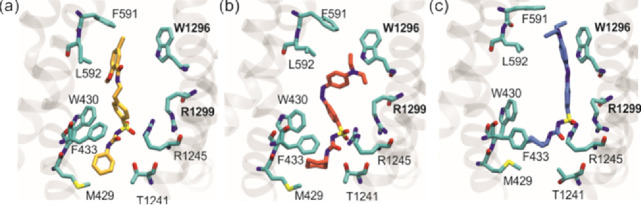
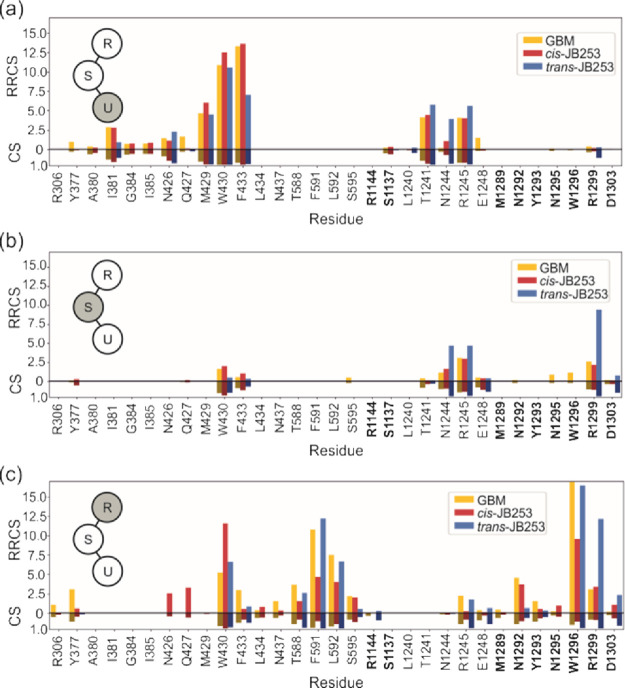
ATP-sensitive potassium (KATP) channels are present in numerous organs, including the heart, brain, and pancreas. Physiological opening and closing of KATPs present in pancreatic β-cells, in response to changes in the ATP/ADP concentration ratio, are correlated with insulin release into the bloodstream. Sulfonylurea drugs, commonly used in type 2 diabetes mellitus treatment, bind to the octamer KATP channels composed of four pore-forming Kir6.2 and four SUR1 subunits and increase the probability of insulin release. Azobenzene-based derivatives of sulfonylureas, such as JB253 inspired by well-established antidiabetic drug glimepiride, allow for control of this process by light. The mechanism of that phenomenon was not known until now. In this paper, we use molecular docking, molecular dynamics, and metadynamics to reveal structural determinants explaining light-controlled insulin release. We show that both and JB253 bind to the same SUR1 cavity as antidiabetic sulfonylurea glibenclamide (GBM). Simulations indicate that, in contrast to JB253, the JB253 structure generated by blue light absorption promotes open structures of SUR1, in close similarity to the GBM effect. We postulate that in the open SUR1 structures, the N-terminal tail from Kir6.2 protruding into the SUR1 pocket is stabilized by flexible enough sulfonylureas. Therefore, the adjacent Kir6.2 pore is more often closed, which in turn facilitates insulin release. Thus, KATP conductance is regulated by peptide linkers between its Kir6.2 and SUR1 subunits, a phenomenon present in other biological signaling pathways. Our data explain the observed light-modulated activity of photoactive sulfonylureas and widen a way to develop new antidiabetic drugs having reduced adverse effects.
三磷酸腺苷敏感性钾 (KATP) 通道存在于许多器官中,包括心脏、大脑和胰腺。胰腺 β 细胞中 KATP 的生理开启和关闭与胰岛素向血液中的释放有关,这与 ATP/ADP 浓度比的变化有关。磺酰脲类药物通常用于 2 型糖尿病的治疗,它们与由四个孔形成 Kir6.2 和四个 SUR1 亚基组成的八聚体 KATP 通道结合,增加胰岛素释放的概率。磺酰脲类药物的偶氮苯衍生物,如受成熟抗糖尿病药物格列美脲启发的 JB253,可以通过光来控制这个过程。到目前为止,这种现象的机制还不得而知。在本文中,我们使用分子对接、分子动力学和元动力学来揭示解释光控胰岛素释放的结构决定因素。我们表明, 和 JB253 都像抗糖尿病磺酰脲格列本脲 (GBM) 一样,结合到 SUR1 的相同腔中。模拟表明,与 JB253 相反,由蓝光吸收产生的 JB253 结构促进 SUR1 的开放结构,与 GBM 的作用非常相似。我们假设,在开放的 SUR1 结构中,从 Kir6.2 突出到 SUR1 口袋的 N 端尾巴被足够灵活的磺酰脲稳定。因此,相邻的 Kir6.2 孔更经常关闭,这反过来又促进胰岛素释放。因此,KATP 电导受其 Kir6.2 和 SUR1 亚基之间肽键的调节,这种现象存在于其他生物信号通路中。我们的数据解释了观察到的光活性磺酰脲的光调节活性,并为开发具有降低不良反应的新型抗糖尿病药物开辟了道路。